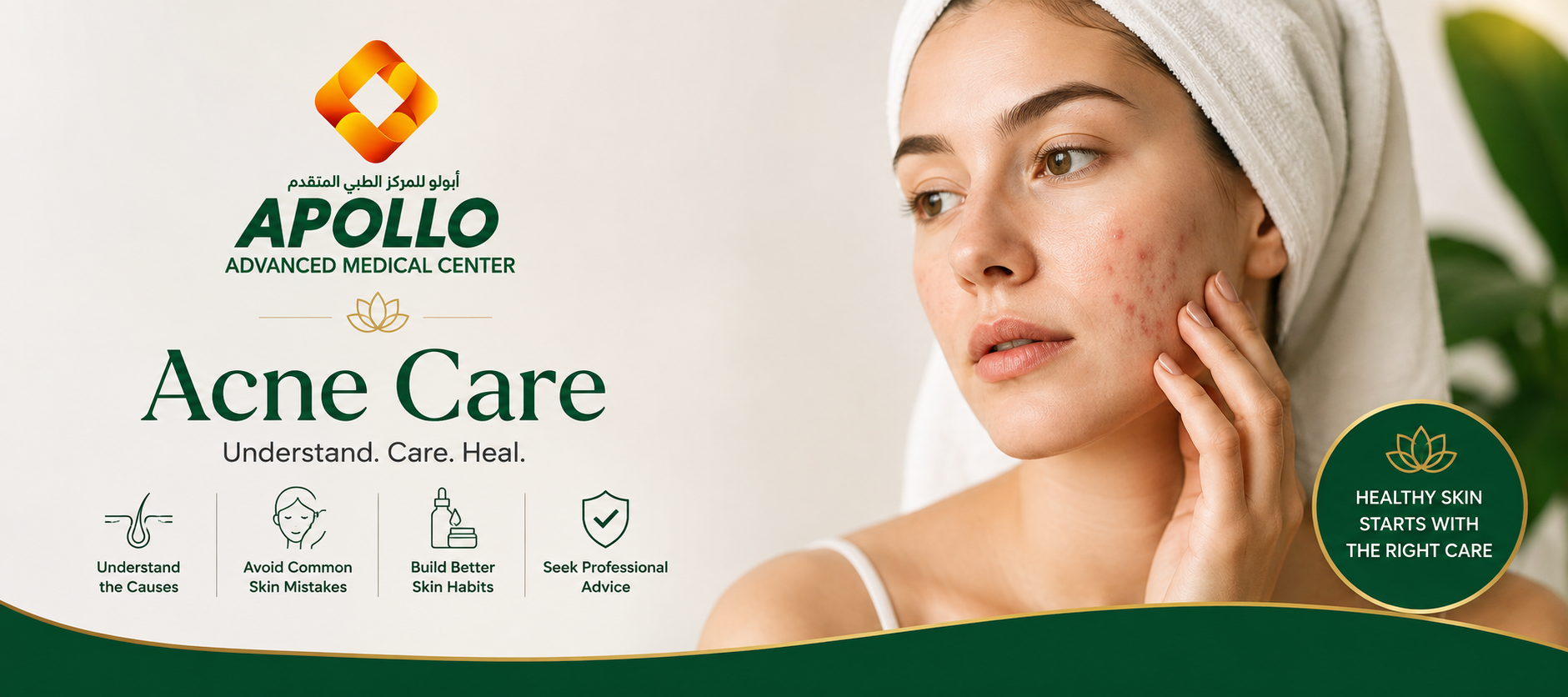
Acne Care: Common Causes, Everyday Skin Mistakes and When to Seek Professional Advice
Acne is one of the most common skin concerns, and it can affect teenagers as well as adults. For some people, it may appear as an occasional pimple. For others, recurring breakouts, painful spots, dark marks, or acne scars can become a long-term concern.
What makes acne particularly frustrating is that there is no single reason why everyone develops it—and there is no universal skincare routine that works for every person.
Understanding what causes acne, which everyday habits can make it worse, and when professional advice is appropriate can help you take better care of your skin.
At Apollo Advanced Medical Center in Al Rigga, Dubai, skin care includes professional skin analysis, acne care, facial treatments, skin rejuvenation and personalized skincare services. The focus is on understanding individual skin concerns and recommending an appropriate approach.
What Actually Causes Acne?
Acne develops when hair follicles or pores become blocked. Several processes can contribute to this, including excess oil production, the buildup of dead skin cells, bacteria and inflammation.
This can result in different types of breakouts, including:
- Blackheads
- Whiteheads
- Small red bumps
- Pus-filled pimples
- Deep, painful nodules
- Cyst-like lesions
Acne commonly affects the face, forehead, chest, upper back and shoulders because these areas contain many oil-producing glands.
Hormones Can Play an Important Role
Hormonal changes are one of the major factors associated with acne.
During puberty, increased androgen activity can stimulate the oil glands and increase oil production. Hormonal fluctuations can also contribute to acne in adults, including some women who experience recurring breakouts around their menstrual cycle.
However, hormones are not the only factor.
Family history, certain medications, skincare or hair-care products, stress and potentially some dietary patterns may influence acne or make existing acne worse.
Is Acne Caused by Dirty Skin?
No.
This is one of the most common misconceptions about acne.
Acne is not simply a result of poor hygiene. The processes responsible for acne occur within the hair follicles and involve oil production, blocked follicles, bacteria and inflammation. Excessive washing or aggressive scrubbing can actually irritate the skin and make breakouts more noticeable.
Good hygiene is important, but more washing does not automatically mean clearer skin.
Everyday Habits That May Be Affecting Your Skin
Sometimes the problem isn't simply the skincare product you're using. It can be the way you're using it—or habits you may not even realize are affecting your skin.
1. Washing Your Face Too Frequently
When you see oily skin or repeated breakouts, it can be tempting to wash your face several times a day.
But excessive cleansing can irritate the skin and potentially worsen acne.
Dermatologists commonly recommend gentle cleansing rather than repeatedly stripping the skin throughout the day. The American Academy of Dermatology recommends washing acne-prone skin twice daily and after activities that cause sweating.
2. Scrubbing Too Hard
Scrubbing harder does not mean cleaning your pores better.
Aggressive exfoliation, rough tools or harsh products can irritate acne-prone skin. A gentle approach is generally preferable.
Think of skincare as care, not punishment.
3. Picking or Popping Pimples
A pimple may be difficult to ignore—especially when it appears before an important event.
But squeezing or picking acne can increase inflammation and raise the risk of scarring and dark marks.
If you frequently experience deep or painful acne, professional evaluation may be more useful than repeatedly trying to remove individual spots yourself.
4. Using Too Many Products at Once
The skincare industry offers thousands of products promising clearer, brighter or smoother skin.
This can encourage people to keep adding new products to their routine.
However, constantly changing acne treatments can irritate the skin and make it difficult to know which product is actually helping—or causing a problem.
The American Academy of Dermatology advises giving an acne treatment sufficient time to work rather than changing products every few days. Some treatments may require several weeks before improvement becomes noticeable.
5. Choosing Products That Can Clog Pores
Some cosmetics, moisturizers, sunscreens and hair-care products may contribute to clogged pores.
For acne-prone skin, dermatologists often recommend looking for products labelled:
"Non-comedogenic"
"Oil-free"
"Won't clog pores"
These products are less likely to contribute to clogged pores in most people.
6. Sleeping With Makeup On
Even products that are described as non-comedogenic should not simply be left on the skin overnight.
Removing makeup before going to bed is an important part of a sensible skincare routine.
7. Ignoring Hair and Hair Products
Your hair and hair-care routine can sometimes affect acne-prone areas, particularly around the forehead and hairline.
Oil from hair and certain hair-care products may contribute to breakouts in susceptible people. Keeping hair away from the face and maintaining appropriate hair hygiene may help.
8. Forgetting Sun Protection
Sun exposure is another important consideration for people managing acne.
Some acne treatments can increase sensitivity to ultraviolet light, and excessive sun exposure can damage the skin. Dermatologists recommend broad-spectrum, water-resistant sunscreen with SPF 30 or higher, with non-comedogenic options being preferable for acne-prone skin.
This is particularly relevant for people living in sunny climates such as Dubai.
What About Stress and Acne?
Stress does not necessarily cause acne by itself, but research and dermatology guidance indicate that stress can contribute to acne flare-ups in people who already experience acne.
That means taking care of your skin is only one part of the picture.
Adequate sleep, regular physical activity, balanced nutrition and effective stress management can all contribute to overall well-being.
If exercise causes significant sweating, cleansing or showering afterward can also help prevent sweat and irritation from contributing to breakouts.
Does Diet Cause Acne?
This is a complicated question.
There is evidence suggesting that certain dietary patterns, including diets with a high glycemic index, may be associated with acne in some people. However, diet is not the sole explanation for acne, and research does not support a simple rule that one particular food automatically causes acne for everyone.
Instead of eliminating large numbers of foods based on social-media advice, people with persistent acne should consider discussing their individual situation with a qualified healthcare professional.
When Should You Seek Professional Advice?
Not every occasional pimple requires a dermatology appointment.
However, professional evaluation becomes particularly important when acne is:
- Persistent or repeatedly returning
- Moderate or severe
- Deep or painful
- Leaving scars
- Leaving persistent dark marks
- Affecting the chest or back extensively
- Affecting your confidence or emotional well-being
- Not improving despite appropriate skincare and treatment
The American Academy of Dermatology notes that people can benefit from seeing a dermatologist even when acne isn't severe, particularly when self-care isn't producing the desired improvement.
Deep, painful acne can also carry a greater risk of scarring and may require professional treatment.
Why Professional Assessment Matters
Not every breakout that looks like acne is necessarily acne.
Some other skin conditions can produce acne-like bumps or inflammation, including folliculitis and perioral dermatitis. A dermatologist can help determine what is actually causing the skin problem and develop an appropriate treatment plan.
This is one reason why simply copying someone else's skincare routine may not produce the same result for you.
Your skin needs an individual assessment—not someone else's routine.
Acne Treatment Requires Patience
One of the biggest mistakes people make is expecting acne treatment to work overnight.
Depending on the treatment and individual circumstances, improvement can take several weeks, and more significant clearing can take several months.
This is why consistency matters.
Instead of constantly switching between products, give an appropriate treatment plan time to work and follow professional instructions carefully.
A Simple Approach to Acne-Prone Skin
While everyone's skin is different, some basic principles can help:
Keep it gentle
Use a mild cleanser rather than aggressively scrubbing your face.
Avoid unnecessary irritation
Don't repeatedly exfoliate, scrub or experiment with multiple strong products at the same time.
Choose appropriate products
Look for non-comedogenic and oil-free products where appropriate.
Don't pick
Allow pimples to heal rather than squeezing them.
Protect your skin from the sun
Use suitable broad-spectrum sunscreen.
Be consistent
Give an appropriate skincare or treatment plan enough time to work.
Get professional help when needed
Persistent, painful or scarring acne deserves proper evaluation.
These principles are consistent with dermatology guidance from organizations such as the American Academy of Dermatology and NHS.
Apollo Advanced Medical Center: Personalized Skin Care in Dubai
At Apollo Advanced Medical Center in Al Rigga, Dubai, skin care is approached with an emphasis on understanding individual concerns.
The center offers skin-focused services including professional skin analysis, acne care, deep cleansing facials, hydration and glow treatments, skin rejuvenation and customized skincare programs.
The objective is not to promise an instant solution or treat every person's skin in exactly the same way.
Instead, professional assessment can help patients understand their concerns and explore appropriate treatment options.
Your Skin Deserves the Right Attention
Acne is common, but that doesn't mean you have to ignore persistent or troublesome breakouts.
Understanding the causes, avoiding common skincare mistakes and recognizing when professional advice is appropriate can make your approach to acne care more informed.
Most importantly, don't compare your skin to someone else's.
The treatment that works for one person may not be the right choice for another.
If you're experiencing persistent acne or are unsure about the condition of your skin, consider speaking with a qualified healthcare professional for an appropriate assessment.
Understand your skin. Care for it professionally.
This article is for general educational purposes and does not replace an individual medical consultation or diagnosis.