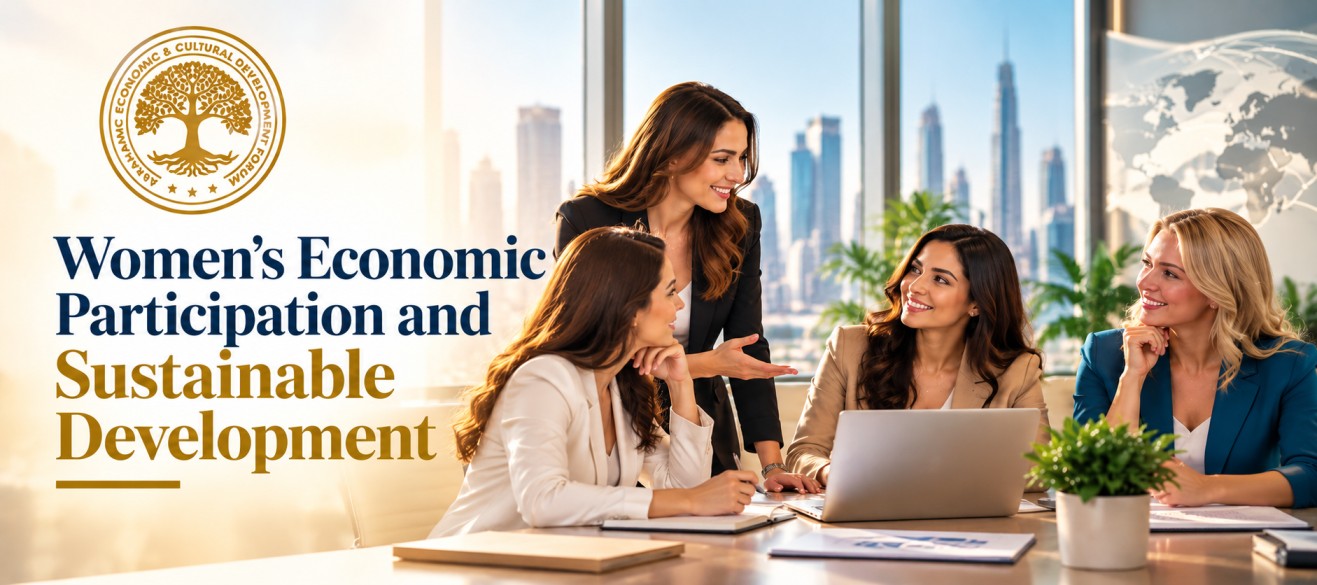
Understanding Women’s Economic Participation
Women’s economic participation refers to the ways women contribute to economic activity. This includes paid employment, entrepreneurship, self-employment, professional services, agriculture, leadership, and other productive activities.
It also involves having opportunities to develop skills, access resources, earn income, and make decisions about economic matters.
Economic participation takes different forms depending on a person's circumstances and the opportunities available in their community.
A woman may contribute as a teacher, engineer, healthcare professional, farmer, business owner, researcher, technician, or senior manager. Another may operate a small home-based enterprise or develop professional skills while balancing family responsibilities.
These experiences demonstrate that women’s contributions extend across many sectors and occupations.
Participation Must Include Opportunity and Fairness
The presence of women in the workforce does not automatically mean that economic opportunities are equal.
Women may still face barriers such as unequal access to training, limited professional networks, discriminatory recruitment practices, inadequate childcare, restricted access to finance, or difficulties advancing into leadership positions.
Addressing these challenges requires attention not only to participation rates but also to the quality, fairness, and sustainability of the opportunities available.
Why Women’s Economic Participation Matters for Sustainable Development
Sustainable development involves improving people's lives while building economic, social, and environmental conditions that can support future generations.
Women’s economic participation connects with this goal in several important ways.
Supporting Household and Community Wellbeing
When women have access to reliable income and meaningful economic opportunities, they may gain greater capacity to contribute to household needs, education, healthcare, savings, and long-term planning.
The benefits depend on individual circumstances, access to resources, and the wider economic environment. Nevertheless, fair economic opportunities can strengthen people's ability to make decisions about their own lives.
Women also contribute knowledge, experience, and leadership to community initiatives, professional organizations, and local development projects.
Strengthening Economic Resilience
Communities benefit when people have different pathways to employment, entrepreneurship, and income generation.
Supporting women's participation can broaden the range of skills and perspectives available to businesses and institutions. It can also help women develop greater financial independence and access opportunities that might otherwise remain out of reach.
Economic resilience is not created by participation alone, however. It also depends on decent working conditions, fair compensation, access to social protection, and the ability to manage economic uncertainty.
Supporting Inclusive Development
An economy cannot make full use of its human capabilities if people face avoidable barriers because of their gender.
Inclusive development seeks to create conditions in which people can contribute according to their abilities and aspirations. Women's economic participation is therefore relevant to discussions about fairness, productivity, poverty reduction, and sustainable livelihoods.
Education and Skills Development: A Foundation for Opportunity
Education can help women develop the knowledge and confidence needed to participate in different areas of economic life.
However, access to education must be connected with opportunities to apply what has been learned.
A woman may complete a qualification but still face difficulties entering her chosen profession because she lacks practical experience, professional contacts, or access to suitable vacancies. Another may have experience running a small business but need additional training in financial planning, digital marketing, or business management.
Practical Skills That Can Support Economic Participation
Relevant skills may include:
-
Digital literacy and technology use.
-
Financial literacy and budgeting.
-
Communication and negotiation.
-
Leadership and decision-making.
-
Entrepreneurship and business planning.
-
Technical and vocational skills.
-
Project management.
-
Research and problem-solving.
Training programmes should reflect local employment opportunities and the needs of different industries.
For example, women interested in entrepreneurship may benefit from learning how to calculate operating costs, understand customer needs, set prices, manage cash flow, and promote products responsibly.
Women entering technical fields may need access to specialized training, practical equipment, mentors, and opportunities to gain work experience.
Lifelong Learning Matters
Economic requirements change as technology, industries, and business practices develop.
Continuing education can help women update their skills, pursue new career opportunities, return to employment after a break, or develop an existing business.
Accessible short courses, professional certifications, online learning, mentoring, and workplace training can all contribute to this process.
Women’s Entrepreneurship and Economic Development
Entrepreneurship offers women another pathway to economic participation.
Women establish businesses in many areas, including retail, professional services, agriculture, education, technology, manufacturing, healthcare, and creative industries.
These enterprises may serve local needs, create employment, introduce new products, or provide services that are not readily available in the market.
However, starting and sustaining a business requires more than a good idea.
Access to Finance and Business Knowledge
Women entrepreneurs may encounter challenges when seeking loans, investment, business premises, market access, or professional networks. The nature and extent of these barriers vary across countries and communities.
Practical support can include:
-
Business planning and financial education.
-
Access to suitable financing options.
-
Mentorship from experienced entrepreneurs.
-
Digital marketing and e-commerce training.
-
Networking opportunities.
-
Guidance on regulations and business registration.
-
Connections with suppliers and potential customers.
For example, a woman running a small clothing business may have strong product knowledge but limited experience with online sales. Training in digital storefronts, customer communication, pricing, and inventory management could help her evaluate ways to reach a wider market.
Such support cannot guarantee business success, but it can help entrepreneurs make more informed decisions.
Recognizing Different Business Models
Not every entrepreneur intends to build a large company.
Small businesses, independent professional services, family enterprises, cooperatives, and social enterprises can all provide meaningful economic opportunities.
Support programmes should therefore consider different business goals, resource requirements, and local market conditions rather than applying the same approach to every entrepreneur.
Women's Employment, Leadership, and Career Progression
Access to employment is an important part of economic participation, but professional development and career progression also matter.
Women may enter an organization and still encounter barriers to promotion, leadership responsibilities, fair compensation, or participation in important decisions.
Creating Fairer Workplaces
Employers can support women's economic participation by reviewing their recruitment, evaluation, promotion, and compensation practices.
Practical steps include:
-
Using clear and consistent recruitment criteria.
-
Evaluating employees according to relevant skills and performance.
-
Providing access to training and leadership development.
-
Establishing appropriate procedures for reporting discrimination or harassment.
-
Supporting flexible working arrangements where feasible.
-
Making promotion pathways transparent.
-
Encouraging mentorship and professional networking.
Leadership development is particularly important when women have the expertise to take on greater responsibility but lack access to professional networks or opportunities to demonstrate their capabilities.
Why Representation in Leadership Matters
Women who participate in leadership can bring their professional experience and perspectives to organizational decisions.
However, representation should not be treated as a substitute for competence, fair processes, or accountability. The goal is to ensure that qualified people have a fair opportunity to contribute and that leadership decisions reflect a range of relevant perspectives.
Organizations should also avoid placing the responsibility for improving workplace equality entirely on individual women. Institutional practices and leadership decisions matter.
Recognizing Unpaid Care and Household Responsibilities
Care responsibilities are an important part of the discussion about women's economic participation.
In many societies, women carry a substantial share of unpaid work, including childcare, caring for older relatives, household management, and supporting family members with additional needs.
These responsibilities contribute to family and community wellbeing, but they can also affect the time available for paid work, education, business development, and professional advancement.
Making Participation More Sustainable
Possible measures include:
-
Access to affordable, reliable childcare.
-
Parental leave arrangements.
-
Flexible working options where appropriate.
-
Support for caregivers returning to employment.
-
Training schedules that accommodate different responsibilities.
-
More balanced sharing of household and care work.
These approaches should recognize that care is a shared social responsibility rather than an issue that women must solve individually.
Sustainable participation also requires considering the wellbeing of workers. Access to employment should not depend on maintaining an unrealistic balance between professional responsibilities and unpaid care.
Digital Inclusion and New Economic Opportunities
Digital tools can create new ways for women to learn, work, sell products, and provide services.
Online platforms may help entrepreneurs reach customers beyond their immediate communities. Remote work may create additional employment options for some professionals. Digital learning can provide access to training that would otherwise require travel.
However, these opportunities depend on reliable internet access, suitable devices, digital skills, safety, and the availability of meaningful work.
Closing the Digital Skills Gap
Digital inclusion requires more than providing access to technology.
Women may benefit from training in:
-
Online business management.
-
Digital payments and financial safety.
-
E-commerce and customer service.
-
Cybersecurity and data protection.
-
Remote collaboration tools.
-
Responsible use of artificial intelligence.
-
Evaluating online information and opportunities.
Programmes should also address online fraud, harassment, privacy, and the risks associated with unreliable employment or investment offers.
Digital participation is most valuable when women can use technology safely and productively to pursue their own goals.
Women's Economic Participation and Sustainable Business Practices
Sustainable development also asks how economic activity affects communities, workers, and the environment.
Women participate in businesses and initiatives across sectors that address these concerns, including agriculture, education, renewable energy, recycling, healthcare, and community services.
Women entrepreneurs and professionals can contribute to sustainable business practices, just as men can. These contributions should be supported through fair access to resources, training, technology, and decision-making opportunities.
Linking Economic Opportunity With Environmental Responsibility
For example, a small enterprise producing reusable household products may need business planning, product design, responsible sourcing, marketing, and financial management skills.
A women-led agricultural business may benefit from training in efficient water use, soil management, storage, and access to markets.
In both cases, skills and business support can help the enterprise assess its economic goals alongside environmental considerations.
The wider lesson is that sustainable development requires practical capabilities and access to opportunities, not simply broad commitments to sustainability.
The Role of Governments, Institutions, and Communities
Women's economic participation is influenced by laws, institutions, workplace practices, infrastructure, education systems, and social expectations.
No single programme can address every barrier. Progress often requires coordinated action from several groups.
Governments and Policymakers
Governments can support participation by reviewing relevant laws and policies, improving access to education and training, addressing discrimination, supporting care infrastructure, and promoting fair access to economic resources.
Policies should be informed by evidence and adapted to local conditions.
Educational Institutions and Training Providers
Schools, universities, vocational institutions, and professional training providers can help women develop relevant skills and connect learning with employment and entrepreneurship opportunities.
They can also support mentoring, career guidance, and practical experience.
Employers and Business Organizations
Businesses can review workplace practices, improve access to development opportunities, support fair recruitment and promotion, and provide training that helps employees progress.
Business associations can also create networks through which women entrepreneurs share knowledge and identify market opportunities.
Communities and Families
Community organizations and families can contribute by recognizing women's economic ambitions, sharing care responsibilities more fairly, and supporting access to education, professional networks, and business opportunities.
Long-term progress is more achievable when individual effort is supported by an enabling environment.
International Cooperation and Knowledge Exchange
Women's economic participation is shaped by different economic, cultural, and institutional conditions across the world.
A programme that works well in one country may require significant adaptation elsewhere. International cooperation can help organizations exchange experiences, examine evidence, and learn from approaches used in different settings.
Useful forms of cooperation include:
-
Professional exchange programmes.
-
Cross-border business networks.
-
Research partnerships.
-
Entrepreneurship mentoring.
-
Skills development initiatives.
-
Leadership training.
-
Sharing effective approaches to workplace inclusion.
-
Dialogue between policymakers, educators, and business leaders.
Such cooperation should avoid assuming that every community has the same priorities or challenges. Effective knowledge exchange combines international experience with local understanding.
AECD Forum Perspective
Women's economic participation connects with the broader interests of the Abrahamic Economic & Cultural Development (AECD) Forum, particularly education, skills development, leadership, entrepreneurship, professional development, international cooperation, and sustainable economic progress.
Sustainable development depends on creating opportunities for people to contribute their knowledge, experience, and abilities. Supporting women's participation is therefore relevant to discussions about workforce development, business growth, community wellbeing, and inclusive institutions.
Education and training can help women prepare for employment, develop businesses, and pursue leadership responsibilities. Professional networks and mentorship can support knowledge exchange, while dialogue among educators, entrepreneurs, policymakers, and community organizations can help identify practical challenges and possible solutions.
AECD Forum's wider interest in cooperation across communities and cultures also provides a relevant context for examining how different societies approach women's economic participation. Sharing experiences can help participants learn from one another while recognizing that local circumstances require locally appropriate responses.
A constructive approach should focus on practical opportunities: improving access to relevant skills, supporting entrepreneurship, encouraging fair professional practices, and strengthening cooperation among institutions.
The objective is not simply to increase participation as a number. It is to support conditions in which women can make meaningful economic choices and contribute to sustainable development.
Practical Action Points
For Women and Aspiring Entrepreneurs
-
Identify your development priorities. Choose skills that align with your career or business goals.
-
Build professional connections. Seek mentors, industry networks, peer groups, and relevant learning opportunities.
-
Strengthen financial and digital literacy. Develop the skills needed to manage resources, assess opportunities, and use digital tools safely.
For Employers and Business Organizations
-
Review workplace practices. Examine recruitment, compensation, training, promotion, and reporting procedures for unnecessary barriers.
-
Support career development. Provide fair access to mentoring, leadership training, practical projects, and professional networks.
For Educators, Policymakers, and Communities
-
Connect education with economic opportunities. Expand access to relevant vocational training, entrepreneurship education, career guidance, and work experience.
-
Address structural barriers. Consider childcare, digital access, finance, safety, and other factors that can affect women's ability to participate and progress.
#SustainableDevelopment
#WomensEmpowerment
#GenderEquality
#WomenInBusiness
#WomenEntrepreneurs
#SkillsDevelopment
#EconomicDevelopment
#WomenInLeadership
#InclusiveGrowth
#Education
#DigitalInclusion
#InternationalCooperation
#ProfessionalDevelopment
#AECDForum