Category: Procurement & Sourcing
Procurement is often viewed as a process of finding the right products at the right price. But in real business projects, procurement involves much more than comparing supplier quotations. A decision that appears cost-effective at the beginning can create unexpected expenses later through delays, quality problems, compatibility issues, rework, or poor supplier performance.
For businesses managing technology, infrastructure, construction, telecommunications, or international sourcing projects, small procurement mistakes can have a significant impact on the overall project budget.
Understanding these mistakes can help businesses improve purchasing decisions, control costs, and build more reliable supplier relationships.
Why Procurement Decisions Have a Direct Impact on Project Costs
Every procurement decision can influence several areas of a project, including:
-
Product and equipment costs
-
Transportation and logistics
-
Installation expenses
-
Project timelines
-
Quality control
-
Labour and rework
-
Inventory requirements
-
Maintenance
-
Business continuity
-
Supplier management
This is why the cheapest quotation is not always the lowest-cost option.
A better approach is to evaluate the total cost of procurement and its potential impact on the entire project lifecycle.
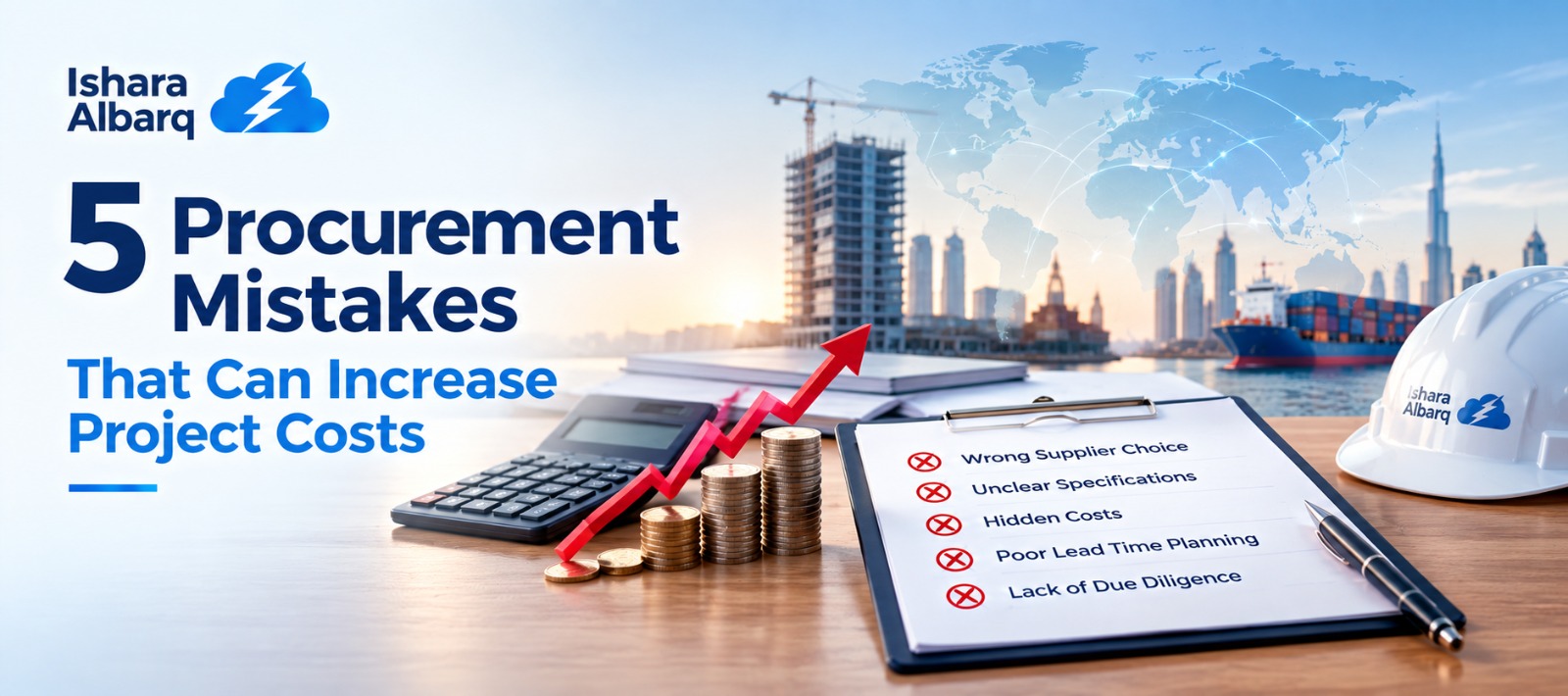
Here are five common procurement mistakes businesses should watch for.
1. Choosing a Supplier Based Only on the Lowest Price
Price is an important procurement consideration, but making a supplier decision purely on the lowest quotation can create problems later.
A low-cost supplier may have limitations related to:
-
Product quality
-
Production capacity
-
Certifications
-
Delivery timelines
-
Packaging
-
Technical support
-
After-sales service
-
Communication
-
Quality consistency
For example, imagine a business receives three quotations for a technical product. One supplier offers a significantly lower price than the others.
At first, the offer may appear attractive. However, if the product does not meet the required specifications, the business may need to replace it, reorder the correct product, or pay additional installation and transportation costs.
The initial saving can quickly disappear.
What businesses should consider
Instead of asking only:
"Who offers the lowest price?"
Procurement teams should ask:
"Which supplier provides the right combination of price, quality, reliability, compliance, and delivery?"
This creates a more complete basis for supplier comparison.
2. Not Defining Technical Requirements Clearly
Unclear specifications are another common source of unexpected procurement costs.
When product requirements are vague, suppliers may interpret the request differently. This can result in products that technically match the quotation but do not actually meet the project's operational requirements.
For technology and infrastructure projects, specifications may include:
-
Dimensions
-
Capacity
-
Performance
-
Materials
-
Compatibility
-
Standards
-
Certifications
-
Environmental requirements
-
Power requirements
-
Connectivity
-
Quantity
-
Warranty
-
Testing requirements
For example, purchasing network equipment without clearly defining required capacity, interfaces, compatibility, or performance requirements can create significant problems during installation.
The business may eventually need additional equipment or replacements.
How to reduce this risk
Before requesting quotations, procurement and technical teams should work together to create a clear specification.
A well-prepared procurement document should communicate:
What is required → Why it is required → Required standards → Expected performance → Delivery requirements
Clear specifications make supplier comparisons more accurate and reduce misunderstandings.
3. Ignoring the Total Cost of Procurement
The purchase price is only one part of the actual cost.
A product purchased internationally may involve additional expenses such as:
-
Freight
-
Insurance
-
Customs duties
-
Taxes
-
Handling charges
-
Warehousing
-
Inspection
-
Packaging
-
Local transportation
-
Installation
-
Testing
-
Maintenance
This is why businesses should evaluate total landed cost rather than focusing only on the supplier's unit price.
A simple example
Suppose Supplier A offers a product at a lower unit price than Supplier B.
However:
Supplier A
-
Lower product price
-
Higher shipping cost
-
Longer delivery time
-
Additional inspection requirement
Supplier B
-
Slightly higher product price
-
Lower logistics cost
-
Faster delivery
-
Better packaging and documentation
The final project cost may be very different from what the initial quotation suggests.
Think beyond the quotation
A strong procurement evaluation should consider:
Product Cost + Logistics + Duties + Handling + Quality Control + Installation + Lifecycle Costs
This broader view helps businesses understand what they are actually paying.
4. Failing to Plan Procurement Lead Times
A procurement decision can affect the entire project schedule.
If critical materials arrive late, the project may experience:
-
Installation delays
-
Idle labour
-
Extended equipment rentals
-
Storage costs
-
Schedule changes
-
Expedited shipping costs
-
Delayed customer delivery
For international procurement, lead times can be affected by production schedules, shipping availability, customs procedures, inspections, and documentation.
Why early planning matters
Procurement should begin with an understanding of the project's required timeline.
Businesses should identify:
-
When the product is needed
-
Supplier production time
-
Inspection time
-
Shipping time
-
Customs clearance
-
Local transportation
-
Buffer time for unexpected delays
Building reasonable contingency time into the procurement schedule can reduce pressure later.
Avoid emergency purchasing
When materials are needed urgently, businesses may have fewer supplier options and may need to pay premium prices for expedited transportation.
Good procurement planning helps avoid turning a predictable purchase into an emergency purchase.
5. Not Conducting Proper Supplier Due Diligence
A supplier can have an attractive quotation and still create serious project risks.
Before entering an important business relationship, companies should evaluate whether the supplier is capable of delivering what has been promised.
Supplier due diligence may include checking:
-
Legal business identity
-
Business experience
-
Manufacturing capability
-
Production capacity
-
Quality-control processes
-
Certifications
-
Export experience
-
Financial stability
-
Customer references
-
Communication standards
-
Delivery history
-
Factory or facility information
-
Packaging and logistics capabilities
For overseas suppliers, this becomes particularly important because geographical distance can make resolving problems more complicated.
Why verification matters
A supplier that cannot consistently meet quality or delivery requirements may create costs far beyond the original purchase price.
These could include:
-
Replacement orders
-
Project delays
-
Reinspection
-
Additional shipping
-
Customer complaints
-
Rework
-
Operational disruption
Proper due diligence helps businesses identify potential risks before committing significant funds.
The Hidden Cost of Procurement Mistakes
Procurement mistakes do not always appear immediately on an invoice.
Some costs emerge later in the project.
| Procurement Mistake | Possible Cost Impact |
|---|---|
| Choosing only by price | Quality problems and replacement costs |
| Unclear specifications | Incorrect products and rework |
| Ignoring total cost | Unexpected logistics and handling expenses |
| Poor lead-time planning | Delays and expedited shipping |
| Weak supplier due diligence | Quality, delivery, and reliability risks |
This is why procurement should be viewed as a strategic part of project management, rather than simply an administrative purchasing function.
How Businesses Can Improve Procurement Cost Control
Businesses can reduce procurement-related cost risks by following a structured process.
1. Define requirements before requesting quotations
Make sure technical, commercial, quantity, quality, and delivery requirements are clearly documented.
2. Compare suppliers using consistent criteria
Create a supplier comparison covering:
-
Price
-
Quality
-
Specifications
-
Certifications
-
Lead time
-
Payment terms
-
Logistics
-
Warranty
-
Support
-
Supplier experience
3. Evaluate total landed cost
Look beyond the unit price and calculate the expected cost of getting the product to its final destination.
4. Verify suppliers
Conduct appropriate due diligence before committing to significant orders.
5. Use samples where appropriate
For products where quality or performance is important, reviewing samples can help identify problems before a larger order is placed.
6. Include quality-control measures
Depending on the project, businesses may consider:
-
Pre-production checks
-
Product samples
-
Factory inspections
-
Pre-shipment inspections
-
Testing
-
Documentation reviews
7. Plan procurement around the project schedule
Procurement timelines should be connected directly to project milestones.
8. Document commercial agreements clearly
Purchase orders and contracts should clearly define specifications, quantities, prices, delivery terms, quality requirements, warranties, and other agreed conditions.
Procurement Should Focus on Value, Not Just Price
Successful procurement is not necessarily about finding the cheapest supplier.
It is about finding the right value for the project's requirements.
A supplier offering a slightly higher price may provide better quality, more reliable delivery, stronger documentation, better technical support, or lower lifecycle costs.
Likewise, a low-cost supplier may be appropriate for some projects when quality, specifications, delivery, and other requirements are properly verified.
The right decision depends on the project's specific requirements and risk profile.
A Practical Procurement Checklist
Before placing a significant order, procurement teams can ask:
Supplier
-
Have we verified the supplier?
-
Does the supplier have sufficient capacity?
-
Have we checked relevant experience and references?
Product
-
Are the technical specifications clear?
-
Is the product compatible with the project?
-
Are required certifications available?
Cost
-
Have we calculated total landed cost?
-
Are there hidden logistics or handling costs?
-
What are the potential lifecycle costs?
Delivery
-
Is the lead time realistic?
-
Does it align with the project schedule?
-
Is contingency time included?
Quality
-
Are inspection and testing requirements defined?
-
Have samples been reviewed where necessary?
Contract
-
Are specifications and quantities documented?
-
Are delivery, warranty, payment, and quality terms clear?
This simple checklist can help identify potential issues before they become expensive problems.
Final Thoughts
Procurement has a direct connection to project cost, quality, and delivery. Choosing the cheapest quotation, using unclear specifications, ignoring total costs, underestimating lead times, or failing to verify suppliers can all create expenses that were not visible at the beginning.
A structured procurement process gives businesses greater visibility into these risks.
For businesses involved in technology procurement, telecommunications, infrastructure, international sourcing, and global trade, careful planning and supplier evaluation can help create more predictable procurement outcomes.
The goal is not simply to purchase at a lower price. It is to make well-informed procurement decisions that support quality, reliability, project timelines, and long-term business value.