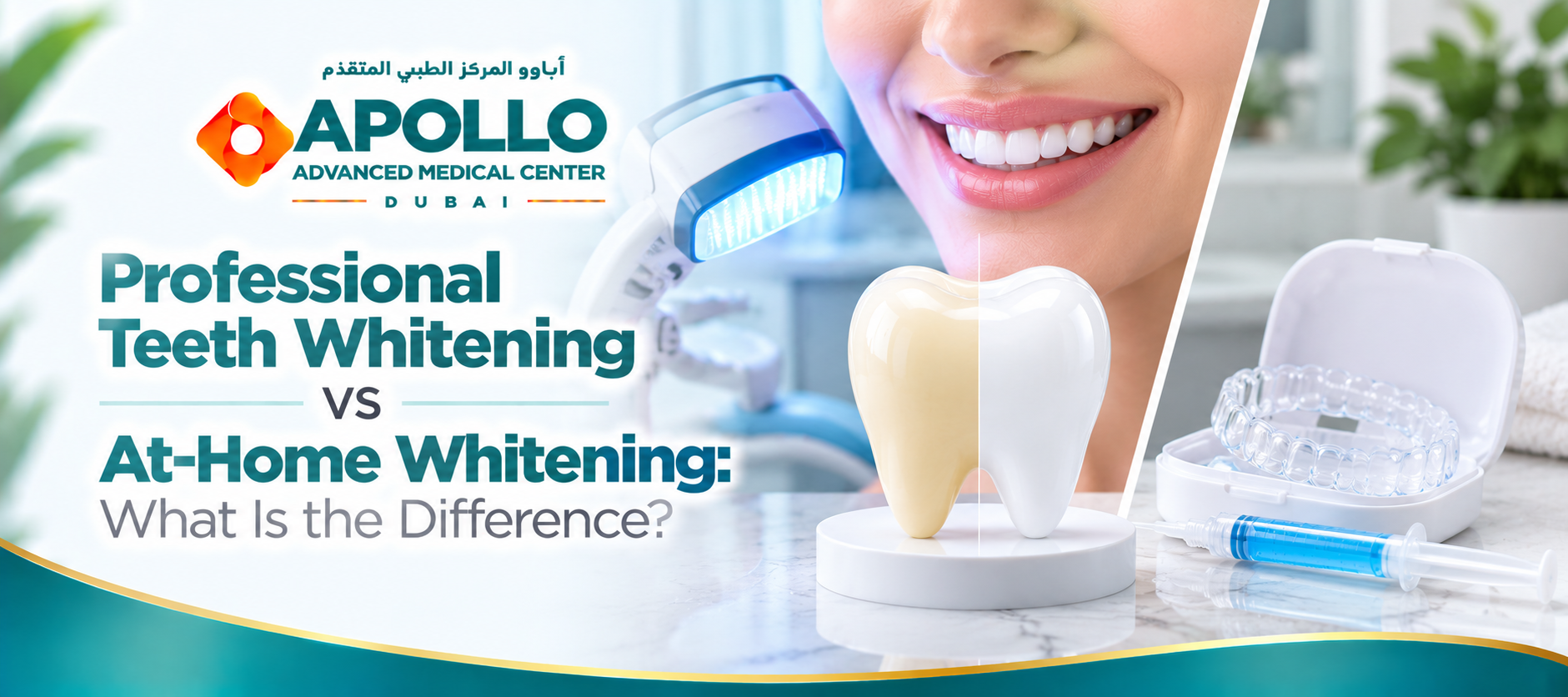
A Brighter Smile, Your Way
A brighter smile is one of the most common reasons people consider cosmetic dental treatment. But with whitening strips, toothpastes, gels, trays and professional treatments all available, it can be difficult to know which option makes sense for you.
The important thing to understand is that teeth whitening is not a one-size-fits-all treatment. The best approach depends on why the teeth look darker, the condition of the teeth and gums, the type of whitening product, your expectations and whether you have existing dental restorations.
Professional whitening and at-home whitening can both lighten natural teeth. The main differences involve the strength and delivery of the whitening agent, speed, supervision, customization and the opportunity to identify dental problems before treatment.
What Actually Causes Teeth to Look Yellow or Stained?
Before comparing whitening methods, it helps to understand what is causing the discoloration.
Tooth discoloration is generally described as extrinsic, intrinsic, or a combination of both.
Extrinsic stains
Extrinsic stains develop on the outer surface of the teeth. Common contributors include:
- Coffee and tea
- Red wine and other strongly coloured drinks
- Certain foods
- Tobacco use
- Poor oral hygiene
- Some environmental exposures
These stains may sometimes be reduced through professional cleaning, brushing and products designed to remove surface discoloration. The whitening toothpastes primarily work by mechanically removing extrinsic surface stains rather than substantially changing the underlying natural colour of the tooth.
Intrinsic discoloration
Intrinsic discoloration occurs within the tooth structure rather than simply on its surface.
It can be associated with factors such as:
- Natural ageing
- Changes during tooth development
- Certain medications taken during tooth development
- Fluorosis
- Previous dental trauma
- Certain dental conditions or restorations
Whitening can address some forms of intrinsic discoloration, but the result depends heavily on the underlying cause. Some deep discoloration may not respond adequately to conventional external whitening.
This is one reason professional assessment can be useful: the same whitening treatment may not produce the same result for every type of discoloration.
Professional Teeth Whitening: What Does It Mean?
Professional whitening generally refers to whitening performed in a dental clinic or a whitening system supplied and supervised by a dentist.
There are two broad professional approaches.
In-office whitening
In-office whitening uses a peroxide-based whitening agent applied under controlled conditions by a dental professional.
Because professional systems can use higher concentrations than many over-the-counter products, treatment can generally be completed more quickly. Some systems may also use a light or other activation method, depending on the treatment protocol.
One advantage is that the dentist can protect the gums and other soft tissues during treatment and monitor how the teeth respond.
Dentist-supervised at-home whitening
Professional whitening does not always mean sitting in a dental chair for the entire treatment.
A dentist may provide custom-fitted trays and whitening gel for use at home. The trays are designed to fit the patient's teeth closely, and the dentist provides instructions about how and when to use them.
This approach can take longer than in-office whitening, but it allows treatment to be carried out gradually at home while remaining part of a professional treatment plan.
What Is At-Home Teeth Whitening?
“At-home whitening” can mean several different things.
It may refer to:
- Dentist-supplied custom trays and whitening gel
- Whitening strips
- Whitening gels
- Whitening toothpastes
- Whitening rinses
- Other over-the-counter whitening products
These products are not all equivalent. Over-the-counter products generally contain lower concentrations of peroxide than professional in-office or dentist-prescribed take-home systems.
So when someone says, “I want to whiten my teeth at home,” the next question should be: Which type of at-home whitening are you considering?
A dentist-supervised take-home tray and an unregulated online whitening product are not the same thing.
Professional vs At-Home Whitening: The Main Differences
1. Speed of Results
One of the most noticeable differences is treatment time.
In-office whitening is designed to produce a whitening effect during a relatively short appointment. Take-home professional systems generally work gradually over days or weeks, depending on the product and instructions. Over-the-counter products may also require repeated use before noticeable changes occur.
If someone needs a brighter smile within a relatively short period, an in-office option may be considered.
If the patient prefers a gradual approach that can be incorporated into their routine, a dentist-supervised take-home system may be worth discussing.
Neither approach should be selected solely because it is faster.
2. Strength and Concentration of Whitening Agents
Professional and consumer products can differ in the concentration and formulation of peroxide.
Hydrogen peroxide and carbamide peroxide are commonly used in tooth whitening. The concentration and application time influence how the treatment is delivered and how quickly whitening occurs.
Higher concentration does not automatically mean that a treatment is appropriate for everyone.
A stronger whitening agent can also increase the likelihood of sensitivity or soft-tissue irritation if used incorrectly. Professional supervision helps the dentist select and manage treatment according to the patient's oral condition.
3. Customization
A major difference between professional care and many consumer products is customization.
A dentist can assess:
- Your natural tooth colour
- Type of staining
- Existing fillings or crowns
- Tooth sensitivity
- Gum condition
- Cavities or other dental problems
- Previous whitening experience
- Your desired result
A dentist-supplied take-home tray can also be made to fit the patient's teeth rather than relying on a generic tray.
That can help reduce unnecessary contact between whitening gel and the gums.
Why Professional Assessment Matters Before Whitening?
Teeth whitening is generally considered an elective cosmetic procedure, but that does not mean the condition of the mouth is irrelevant. A clinical examination before bleaching because discoloration may have an underlying dental cause, and the patient's history and existing restorations can affect the expected result.
For example, whitening may not be appropriate to begin immediately if someone has untreated dental problems or significant sensitivity.
A professional examination can therefore answer two separate questions:
“Can the teeth be whitened?”
and
“Why have they become discoloured in the first place?”
That distinction is important.
What About Crowns, Veneers and Fillings?
This is one of the most frequently misunderstood aspects of teeth whitening.
Whitening products affect natural tooth structure. They do not whiten tooth-coloured restorations in the same way.
Crowns, veneers, fillings and other restorations may retain their existing colour while surrounding natural teeth become lighter. This can sometimes create a visible colour difference.
For example, someone with a front crown should not assume that whitening the surrounding natural teeth will also change the shade of that crown.
This is why existing dental work should be discussed before whitening.
If a patient is considering both whitening and future cosmetic restorations, the order and timing of treatments may also need to be considered as part of the overall treatment plan.
What Results Should You Expect?
Whitening should be approached with realistic expectations.
The final result can vary depending on:
- Starting tooth colour
- Type of discoloration
- Age
- Diet and lifestyle
- Smoking or tobacco use
- Oral hygiene
- Whitening method
- Treatment duration
- Existing dental restorations
Not every tooth will become an extremely bright or uniform shade.
Natural teeth also have variations in translucency and colour. A good cosmetic outcome should therefore be discussed in terms of what is realistic for the individual patient rather than an idealized image seen online.
Can Whitening Remove Every Type of Stain?
No.
Whitening is most predictable when the discoloration is responsive to the particular whitening method being used.
Surface stains from foods, drinks and tobacco may respond differently from deeper intrinsic discoloration. Some types of discoloration may require alternatives to conventional external whitening.
If whitening does not adequately change a deeply discoloured tooth, a dentist may discuss other cosmetic or restorative options depending on the cause and condition of the tooth.
This is another reason not to keep increasing whitening treatment simply because the first attempt did not produce the expected result.
Is Tooth Sensitivity Normal During Whitening?
Temporary sensitivity is one of the most common side effects associated with tooth whitening.
Some people experience sensitivity to:
- Cold drinks
- Hot foods
- Sweet foods
- Air
- Certain acidic foods
Gum irritation can also occur, particularly when whitening gel comes into contact with the gums and temporary tooth sensitivity and gingival irritation as common adverse effects of vital tooth whitening.
If sensitivity is severe, persistent or concerning, it is sensible to stop self-treatment and speak with a dental professional rather than simply applying more whitening product.
Common Whitening Mistakes to Avoid
Using more gel than recommended
More whitening gel does not necessarily mean better results. Excess product can increase contact with the gums and may increase irritation.
Follow the product or dentist's instructions carefully.
Whitening too frequently
Some people continue whitening repeatedly because they want an increasingly bright shade.
Repeated or aggressive bleaching can increase sensitivity and other unwanted effects. Whitening should be approached as a planned cosmetic treatment rather than an everyday oral-care habit.
Ignoring dental problems
Whitening should not be used to mask tooth pain, untreated decay or gum problems.
If something is wrong with the tooth, the underlying issue needs attention.
Using DIY acids or household ingredients
Online advice may promote ingredients such as fruit acids, vinegar, charcoal or other household substances as natural whitening solutions and evidence for many DIY whitening approaches is limited and that some methods may be abrasive or ineffective.
“Natural” does not automatically mean safe for enamel.
Buying unregulated whitening treatments
The experts recommends professional dental involvement when considering whitening because unsupervised treatment can overlook existing dental problems and may expose patients to avoidable risks.
Which Is Better: Professional or At-Home Whitening?
There is no single answer that applies to everyone.
Professional in-office whitening may appeal to people who:
- Want a faster treatment process
- Prefer professional supervision
- Want their teeth and gums assessed first
- Have specific cosmetic goals
- Want treatment delivered under controlled conditions
Dentist-supervised at-home whitening may appeal to people who:
- Prefer gradual whitening
- Want to carry out treatment at home
- Are comfortable following a treatment schedule
- Want custom-fitted trays and professional guidance
Over-the-counter whitening may appeal to people who:
- Want a readily available product
- Prefer a lower-cost approach
- Are willing to follow product instructions carefully
However, these categories should not be viewed as interchangeable. The right option depends on the person's oral health, type of staining, expectations and preferences.
How to Maintain Whiter Teeth After Treatment?
Whitening results can gradually fade, particularly when teeth are regularly exposed to staining substances.
Helpful habits include:
- Brush twice daily with fluoride toothpaste.
- Clean between the teeth regularly.
- Attend recommended dental check-ups.
- Avoid tobacco products.
- Limit frequent exposure to strongly staining drinks and foods.
- Follow the maintenance instructions provided by your dentist.
- Do not continue whitening indefinitely without professional advice.
Coffee, tea, red wine, dark berries, cola and strongly coloured sauces can contribute to surface staining.
Good oral hygiene does not guarantee that teeth will remain permanently white, but it can help support overall oral health and reduce the accumulation of surface stains.
Professional and at-home teeth whitening can both play a role in improving the appearance of natural teeth, but they are not identical treatments.
In-office whitening generally offers a faster, professionally controlled approach, while dentist-supervised take-home whitening provides a gradual option that can be used at home. Over-the-counter products offer another choice, but their formulations, effectiveness and delivery methods vary.
The most important step is understanding why your teeth are discoloured and what result is realistically achievable.
Whitening does not change the colour of crowns, veneers or other tooth-coloured restorations in the same way it changes natural teeth. Existing dental problems, sensitivity and gum health can also affect whether whitening is appropriate.
If you are considering teeth whitening, a professional assessment can help you choose an approach based on your oral health rather than simply selecting the strongest or fastest-looking option.
Thinking about brightening your smile but unsure whether professional or at-home whitening is right for you?
A dental consultation can help you understand the cause of tooth discoloration, assess your oral health and discuss suitable whitening options and realistic expectations.
Apollo Advanced Medical Center offers teeth whitening and other dental services at its clinic in Al Rigga, Union, Dubai, near Fish Roundabout. For enquiries or appointments, call 04 286 4876 or WhatsApp +971 52 892 0301.