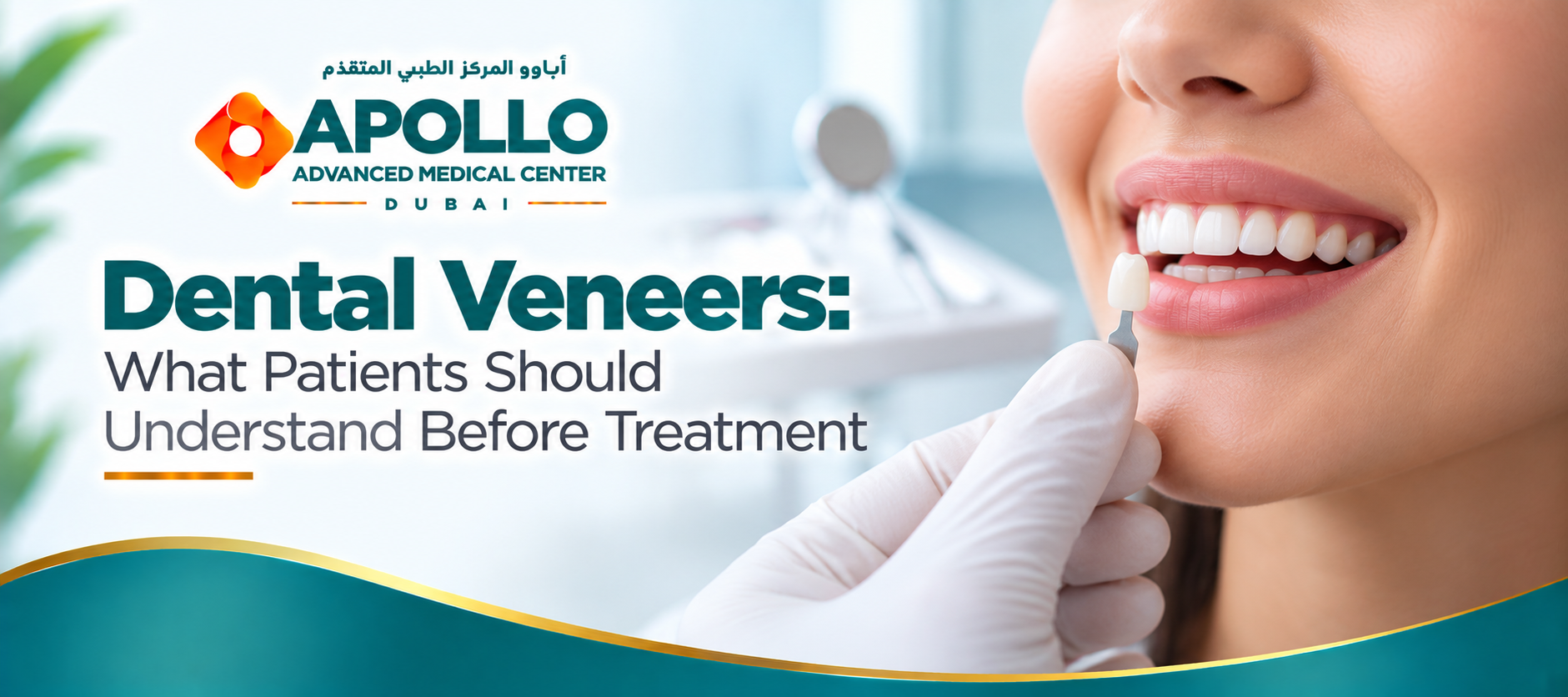
Dental Veneers: A Quick Guide
A brighter, more even smile can change the way you feel about your appearance, but choosing a cosmetic dental treatment deserves more thought than simply looking at before-and-after photographs.
Dental veneers are thin coverings placed over the visible surface of teeth to change their appearance. Depending on the material and technique, veneers may be used to address concerns such as discoloration, minor chips, changes in tooth shape or uneven-looking teeth. However, veneers are not suitable for every patient, and the decision should begin with a professional dental assessment rather than a cosmetic consultation alone.
This is particularly important because some veneer procedures involve removing a portion of natural enamel. Enamel does not grow back, so patients should understand what treatment involves, what alternatives exist and whether their teeth and gums are healthy enough for cosmetic treatment.
What Are Dental Veneers?
Dental veneers are thin coverings designed to bond to the front surface of teeth. They are generally used to alter the appearance of the smile rather than to provide the same level of structural coverage as a dental crown.
Veneers may be made from materials such as porcelain or tooth-coloured resin-based materials. Porcelain veneers are custom-made and designed to fit individual teeth, while composite approaches may be formed and bonded directly to the tooth.
The exact material and technique can affect appearance, durability, repairability and how much tooth preparation is required.
A veneer therefore should not be viewed as simply a decorative cover. It is a dental procedure that needs proper planning.
What Dental Veneers Can Be Used For?
Veneers are primarily associated with cosmetic dentistry. Cosmetic dentistry focuses on improving the appearance of the smile, and veneers are among the procedures used for this purpose.
Depending on the patient's situation, veneers may be considered for concerns such as:
Tooth discoloration
Some forms of discoloration may not respond as expected to conventional whitening. In selected cases, a veneer can alter the visible appearance of the tooth.
However, discoloration has many possible causes, so the cause should be assessed before deciding on cosmetic treatment.
Minor chips or irregularities
A small chip or uneven edge may sometimes be addressed with cosmetic treatment.
Veneers are not automatically the appropriate solution for every chipped tooth. Depending on the amount of damage, options may include bonding, enamel reshaping, a crown or another restoration.
Tooth shape
Some people are concerned about teeth that appear unusually short, narrow, uneven or irregularly shaped.
Veneers can alter the visible shape and proportions of selected teeth, but the dentist needs to consider the bite and surrounding teeth when planning the result.
Gaps or spacing
In certain cases, veneers may be considered to change the appearance of small spaces between teeth.
However, orthodontic treatment may be more appropriate when the underlying issue involves tooth position or bite rather than simply appearance.
This is why a proper assessment matters: the treatment that produces the desired visual change is not necessarily the treatment that best addresses the underlying dental issue.
Veneers Are Not the Same as Dental Crowns
Patients sometimes use the terms “crown” and “veneer” interchangeably, but they serve different purposes.
A veneer generally covers the front visible surface of a tooth.
A crown covers much more of the tooth and is typically used when a tooth needs greater structural restoration or protection.
For example, a significantly weakened or extensively damaged tooth may require a crown rather than a veneer.
A relatively healthy tooth with a primarily cosmetic concern may be considered for a veneer if the dentist determines that treatment is appropriate.
The distinction is important because cosmetic improvement and structural restoration are not the same thing.
Why a Professional Assessment Is Important Before Veneers?
One of the biggest mistakes patients can make is treating veneers as a purely cosmetic purchase.
Before any irreversible or tooth-altering cosmetic treatment, the condition of the teeth and gums should be evaluated.
A dental assessment may consider:
- Existing cavities
- Gum health
- Tooth structure
- Enamel condition
- Existing fillings or restorations
- Tooth sensitivity
- Bite and tooth contact
- Tooth alignment
- Signs of tooth wear
- Previous dental treatment
- Oral hygiene
- The patient's cosmetic expectations
If active dental disease is present, it may need to be addressed before cosmetic treatment is considered.
This is not simply a formality. Placing a cosmetic restoration over an unhealthy tooth can potentially conceal or complicate an existing problem.
Does Getting Veneers Require Removing Enamel?
This is one of the most important questions to ask before treatment.
The answer depends on the type of veneer and the technique being used.
Some veneers require a small amount of drilling or removal from the front of the tooth, while not all veneer approaches require the same preparation.
For conventional porcelain veneers, some enamel is commonly removed to create space for the restoration and establish an appropriate surface for bonding and porcelain veneers involve enamel removal and are therefore not considered reversible in the same way as some less invasive cosmetic procedures.
This means patients should not assume that veneers are a temporary treatment that can simply be removed later with the tooth returning exactly to its original condition.
Before proceeding, ask the dentist:
- How much enamel will need to be removed?
- Is tooth preparation necessary in my case?
- Is the treatment reversible?
- What alternatives could address my concern?
- What happens if I later want the veneers replaced?
These questions can help you make a more informed decision.
Who May Be Suitable for Dental Veneers?
There is no universal checklist that guarantees someone is a suitable candidate.
Suitability depends on the condition of the teeth, gums, bite, oral hygiene and the patient's expectations.
A dentist may consider veneers when a patient has:
- Healthy teeth and gums
- Cosmetic concerns affecting the visible teeth
- Sufficient tooth structure for the proposed treatment
- Realistic expectations about the result
- A willingness to maintain good oral hygiene
- An understanding that some veneer procedures are irreversible
The patient's bite is also important. Excessive forces on the teeth, including certain forms of teeth grinding or clenching, may affect whether veneers are appropriate and how they should be planned.
The final decision should therefore follow a dental examination rather than being based solely on photographs or social-media examples.
When Veneers May Not Be the First Choice
Veneers are not a universal solution for every smile concern.
A dentist may recommend addressing other issues first if a patient has:
Untreated tooth decay
A cosmetic covering should not be used as a substitute for treating active dental disease.
Gum disease
Healthy gums are an important foundation for cosmetic dental treatment. If gum inflammation or periodontal disease is present, appropriate treatment may need to come first.
Significant tooth damage
A heavily damaged or structurally weakened tooth may require a restoration such as a crown rather than a veneer.
Major alignment or bite problems
If teeth are significantly crowded, rotated or incorrectly positioned, orthodontic treatment may be more appropriate than using veneers to camouflage their position.
Insufficient enamel
Because certain veneer techniques rely on enamel for bonding and may require tooth preparation, the amount and condition of remaining enamel are important considerations.
Unrealistic expectations
A dentist should discuss what can realistically be achieved rather than promising that veneers will create an identical copy of a particular celebrity smile or photograph.
Veneers and Your Natural Smile: Why “Perfect” Isn't Always the Goal
One of the less obvious aspects of cosmetic dentistry is that a natural-looking smile does not necessarily mean every tooth is identical.
Teeth naturally vary in:
- Shape
- Size
- Colour
- Translucency
- Surface texture
- Position
A good cosmetic treatment plan therefore considers the overall relationship between the teeth, gums, lips and face rather than treating each tooth as an isolated object.
Patients should discuss their preferences clearly. For example, some people may want a subtle change while others are seeking a more noticeable transformation.
The dentist can then explain what is realistically achievable within the limits of healthy tooth structure and appropriate dental treatment.
What Should You Ask Before Getting Veneers?
A consultation should be a conversation, not simply a quick decision about colour and shape.
Consider asking:
“What problem are we actually treating?”
Understanding whether the concern is discoloration, shape, spacing, wear, damage or alignment helps determine whether veneers are appropriate.
“What alternatives do I have?”
Depending on the situation, alternatives may include:
- Professional whitening
- Dental bonding
- Enamel reshaping
- Orthodontic treatment
- Crowns
- Other restorative procedures
- No treatment
“How much natural tooth structure will be changed?”
This is particularly important because enamel removal is permanent.
“What are the possible complications?”
Patients should understand risks, maintenance requirements and what may happen if a veneer chips, loosens or needs replacement.
“How will my bite affect the treatment?”
The way your teeth come together can influence cosmetic restorations, particularly if there are strong biting forces or grinding habits.
“What will happen if I don't have veneers?”
Understanding the alternative can help put the proposed treatment into perspective and informed consent as a process in which patients receive information about their dental condition, proposed treatment, benefits and risks before treatment.
What Are the Possible Risks of Veneers?
Veneers can provide cosmetic improvement, but no dental procedure is completely risk-free.
Potential concerns can include:
- Tooth sensitivity
- Chipping or fracture
- Veneer loosening or debonding
- Changes around the gum margin
- Discoloration of surrounding or exposed tooth structure
- The need for repair or replacement
- Irreversible alteration of natural enamel in cases where preparation is required
The specific risks vary according to the material, technique, oral condition and individual patient factors..
This is another reason to discuss material choices and expected maintenance with a dental professional rather than selecting veneers based only on appearance.
How Long Do Dental Veneers Last?
There is no single lifespan that applies to every veneer.
Longevity depends on factors such as:
- Material
- Bonding technique
- Bite forces
- Oral hygiene
- Diet and habits
- Tooth grinding or clenching
- Quality of the underlying tooth
- Regular dental care
Veneers may eventually require repair or replacement. Patients should therefore consider them as a long-term dental commitment rather than a one-time cosmetic purchase.
Regular dental check-ups remain important even after cosmetic treatment.
How to Care for Veneers?
Veneers do not eliminate the need for everyday oral care.
Patients should continue to:
- Brush twice daily with fluoride toothpaste.
- Clean between the teeth every day.
- Attend regular dental examinations.
- Avoid using teeth to open packages or bite inappropriate hard objects.
- Tell their dentist if a veneer becomes loose, chipped or uncomfortable.
- Seek dental advice if persistent sensitivity or pain develops.
It is also important to remember that the tooth underneath and the surrounding gums remain biological tissues. A veneer does not make the tooth immune to decay or gum disease.
Be Careful With DIY and Unsupervised Veneers
Social media has made cosmetic dental trends increasingly visible, including products and services marketed outside conventional dental care.
The experts advises patients to seek treatment from licensed dentists for veneers and warns that unsupervised procedures can lead to complications, including damage to teeth and gums.
Some temporary or direct-to-consumer products may also create problems if they interfere with cleaning or trap food around the teeth.
A low price or quick procedure should not replace a proper examination and treatment plan.
Dental veneers can be an effective cosmetic option for carefully selected patients, but they should not be approached as a quick way to copy a particular smile.
Before treatment, patients should understand what veneers are, how much natural tooth structure may be affected, whether their teeth and gums are healthy, what alternatives exist, what maintenance may be required and what happens if the veneers need repair or replacement.
Most importantly, cosmetic goals should not come at the expense of oral health.
If you are considering veneers, start with a professional dental assessment. A well-planned consultation can help you understand your options and make a decision based on your teeth, oral health, expectations and long-term needs.
Considering dental veneers but not sure whether they are right for you?
A professional dental consultation can help you understand your teeth, available cosmetic options, preparation requirements and potential alternatives before making a decision.
Apollo Advanced Medical Center provides dental care in Al Rigga, Union, Dubai, including crowns and veneers.