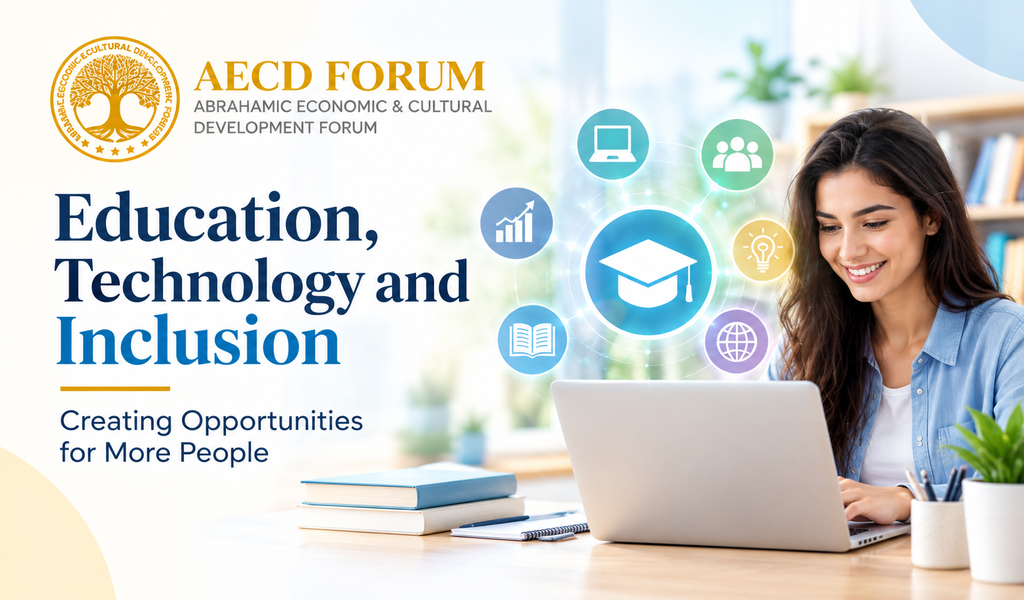
Education should open doors—not create new barriers.
Education has the power to open doors, build confidence, and help people participate more fully in society. As technology continues to influence how we learn, work, and communicate, it offers new ways to make education more accessible. Online courses, digital libraries, virtual classrooms, and learning applications can help people gain knowledge beyond the limits of traditional classrooms.
However, technology alone cannot guarantee equal opportunities. Some learners lack reliable internet access, suitable devices, accessible learning materials, or the digital skills needed to benefit from online education. Others face barriers related to language, disability, financial circumstances, or limited educational support.
The real opportunity lies in bringing education, technology, and inclusion together. When digital tools are designed around people's different needs, they can help more learners access knowledge, develop practical skills, and prepare for future opportunities.
For educators, policymakers, businesses, communities, and development organisations, the challenge is not simply to introduce more technology. It is to ensure that educational progress reaches people who might otherwise be left behind.
1. How Technology Is Changing Education?
Technology has expanded the ways people access information and develop new skills. Learning no longer needs to take place only in a physical classroom or follow a single timetable.
Digital platforms can offer recorded lessons, interactive exercises, online discussions, virtual training, and access to educational resources from different parts of the world. These options can be especially useful for working professionals, people living far from educational institutions, and learners who need more flexibility.
For example, a young person living in a small town may be able to study digital marketing through an online course. A professional may learn new software skills after working hours, while a teacher can use digital resources to explain difficult concepts through videos and interactive activities.
Technology can also support collaboration. Learners can work on shared projects, exchange ideas with people from different countries, and explore perspectives beyond their immediate communities.
Yet the value of these tools depends on how they are used. Technology should strengthen teaching, encourage participation, and support understanding—not simply replace meaningful interaction between teachers and learners.
2. What Does Inclusive Education Really Mean?
Inclusive education aims to ensure that people have fair opportunities to learn, participate, and develop their abilities, regardless of their circumstances or individual needs.
This means recognising that learners do not all start from the same position. Some may have access to high-speed internet, personal devices, and quiet study spaces. Others may share a phone with family members, depend on unstable connectivity, or balance education with employment and caregiving responsibilities.
Inclusion requires educational institutions to recognise these differences and consider how learning can become more accessible.
Removing barriers to learning
Practical approaches include:
-
Providing learning materials that work on mobile phones and use limited data.
-
Offering recorded lessons or downloadable resources for learners with unreliable internet access.
-
Making digital content accessible to people with disabilities.
-
Using clear language and providing suitable language support.
-
Offering flexible learning schedules where possible.
-
Helping learners develop basic digital skills before introducing more advanced tools.
Consider a training programme delivered entirely through live video sessions. Learners with unreliable internet connections may struggle to attend, even if they are motivated and capable. Providing recordings, written notes, and alternative ways to participate can make the programme more inclusive.
The principle is straightforward: educational opportunities should be designed around the realities of learners' lives.
3. Bridging the Digital Divide
The digital divide refers to differences in people's access to digital technology and their ability to use it effectively. It involves more than having an internet connection.
A learner may own a smartphone but lack a suitable device for completing assignments. Another may have access to a computer but not know how to evaluate online information, use educational platforms, or protect personal data.
Addressing these challenges requires a combination of infrastructure, affordability, training, and ongoing support.
Access must be practical and affordable
Governments, educational institutions, community organisations, and private-sector partners can work together to improve access to devices, connectivity, and learning resources.
Community learning centres and libraries can provide shared digital facilities. Schools and training providers can offer introductory technology sessions. Organisations can also consider low-bandwidth materials and offline learning options when designing programmes.
However, access initiatives should reflect local needs. A solution that works well in a large city may not be suitable for a rural community with limited connectivity or electricity.
Listening to learners and local educators is essential for identifying which barriers matter most and which interventions are practical.
4. Digital Skills Are Essential for Lifelong Learning
Access to technology is only the first step. People also need the skills and confidence to use it productively.
Digital literacy includes understanding how to navigate online platforms, search for information, assess the credibility of sources, communicate responsibly, and protect personal information. As artificial intelligence becomes more widely used, learners also need to understand that automated tools can make mistakes and may produce incomplete or misleading information.
These skills matter in education, employment, entrepreneurship, and everyday life.
Connecting learning with real opportunities
A student learning spreadsheets may use the skill in business administration. Someone completing an online course in graphic design may build a portfolio for freelance work. A small business owner may learn to manage digital payments, communicate with customers, or promote products online.
These examples show why digital education should combine knowledge with practical application.
Training programmes are more useful when learners can practise new skills, receive feedback, and understand how those skills relate to their goals. Certificates may demonstrate participation or achievement, but learners also benefit from being able to show what they can actually do.
Digital skills development should therefore be part of a wider approach that includes communication, problem-solving, critical thinking, and professional development.
5. The Role of Teachers in Technology-Enabled Education
Technology can provide useful resources, but teachers remain central to effective learning. They help students understand difficult concepts, recognise progress, ask better questions, and connect knowledge with real situations.
Digital tools can support teachers by providing alternative explanations, interactive exercises, and opportunities to review learning progress. They can also help teachers adapt activities for learners with different levels of understanding.
However, introducing technology without adequate preparation can create extra work and confusion.
Supporting educators through training
Teachers need time and practical training to understand which tools are appropriate for their subjects and students. They should also be able to identify when a digital activity adds value and when a direct conversation, group discussion, or hands-on exercise would work better.
For example, an online quiz may help a teacher identify which concepts need further explanation. The teacher can then use classroom discussion to address misunderstandings rather than relying on the quiz alone.
Educational institutions should also consider privacy, accessibility, academic integrity, and the quality of digital resources.
Successful technology-enabled education depends on the relationship between capable educators, appropriate tools, and supportive learning environments.
6. Artificial Intelligence: Opportunities and Responsibilities
Artificial intelligence is creating new possibilities for learning. Depending on the tool and how it is used, it may help explain concepts, generate practice questions, support language learning, organise study materials, or provide feedback on a draft.
These uses can offer additional support, particularly when learners need to review material at their own pace. AI-assisted tools may also help educators prepare resources or adapt explanations for different audiences.
Nevertheless, these benefits should not be confused with guaranteed learning outcomes.
Keeping learning thoughtful and responsible
AI systems can provide incorrect information, reflect bias, or fail to understand a learner's circumstances. They may also raise concerns about privacy, data protection, authorship, and overreliance on automated answers.
Learners should be encouraged to verify important information, consult reliable sources, and use AI to support their thinking rather than replace it.
Educators and institutions should establish clear guidelines about acceptable use, assessment, personal information, and human review. Learners should understand when AI assistance is permitted and when work must reflect their own independent effort.
Inclusion matters here too. AI-supported education should not become an advantage available only to learners who can afford advanced tools or have strong digital skills.
The goal should be to use emerging technology responsibly while protecting the quality, fairness, and human value of education.
7. Women, Young People, and Underserved Communities
Inclusive digital education can help people who face barriers to traditional learning. This includes women with caregiving responsibilities, young people seeking employment, people with disabilities, rural communities, and adults who want to return to education later in life.
Flexible online learning may help some people balance education with other responsibilities. Remote training can also reduce travel requirements, although access to devices, connectivity, a safe study environment, and suitable support remains important.
Creating opportunities requires more than access
A course is not genuinely inclusive simply because it is available online. Learners may also need mentoring, financial assistance, language support, accessible materials, or guidance on applying their new skills.
For example, a digital skills programme for women seeking employment could combine technical training with career guidance, portfolio development, interview preparation, and connections to employers. The exact approach should reflect participants' goals and local employment conditions.
Similarly, youth programmes can connect digital learning with entrepreneurship, leadership, and community projects. Young people can practise what they learn by developing solutions to local problems and working with mentors.
Inclusive education becomes more meaningful when it supports learners from their first point of access through to participation, completion, and practical application.
8. Partnerships Can Expand Educational Opportunities
No single organisation can solve every challenge affecting education and digital inclusion. Cooperation between educational institutions, governments, businesses, community organisations, and development forums can help combine different strengths and resources.
Schools and universities understand educational needs. Technology providers can contribute tools and technical expertise. Employers can identify relevant workplace skills. Community organisations can help reach learners who may be overlooked by conventional programmes.
Partnerships are most effective when their goals are clear and their contributions respond to actual needs.
For example, a community-based digital learning initiative might bring together a training provider, local employers, and a community organisation. The training provider delivers lessons, employers explain which skills are relevant to entry-level roles, and the community organisation helps participants access the programme and receive ongoing support.
Such cooperation should include ways to evaluate progress. Useful measures may include participation, course completion, demonstrated skills, learner feedback, accessibility, and the extent to which participants can apply what they have learned.
The purpose is not simply to count how many people have been given access to technology. It is to understand whether learning opportunities are becoming more useful and equitable.
9. Building a More Inclusive Future Through Education
A strong approach to educational inclusion combines technology with human support and long-term planning.
Educational institutions need to review who is participating, who is struggling, and who may be excluded. Technology providers should consider accessibility and affordability. Policymakers can support digital infrastructure and relevant training, while employers can contribute to lifelong learning and professional development.
Communities also have an important role. Peer learning groups, mentoring, local workshops, and shared learning spaces can help people build confidence and support one another.
Progress should be evaluated carefully. A new platform may increase access but still fail to support learners who need individual guidance. An online course may attract many participants but offer limited practical value if learners cannot apply the skills afterwards.
By considering access, learning quality, participation, and outcomes together, organisations can make better decisions about where to invest time and resources.
AECD Forum Perspective
The Abrahamic Economic & Cultural Development (AECD) Forum focuses on areas including education, skill development, youth empowerment, women's empowerment, professional development, research, entrepreneurship, international cooperation, and sustainable development. Education, technology, and inclusion connect these priorities by highlighting the importance of ensuring that people can participate in learning and apply their knowledge meaningfully.
Digital learning can support professional development and lifelong education, while inclusive training can help more people prepare for employment, entrepreneurship, and community leadership. Research and evaluation can help identify barriers and improve the design of educational initiatives.
International cooperation is also important. Communities and institutions can share experiences, learn from different approaches, and develop solutions that respond to local circumstances rather than assuming that one model will work everywhere.
For AECD Forum and organisations with similar interests, the broader goal is to encourage learning opportunities that are accessible, practical, and responsive to human needs. Technology can contribute to this goal, but lasting progress also requires educators, institutions, communities, and decision-makers to work together.
Practical Action Points
Here are seven steps that educational institutions, organisations, and individuals can consider:
-
Identify barriers to access. Ask learners about device availability, internet costs, accessibility, language, and time constraints.
-
Choose suitable digital tools. Prioritise tools that address a clear learning need and are practical for the intended audience.
-
Strengthen digital literacy. Include training on online research, source evaluation, privacy, cybersecurity, and responsible AI use.
-
Support teachers and trainers. Provide practical training, appropriate resources, and time to develop effective learning activities.
-
Make materials more accessible. Use clear language, mobile-friendly formats, captions, and alternative formats where appropriate.
-
Connect learning with real-life goals. Include projects, practical exercises, mentoring, and opportunities to demonstrate skills.
-
Review outcomes and improve. Gather learner feedback and assess whether programmes are helping participants gain and apply knowledge.
These steps can help turn the promise of digital education into more practical and inclusive learning experiences.
Education, technology, and inclusion are closely connected. Digital tools can help people access knowledge, develop new skills, and participate in opportunities that may once have seemed out of reach. But these benefits are not automatic.
Meaningful progress requires affordable access, digital literacy, capable educators, accessible learning materials, responsible use of AI, and support for people facing additional barriers.
It also requires a broader understanding of success. The purpose of educational technology is not simply to put lessons online or introduce the newest tools. It is to help people learn, develop confidence, apply their knowledge, and participate more fully in society.
By placing inclusion at the centre of educational planning, institutions and communities can work towards a future in which technology serves learners from different backgrounds and circumstances.
Education creates opportunity when people can access it, participate in it, and use what they learn to shape their future.
#Education #DigitalLearning #InclusiveEducation #EducationTechnology #DigitalInclusion #DigitalLiteracy #LifelongLearning #SkillDevelopment #YouthEmpowerment #WomensEmpowerment #FutureOfEducation #AIinEducation #SustainableDevelopment #InternationalCooperation #AECDForum