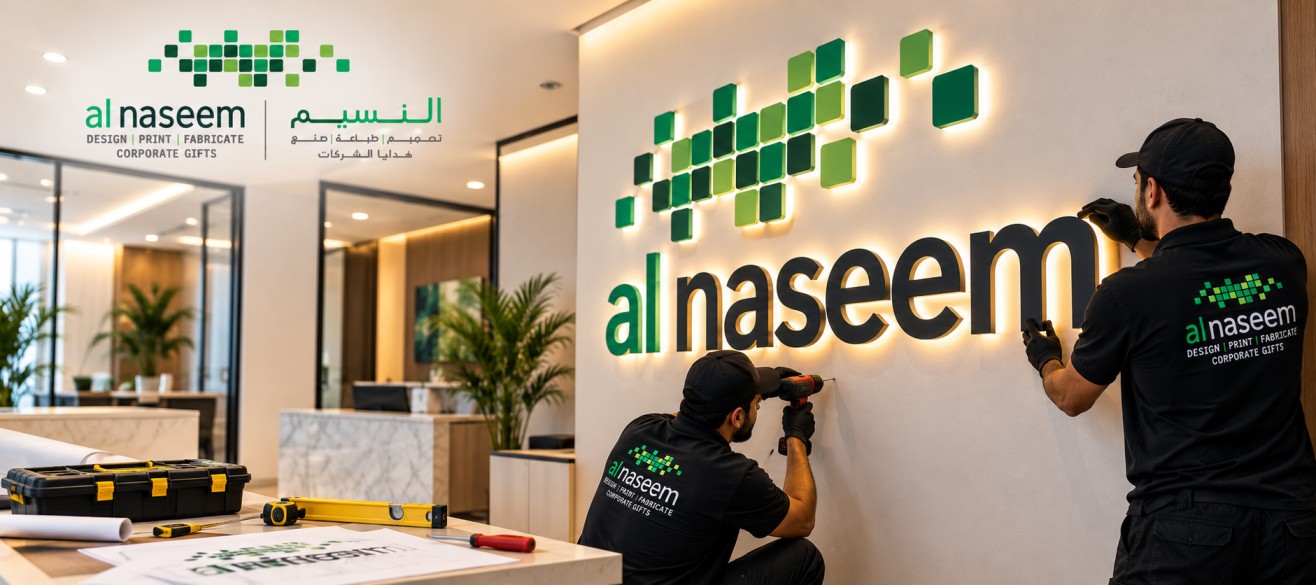
Understanding the Process Behind High-Quality Signage
A professional sign is often the first visual interaction a customer has with a business. Whether it is an exterior building sign, reception sign, retail signage, wayfinding system, or branded office display, a well-made sign does more than show a name—it communicates identity, professionalism, location, and attention to detail.
Creating a high-quality sign involves much more than printing a logo or selecting an attractive material. From the first design concept to fabrication, finishing, quality control, and installation, every stage needs careful planning.
For businesses investing in signage, understanding this process can help them make better decisions and recognise the difference between a sign that simply looks good and one that is built to perform.
1. Everything Starts With Understanding the Requirement
A professional signage project begins with a conversation.
Before creating a design, the signage team needs to understand the business, its brand identity, the purpose of the sign, and where it will be installed.
Important questions may include:
- Where will the sign be installed?
- Is it indoor or outdoor signage?
- What size is required?
- How far away should it be visible?
- Does it need illumination?
- What materials are suitable?
- What is the surrounding architecture like?
- Are there specific brand guidelines?
- What type of surface will the sign be mounted on?
This initial stage helps ensure that the final design is not only attractive but also practical.
2. Site Assessment Matters
A sign designed without understanding its installation environment can create problems later.
A professional signage provider may assess factors such as:
Available space: The physical dimensions of the installation area determine how the sign can be positioned.
Viewing distance: Letter size and design need to work for the distance from which customers will see the sign.
Mounting surface: Glass, concrete, metal, cladding, and other surfaces may require different fixing methods.
Environmental exposure: Outdoor signage may need to account for sunlight, heat, dust, humidity, wind, and rain.
Access: Installation and future maintenance should also be considered.
A good site assessment reduces surprises during fabrication and installation.
3. Turning the Brand Into a Signage Design
The next step is translating the business identity into a physical design.
This includes decisions about:
- Logo placement
- Typography
- Colours
- Letter dimensions
- Materials
- Depth
- Illumination
- Finishes
- Overall proportions
A professional sign should remain recognisable as part of the company's wider branding.
For example, a business with a sophisticated visual identity may benefit from carefully selected metallic finishes, dimensional lettering, or subtle illumination rather than an overly complicated design.
The goal is not to add as many elements as possible.
Good signage communicates clearly.
4. Choosing the Right Material
Material selection can significantly affect the appearance, durability, weight, and maintenance requirements of a sign.
Depending on the application, signage may incorporate materials such as:
- Acrylic
- Aluminium
- Aluminium Composite Panel (ACP)
- Stainless steel
- PVC
- Wood or wood-look finishes
- Vinyl
- LED components
The right choice depends on the sign's location, size, design, environmental exposure, budget, and desired finish.
For example, an indoor reception logo may have very different material requirements from a large illuminated outdoor storefront sign.
This is why material selection should be based on the application, not simply on what looks attractive in a sample.
5. From Digital Design to Fabrication
Once the design and specifications are approved, the project moves into fabrication.
Depending on the sign, production may involve processes such as:
- CNC cutting
- Laser cutting
- Routing
- Bending
- Printing
- Vinyl application
- 3D lettering
- Welding
- Assembly
- Surface finishing
- LED installation
Each component needs to be produced according to the approved dimensions and specifications.
Precision at this stage matters because even small inconsistencies can become noticeable when individual letters, panels, or logos are assembled into one finished sign.
6. Finishing Gives the Sign Its Final Appearance
Fabrication creates the structure, but finishing helps determine how the final product looks.
Depending on the material, finishing may include:
- Powder coating
- Painting
- Polishing
- Brushing
- Lamination
- Vinyl application
- Protective coatings
- Special textures or effects
The finish should complement the brand while also being appropriate for the intended environment.
For outdoor applications, practical considerations such as surface durability and maintenance should also be taken into account.
7. Illumination Requires Careful Planning
For illuminated signage, lighting is not simply an extra feature added at the end.
The lighting method needs to be considered during the design and fabrication stages.
Common approaches include:
- Front illumination
- Back or halo illumination
- Edge illumination
- Internal LED illumination
The choice can influence the sign's material, depth, construction, wiring, access requirements, and overall appearance.
A well-designed illuminated sign should provide clear visibility without making the branding difficult to read.
Electrical components should also be selected and installed appropriately for the application.
8. Quality Control Before Installation
Before a sign leaves the workshop, it should be checked against the approved specifications.
Quality checks can include:
- Dimensions
- Logo accuracy
- Colour and finish
- Letter alignment
- Surface quality
- Structural assembly
- Lighting performance
- Electrical connections
- Hardware and fixing points
This stage is important because correcting a problem in the workshop is generally easier than discovering it after installation.
9. Professional Installation
The installation stage brings the project together.
Depending on the sign, installation may involve:
- Positioning and alignment
- Mounting brackets
- Mechanical fixings
- Structural supports
- Electrical connections
- Levelling
- Final adjustments
- Testing
Installation should take into account the building surface and the weight and structure of the sign.
For larger or more complex signage, proper installation planning is particularly important.
A beautifully fabricated sign can still look wrong if it is poorly positioned or incorrectly aligned.
10. Final Inspection
Once the sign has been installed, the project should receive a final inspection.
The team can check:
- Overall alignment
- Visibility
- Lighting
- Finish
- Fixings
- Brand presentation
- Site cleanliness
- Final appearance from different viewing angles
This final step helps ensure that the finished sign reflects the approved design and functions as intended.
Why the Process Matters?
Professional signage is the result of several connected decisions.
A weakness at one stage can affect the final product.
For example:
Poor design → difficult fabrication
Wrong material → unnecessary maintenance
Incorrect measurements → installation problems
Poor lighting planning → inconsistent illumination
Weak installation → alignment or structural issues
This is why experienced signage companies treat a project as a complete process rather than simply a printing or fabrication job.
What Makes a Sign Truly Professional?
A professional sign should bring several elements together:
Clear Communication
Customers should understand the business or message quickly.
Strong Brand Consistency
The sign should look like a natural extension of the company's identity.
Appropriate Materials
Materials should suit the location, design, and expected use.
Quality Fabrication
Components should be accurately produced and properly finished.
Proper Installation
The completed sign should be securely and accurately positioned.
Long-Term Practicality
Maintenance and environmental conditions should be considered from the beginning.
From the first design concept to the final installation, professional signage involves planning, technical knowledge, craftsmanship, and attention to detail.
The finished sign may only take a few seconds for a customer to notice, but creating it properly can involve many stages behind the scenes.
For businesses looking for custom signage in Dubai, choosing a signage provider that can manage the process from design and material selection through fabrication and installation can help create a more consistent result.
At Al Naseem, signage is approached as a complete journey—from design and material selection to fabrication, finishing, and installation—with the goal of creating signage that represents the business professionally and works effectively in its intended environment.
A professional sign is not simply made. It is designed, engineered, fabricated, finished, and installed with purpose.