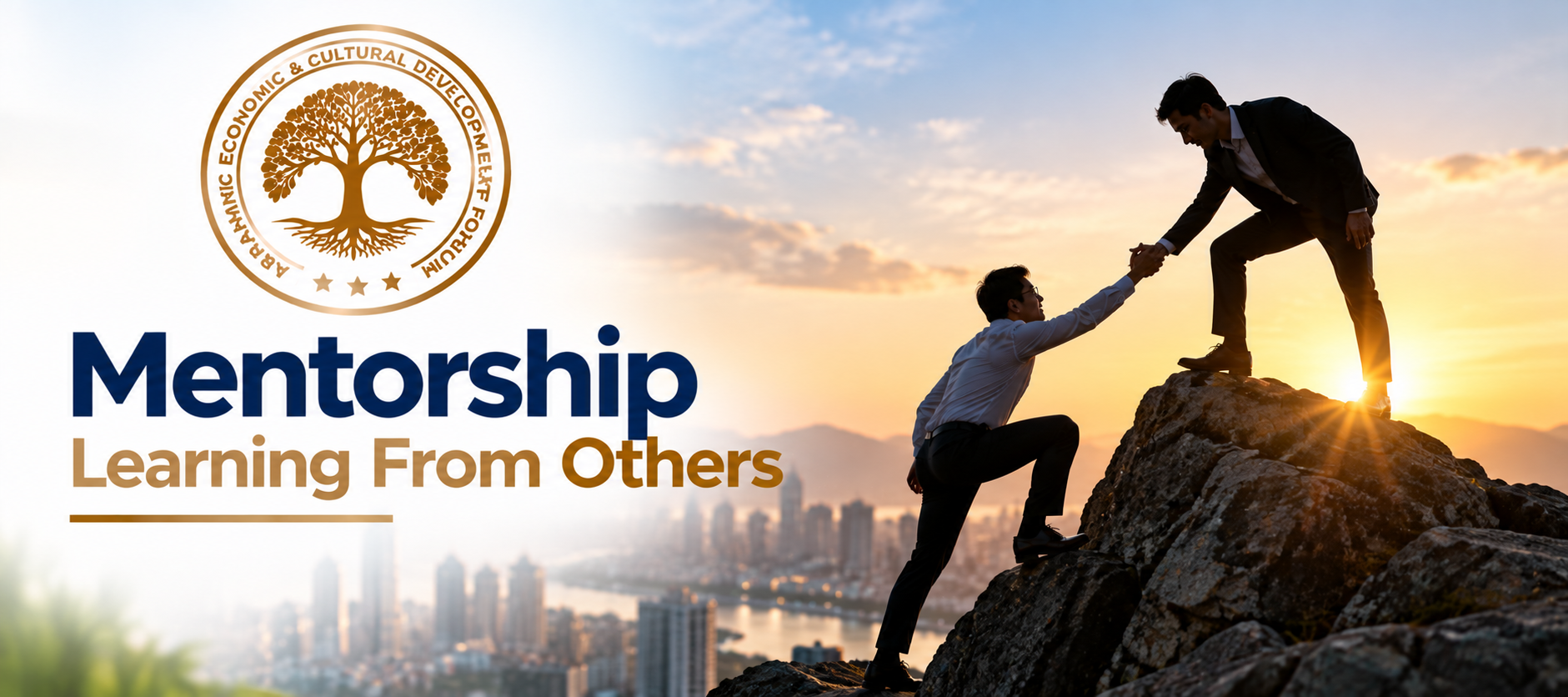
What Is Mentorship?
Mentorship is a learning relationship in which a more experienced person shares knowledge, experience, guidance, and feedback with someone who is developing personally or professionally.
A mentor does not necessarily have to be older. What matters is relevant experience, willingness to share knowledge, and the ability to provide thoughtful guidance.
For example:
- A university student may learn from a professional working in their chosen field.
- A young entrepreneur may seek guidance from an experienced business owner.
- A new manager may learn leadership practices from an experienced leader.
- A professional changing careers may learn from someone who has already made a similar transition.
The relationship can be formal or informal, short-term or long-term.
Why Learning From Others Matters?
Experience Can Provide Context
Books and courses can explain concepts, but experience often shows how those concepts work in real situations.
A mentor can explain not only what to do, but also why a particular approach worked—or failed—in a specific situation.
For example, an aspiring entrepreneur may understand business planning academically but still struggle with customer communication, managing uncertainty, or handling an unsuccessful idea. A mentor who has experienced these situations can share practical lessons that are difficult to learn from theory alone.
Mentors Can Offer Honest Feedback
Self-assessment is not always easy.
A mentor can provide another perspective on a person's communication style, decision-making, professional goals, or approach to challenges.
Constructive feedback can help someone recognize strengths while also identifying areas that need improvement.
The most useful mentorship relationships allow questions, disagreement, and honest discussion rather than simply providing praise.
Mentorship and Professional Development
Mentorship can support professional development at different stages of a career.
For Students
Students can use mentorship to understand what different careers actually involve.
A mentor can help them:
- Explore career options
- Understand workplace expectations
- Develop professional communication
- Build practical skills
- Prepare for interviews
- Learn how to approach professional challenges
This can help connect classroom learning with the realities of employment.
For Young Professionals
Early-career professionals often face questions that are not covered in formal education.
How should you respond to difficult feedback?
How do you communicate with senior colleagues?
When should you take a new opportunity?
How can you improve your professional skills?
A mentor can share experiences that help a young professional think through these questions more carefully.
For Entrepreneurs
Entrepreneurship involves uncertainty and continuous learning.
A mentor with relevant experience can help an entrepreneur examine an idea, understand potential challenges, consider different approaches, and learn from previous business experiences.
However, mentorship should not replace research, customer feedback, financial analysis, or professional advice where specialist expertise is required.
Mentorship Is a Two-Way Relationship
Mentorship is sometimes viewed as a one-directional relationship: one person teaches and another person learns.
In reality, effective mentorship can benefit both sides.
A mentor may gain new perspectives by working with someone from a different generation, profession, culture, or educational background.
Younger professionals may bring familiarity with emerging technologies, changing consumer expectations, new communication habits, or different approaches to work.
This makes mentorship particularly valuable in a changing professional environment.
Learning Across Cultures and Communities
Mentorship can also encourage cross-cultural understanding.
International mentorship relationships can expose people to different professional practices, social perspectives, business environments, and ways of approaching problems.
For an increasingly connected world, learning how people from different backgrounds think and work can support better communication and collaboration.
This is especially relevant to international cooperation, entrepreneurship, education, and community development.
Mentorship and Leadership Development
Leadership is developed through more than formal positions.
A person can begin developing leadership skills by learning how to:
- Listen carefully
- Communicate clearly
- Accept responsibility
- Handle disagreement
- Make thoughtful decisions
- Support others
- Learn from mistakes
Mentors can help emerging leaders reflect on these areas through real examples and conversations.
A strong mentor does not simply provide answers. They can encourage the learner to ask better questions and develop independent judgment.
How to Build a Meaningful Mentorship Relationship
Start With a Clear Purpose
Before approaching a mentor, think about what you want to learn.
Instead of saying:
"I want you to be my mentor."
Consider a more specific request:
"I am interested in developing my leadership skills and would value your perspective on managing a team for the first time."
A clear purpose makes the relationship easier to begin.
Choose Relevance Over Status
The most suitable mentor is not necessarily the most famous or senior person.
Look for someone whose experience is relevant to your goals and whose approach to learning and professional development you respect.
Ask Good Questions
Good mentorship depends heavily on good questions.
Instead of asking only, "What should I do?", try questions such as:
- "What would you consider before making this decision?"
- "What mistakes did you make when you were at this stage?"
- "What skill helped you most in your career?"
- "What would you approach differently today?"
- "What should I learn next?"
These questions can lead to deeper conversations.
Be Prepared to Act on Feedback
Mentorship becomes more valuable when learning is followed by action.
If a mentor recommends improving communication, for example, the learner can practice active listening, improve presentation skills, or request feedback after meetings.
Then the next conversation can focus on what happened and what was learned.
This creates a cycle of advice, action, reflection, and improvement.
Mentorship Beyond Career Advancement
Mentorship is not only about getting a better job or progressing professionally.
It can also support personal development.
A good mentor may encourage someone to think about:
- Confidence
- Responsibility
- Ethics
- Resilience
- Communication
- Time management
- Decision-making
- Community contribution
These qualities can influence how people participate in workplaces, communities, and society.
Creating More Accessible Mentorship Opportunities
Mentorship opportunities should not be limited to people who already have strong professional networks.
Educational institutions, professional associations, businesses, community organizations, and development initiatives can help create structured opportunities for people who may otherwise struggle to find mentors.
Special attention can also be given to young people and women seeking access to professional networks, leadership development, entrepreneurship, and skill-building opportunities.
Digital communication has also made it possible for mentorship relationships to develop across cities and countries, making geographical distance less of a barrier.
AECD Forum Perspective
For the Abrahamic Economic & Cultural Development (AECD) Forum, mentorship naturally connects with education, skill development, leadership, youth development, women's empowerment, entrepreneurship, and professional growth.
Education provides an important foundation, but learning can continue through relationships, experience, dialogue, and practical engagement.
Mentorship can create opportunities for people from different generations, professions, cultures, and communities to exchange knowledge. Such relationships can encourage young people to develop practical skills while giving experienced professionals an opportunity to share knowledge and contribute to the development of others.
From an international perspective, mentorship can also support cross-cultural learning and professional connections. When people learn from one another across communities and borders, they can gain broader perspectives on leadership, education, entrepreneurship, and economic development.
For organizations and communities, the goal can be to create environments where knowledge is shared rather than kept within individual networks.
Practical Action Points
1. Identify One Skill You Want to Develop
Choose one specific area—such as communication, leadership, entrepreneurship, or professional writing.
2. Find Someone With Relevant Experience
Look beyond job titles. Consider people whose experience genuinely matches your learning goals.
3. Prepare Before Every Conversation
Write down two or three questions or challenges you want to discuss.
4. Keep a Learning Journal
Record useful advice, lessons, decisions, and actions after mentorship conversations.
5. Turn Advice Into Practice
Do not simply collect advice. Apply what is relevant and observe the results.
6. Build a Two-Way Relationship
Share your own observations, ideas, and experiences. Mentorship can be a conversation rather than a lecture.
7. Become a Mentor Yourself
As your experience grows, look for opportunities to support someone who is at an earlier stage of their journey.
No one builds a meaningful career, organization, or community entirely alone.
We learn from teachers, colleagues, leaders, entrepreneurs, friends, and people who have taken different paths before us. Mentorship creates a more intentional way to learn from that experience.
For students and young professionals, it can provide practical guidance. For experienced professionals, it can create an opportunity to share knowledge and contribute to the development of others. For communities, it can strengthen connections between generations and broaden access to learning.
The most valuable mentorship is not about finding someone who has all the answers. It is about finding people who can help us ask better questions, see situations from new perspectives, and continue learning.
#Mentorship #ProfessionalDevelopment #Leadership #SkillDevelopment #YouthDevelopment #CareerGrowth #Learning #Entrepreneurship #Education #FutureLeaders #WomenInLeadership #YouthEmpowerment #InternationalCooperation #AECDForum