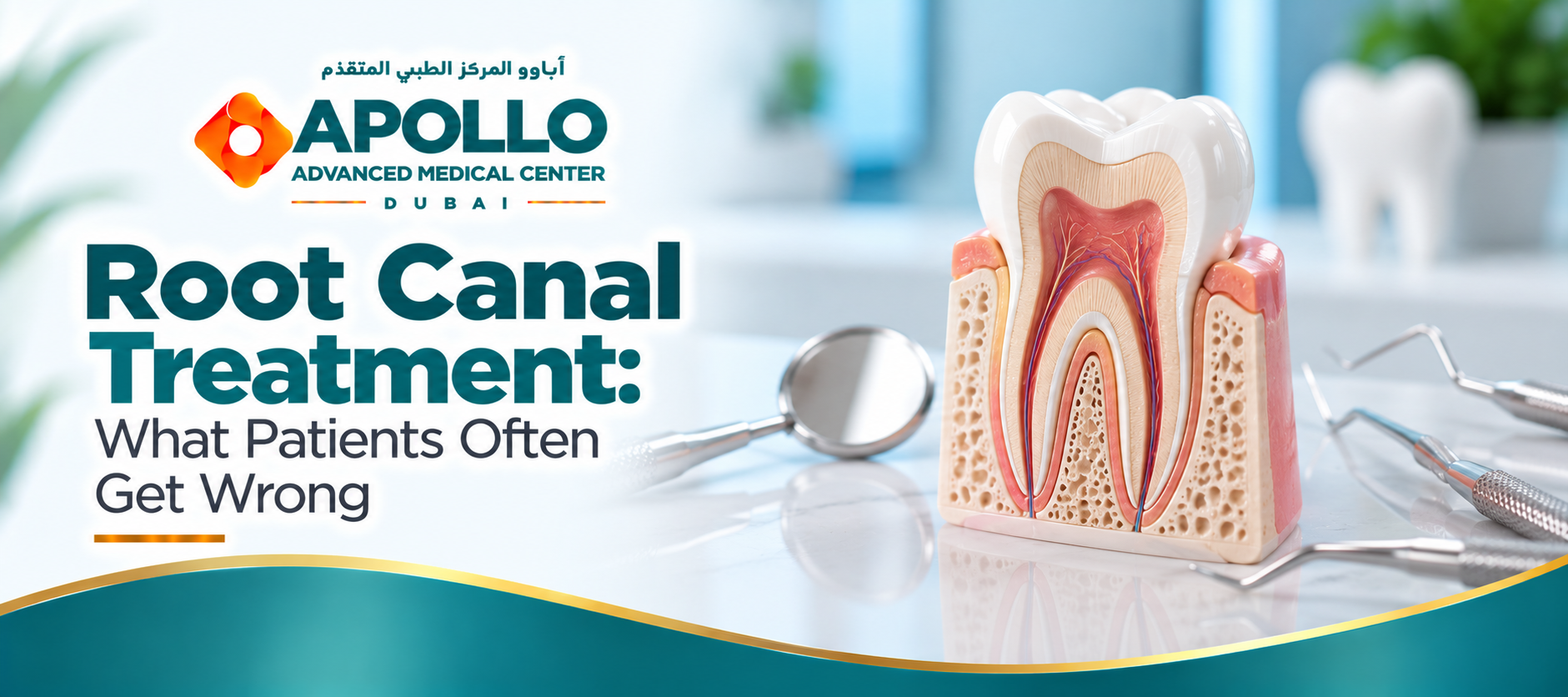
Root Canal: Know the Facts
A root canal is one of those dental treatments that many people have heard about long before they actually understand it. For some, the words immediately bring to mind severe pain, a complicated procedure, or the idea that the tooth is already “dead.” Others assume that if a tooth stops hurting, the problem has disappeared.
These assumptions can make people delay dental care when treatment may be needed.
In reality, root canal treatment is designed to treat problems inside a tooth—specifically inflammation or infection of the dental pulp—and to help preserve the natural tooth when it can still be restored. During treatment, the diseased pulp is removed, the root canals are cleaned and disinfected, and the space is filled and sealed.
Understanding what a root canal actually does can make the process much less mysterious and help patients have more productive conversations with their dentist.
The following guide looks at some of the most common misunderstandings about root canal treatment, what symptoms may indicate a problem, and why preserving a natural tooth can matter.
What Does a Root Canal Actually Treat?
To understand root canal treatment, it helps to look briefly at the inside of a tooth.
Beneath the enamel and dentin is a soft tissue called the pulp. It contains nerves, blood vessels and connective tissue. The pulp plays an important role while the tooth is developing, but a fully developed tooth can continue to function after the pulp has been removed because it receives support from the surrounding tissues.
A root canal treatment is therefore not simply a treatment for a painful tooth. It treats inflammation or infection affecting the pulp and the root canal system inside the tooth.
This problem can develop for several reasons, including:
- Deep tooth decay
- A crack or fracture
- A chipped or damaged tooth
- Repeated dental procedures on the same tooth
- Dental trauma
- Problems involving an existing restoration
- Infection that has reached the pulp
If inflamed or infected pulp is left untreated, infection can extend beyond the tooth and may contribute to an abscess.
A root canal is about the inside of the tooth
One common misunderstanding is that a root canal “removes the tooth nerve” and therefore has little to do with preserving the tooth itself.
The opposite is closer to the purpose of the treatment.
The diseased or infected pulp is removed so that the remaining tooth structure can be cleaned, sealed and restored. The goal is to retain the tooth rather than automatically remove it.
Common Root Canal Misconceptions Patients Should Know
Misconception 1: “If I need a root canal, the tooth must be removed.”
Not necessarily.
Root canal treatment is specifically intended to save a natural tooth that has inflamed or infected pulp when the tooth remains suitable for restoration. After the canals are cleaned and sealed, the tooth can be restored so it can continue to function.
However, not every tooth can be saved. A severely fractured tooth, inadequate supporting bone, or a tooth that cannot be predictably restored may require extraction. The decision depends on the individual tooth and its surrounding structures.
That is why an examination is important before assuming that extraction is the only option.
Misconception 2: “A root canal is only needed when the tooth hurts badly.”
Pain is an important warning sign, but it is not the only one.
Possible symptoms associated with a tooth that may require endodontic assessment include:
- Persistent or severe toothache
- Pain when biting or chewing
- Sensitivity to hot or cold that lingers after the stimulus is removed
- Swelling or tenderness around the tooth
- A recurring pimple or small swelling on the gum
- A cracked or chipped tooth
- Deep decay
- Changes in the appearance of the tooth
Importantly, these symptoms do not automatically mean that a root canal is required. Different dental conditions can produce similar symptoms, so diagnosis requires an appropriate dental examination.
Misconception 3: “If the pain disappears, the tooth is healed.”
This is a particularly important misunderstanding.
Dental pain can change or disappear for different reasons. A reduction in pain does not necessarily prove that the underlying dental problem has resolved.
If the pulp becomes severely damaged or infected, the situation can sometimes progress even when symptoms change. Untreated infection may eventually contribute to an abscess.
For that reason, unexplained dental pain, swelling or persistent sensitivity should not simply be ignored because it temporarily improves.
Misconception 4: “Root canal treatment itself causes severe pain.”
Modern root canal treatment is performed using local anaesthesia, and the patients are generally awake during treatment but should not feel pain from the procedure itself because of the anaesthetic. Some soreness or sensitivity can occur afterward while the area recovers.
The experience can vary depending on the condition of the tooth, the extent of infection and the complexity of treatment.
The important point is that the old image of a root canal as automatically being an exceptionally painful procedure does not accurately describe modern dental treatment.
Misconception 5: “Once the root canal is done, the tooth needs no further attention.”
Root canal treatment is an important part of saving the tooth, but the tooth still needs a suitable final restoration and normal oral care.
Depending on the condition and location of the tooth, the dentist may recommend a filling or crown to protect and restore it. An unrestored treated tooth may be more susceptible to fracture, which is why completing the recommended restoration matters.
Good brushing, flossing, regular dental examinations and prompt attention to new problems remain important after treatment.
Why Do Teeth Need Root Canal Treatment?
A root canal is generally considered when the pulp has become inflamed or infected.
Deep tooth decay
Untreated decay can progress deeper into the tooth. When bacteria reach the pulp, inflammation or infection may develop.
Cracks and fractures
A crack can provide a pathway for bacteria to reach the inner part of the tooth. Not every cracked tooth needs root canal treatment, but significant pulp involvement may make endodontic treatment necessary.
Dental trauma
An injury can damage the pulp even when the tooth does not appear dramatically broken from the outside.
Repeated dental procedures
A tooth that has undergone several procedures may experience changes or damage affecting the pulp. Previous dental work is therefore one of the factors dentists consider when evaluating a painful or damaged tooth.
What Happens During Root Canal Treatment?
Although the exact process varies depending on the tooth and clinical situation, the basic principle is straightforward.
1. Examination and assessment
The dentist evaluates the tooth, symptoms and surrounding tissues. Dental imaging may also be used when appropriate to understand the tooth and surrounding area.
2. Local anaesthesia
Local anaesthesia is generally used so the patient is comfortable during treatment.
3. Accessing the inside of the tooth
The dentist creates an opening that allows access to the pulp and root canal system.
4. Removing infected or inflamed pulp
The affected pulp tissue is removed.
5. Cleaning and disinfecting
The root canals are carefully cleaned and shaped to reduce infection and prepare them for sealing.
6. Sealing the canals
The cleaned space is filled and sealed, commonly using a material called gutta-percha.
7. Restoring the tooth
A final restoration, such as a filling or crown, may be needed depending on how much tooth structure remains and which tooth was treated.
Treatment may take more than one appointment depending on the condition and complexity of the tooth.
Why Preserving the Natural Tooth Matters?
When a tooth can be predictably saved, preserving it has several practical advantages.
A natural tooth contributes to normal chewing and biting and maintains the existing arrangement of the teeth. Removing a tooth creates a space that may eventually need replacement with an implant, bridge or denture, depending on the circumstances.
This does not mean extraction is always wrong. Sometimes a tooth genuinely cannot be saved. The important point is to understand why extraction is being recommended and whether restorative or endodontic options are appropriate in that particular case.
Common Mistakes Patients Make
Waiting until the pain becomes severe
Dental problems do not always become easier to treat when they are ignored. Persistent pain, swelling or sensitivity deserves professional assessment.
Assuming antibiotics replace root canal treatment
Antibiotics and dental treatment are not interchangeable. Root canal treatment addresses the infected or inflamed tissue inside the tooth by cleaning and sealing the root canal system. Whether medication is appropriate depends on the clinical situation and should be determined by a dental professional.
Delaying the final restoration
Completing the recommended restoration is part of protecting the treated tooth.
Assuming every toothache means a root canal
Tooth pain can have many causes. A professional assessment is needed to determine what is actually happening.
Believing a treated tooth can never develop another problem
Root canal treatment has a high level of clinical use, but no dental procedure makes a tooth immune to future problems. A previously treated tooth can sometimes fail to heal as expected or develop new decay, a damaged restoration or another problem later. In some cases, retreatment or endodontic surgery may be considered.
When Should You See a Dentist?
Consider arranging a dental assessment if you experience:
- Persistent tooth pain
- Pain while chewing or biting
- Prolonged hot or cold sensitivity
- Gum swelling around a tooth
- A recurring pimple or drainage point on the gum
- A cracked or significantly damaged tooth
- Facial swelling associated with dental symptoms
- A tooth that has become noticeably darker after an injury
Significant facial swelling, difficulty breathing or swallowing, or rapidly worsening symptoms require urgent medical or dental attention rather than waiting for a routine appointment.
Remember that symptoms alone cannot determine whether a root canal is necessary. Your dentist needs to assess the tooth and determine whether the pulp is involved and whether the tooth can be restored.
A Root Canal Is About Saving, Not Simply Removing
Perhaps the biggest misunderstanding about root canal treatment is the idea that it is simply a complicated way of dealing with a tooth that is already lost.
In many cases, the purpose is quite different: remove diseased or infected pulp, clean and seal the inside of the tooth, and preserve the natural tooth when it remains restorable.
Pain, sensitivity and swelling should not be ignored, but they also should not be used to self-diagnose. A toothache does not automatically mean a root canal, and the disappearance of pain does not necessarily mean the underlying problem is gone.
If root canal treatment has been recommended, ask questions, understand the alternatives and find out what restoration the tooth will need afterward. With the right assessment and appropriate care, preserving the natural tooth may remain a realistic part of the treatment plan.
If you have persistent tooth pain, sensitivity, swelling or have been advised to consider a root canal, a professional dental assessment can help clarify the cause and available options.
Apollo Advanced Medical Center provides root canal treatment as part of its dental services in Al Rigga, Union, Dubai.