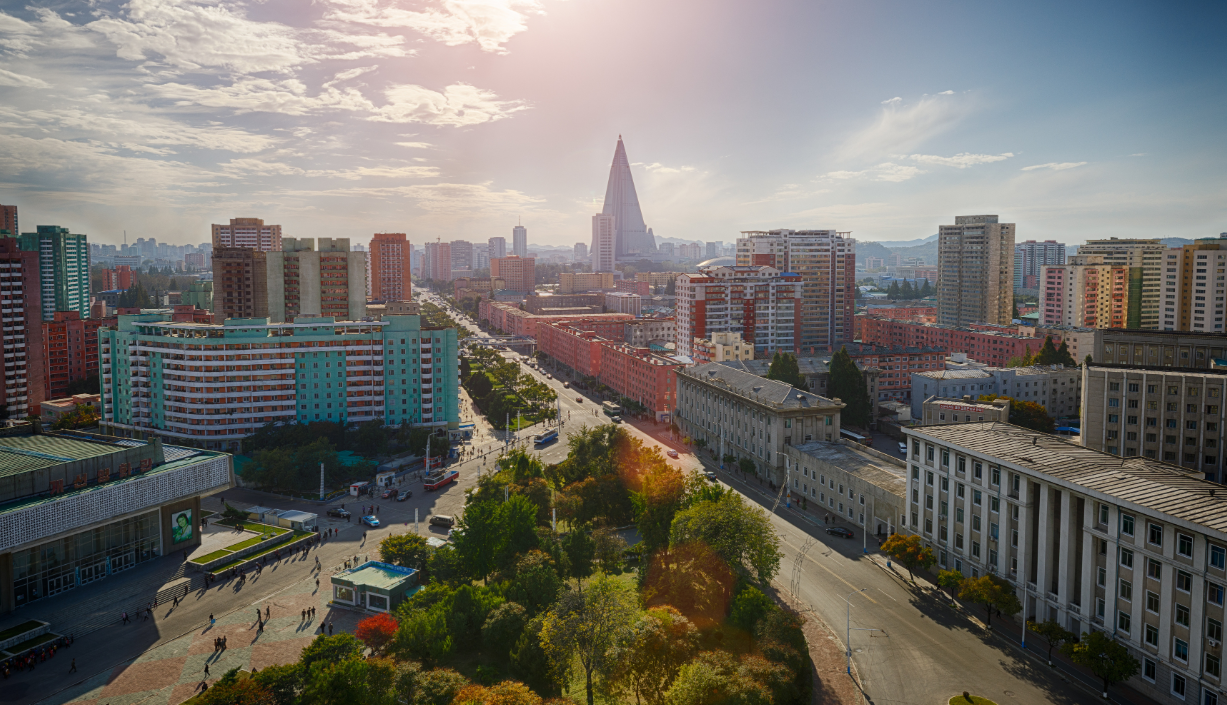
Pyongyang, North Korea: The Historic Capital of the Democratic People's Republic of Korea
Pyongyang, the capital and largest city of the Democratic People's Republic of Korea (DPRK), is the country's political, administrative, cultural, and economic center. Situated along the banks of the Taedong River, Pyongyang is one of the oldest cities on the Korean Peninsula, with a history spanning more than 2,000 years.
The city is known for its broad boulevards, monumental architecture, public squares, museums, parks, and riverside scenery. It serves as the headquarters of the country's government, major universities, cultural institutions, and industries.
Visitors to Pyongyang experience a city with a distinctive architectural style, carefully planned urban spaces, and historical landmarks that reflect the country's modern history and cultural traditions. International travel to North Korea is subject to government regulations and availability, so prospective visitors should review current travel requirements before planning a trip.
Overview of Pyongyang
Pyongyang is the political, cultural, and administrative heart of North Korea.
Quick Facts
-
Country: Democratic People's Republic of Korea (North Korea)
-
Capital: Pyongyang
-
Population: Approximately 3 million
-
Time Zone: Korea Standard Time (KST)
-
Official Language: Korean
-
Currency: North Korean Won (KPW)
-
Climate: Humid continental climate with four distinct seasons
-
Major Industries: Manufacturing, Heavy Industry, Machinery, Textiles, Construction, Food Processing, Government Services, Education, Scientific Research
History and Cultural Heritage
Pyongyang is regarded as one of the oldest continuously inhabited cities in East Asia. Archaeological evidence suggests settlements in the area date back thousands of years, and the city has served as an important political and cultural center during different periods of Korean history.
After the Korean War (1950–1953), much of the city was rebuilt, resulting in wide avenues, monumental buildings, public parks, and large residential districts that characterize modern Pyongyang today.
The city preserves historical sites, museums, traditional architecture, and monuments that reflect various periods of Korean history.
A Rich Cultural Identity
Pyongyang showcases elements of Korean cultural heritage through:
-
Traditional Korean music
-
Folk dance performances
-
Museums
-
Public art
-
Historic architecture
-
Korean cuisine
-
Cultural festivals
-
Traditional crafts
-
Classical performances
-
National celebrations
Visitors can also experience traditional Korean customs, cuisine, and artistic performances.
Famous Tourist Attractions
1. Juche Tower
One of Pyongyang's most recognizable landmarks, the Juche Tower overlooks the Taedong River and offers panoramic views of the city.
2. Kim Il Sung Square
The city's central public square, used for national celebrations, public events, and ceremonial gatherings.
3. Arch of Triumph
A monumental structure built to commemorate Korea's resistance against Japanese occupation, and one of the largest triumphal arches in the world.
4. Mansu Hill Grand Monument
A major monument and public landmark visited by organized tour groups.
5. Victorious Fatherland Liberation War Museum
A museum dedicated to the history of the Korean War from the DPRK's perspective, featuring historical exhibits and military artifacts.
6. Korean Central History Museum
A museum displaying archaeological discoveries, cultural artifacts, and exhibits on Korean history.
7. Pyongyang Metro
Known for its deep underground stations and elaborate interiors decorated with murals, chandeliers, and mosaics.
8. Mangyongdae Native House
A historic site associated with the early history of the DPRK.
9. Taedong River Riverside
A scenic area offering pleasant views, parks, bridges, and walking paths.
10. Moran Hill Park
One of the city's most popular parks, featuring gardens, walking trails, monuments, and cultural sites.
Natural Beauty and Outdoor Activities
Although primarily an urban destination, Pyongyang offers several green spaces and nearby natural attractions.
Popular activities include:
-
Riverside walks
-
Park visits
-
Photography
-
Museum tours
-
Historical sightseeing
-
Cultural performances
-
Monument visits
-
Scenic viewpoints
Nearby attractions include:
-
Mount Myohyang
-
Nampo coastal region
-
West Sea Barrage
-
Local countryside excursions (subject to travel permissions)
Food and Culinary Scene
Traditional Korean cuisine is an important part of life in Pyongyang.
Popular dishes include:
-
Pyongyang Naengmyeon (cold buckwheat noodles)
-
Kimchi
-
Bibimbap
-
Bulgogi
-
Korean Dumplings
-
Rice dishes
-
Seafood specialties
-
Tofu dishes
-
Traditional soups
-
Korean tea
Economy and Business Environment
Pyongyang is North Korea's primary industrial and administrative center.
Major industries include:
-
Manufacturing
-
Machinery
-
Heavy Industry
-
Construction
-
Food Processing
-
Textile Production
-
Scientific Research
-
Education
-
Government Administration
Economic activity operates within North Korea's unique national system and is subject to domestic policies and international sanctions that affect trade and foreign investment.
Education
Pyongyang is home to many of the country's leading educational and research institutions.
Major institutions include:
-
Kim Il Sung University
-
Kim Chaek University of Technology
-
Pyongyang University of Science and Technology (PUST)
-
Pyongyang Medical University
-
Academy of Sciences of the DPRK
These institutions contribute to higher education, engineering, science, medicine, and research.
Transportation
Pyongyang has the country's most developed transportation network.
Transportation includes:
-
Pyongyang International Airport (Sunan International Airport)
-
Pyongyang Metro
-
Tram system
-
Trolleybuses
-
Public buses
-
Railway connections
The city serves as North Korea's principal transportation hub.
Shopping
Shopping opportunities for international visitors are generally limited and are often included as part of organized tours.
Available shopping locations may include:
-
Department stores
-
Souvenir shops
-
Handicraft stores
-
Bookstores
-
Cultural gift shops
Common purchases include traditional artwork, handicrafts, stamps, books, ceramics, embroidery, and locally produced souvenirs.
Annual Events and Cultural Celebrations
Pyongyang hosts several national and cultural events throughout the year, including:
-
Lunar New Year celebrations
-
National Day events
-
Spring cultural festivals
-
Mass performances (when scheduled)
-
Sporting events
-
Music and dance performances
-
Art exhibitions
Event schedules and public access may vary.
Living in Pyongyang
As the country's capital, Pyongyang has modern public infrastructure, educational institutions, cultural venues, parks, and residential districts.
The city serves as the center of government administration, education, healthcare, scientific research, and national cultural activities.
Why Visit Pyongyang?
Pyongyang offers a unique experience for travelers interested in:
-
Korean history
-
Monumental architecture
-
Museums
-
Traditional Korean culture
-
Urban planning
-
Historical landmarks
-
Cultural performances
-
Photography
International tourism is generally conducted through authorized tour operators and under specific regulations established by the DPRK authorities.
Future Development
Pyongyang continues to see investment in:
-
Urban infrastructure
-
Residential housing
-
Transportation
-
Scientific research
-
Public facilities
-
Education
-
Healthcare
-
Cultural institutions
The pace and scope of development are influenced by domestic priorities as well as international economic conditions.
Conclusion
Pyongyang is one of East Asia's most distinctive capitals, offering visitors an opportunity to explore Korean history, monumental architecture, cultural institutions, and riverside landscapes. From the Juche Tower and Kim Il Sung Square to museums, parks, and traditional Korean cuisine, the city presents a unique perspective on the Korean Peninsula.
For travelers with an interest in history, architecture, and culture, Pyongyang provides an experience unlike any other, while visits should always be planned in accordance with current travel regulations and official guidance.
#Pyongyang #NorthKorea #DPRK #VisitPyongyang #KoreaTravel #TravelGuide #JucheTower #KimIlSungSquare #TaedongRiver #KoreanCulture #HistoricCity #Architecture #Museums #Education #Manufacturing #History #EastAsia #CulturalHeritage #UrbanDevelopment #TravelAsia #MonumentalArchitecture #ExploreKorea #PyongyangMetro #AsianTravel #GovernmentCenter #KoreanHistory #CityGuide #Tourism #CapitalCity #TravelInformation #lowkot