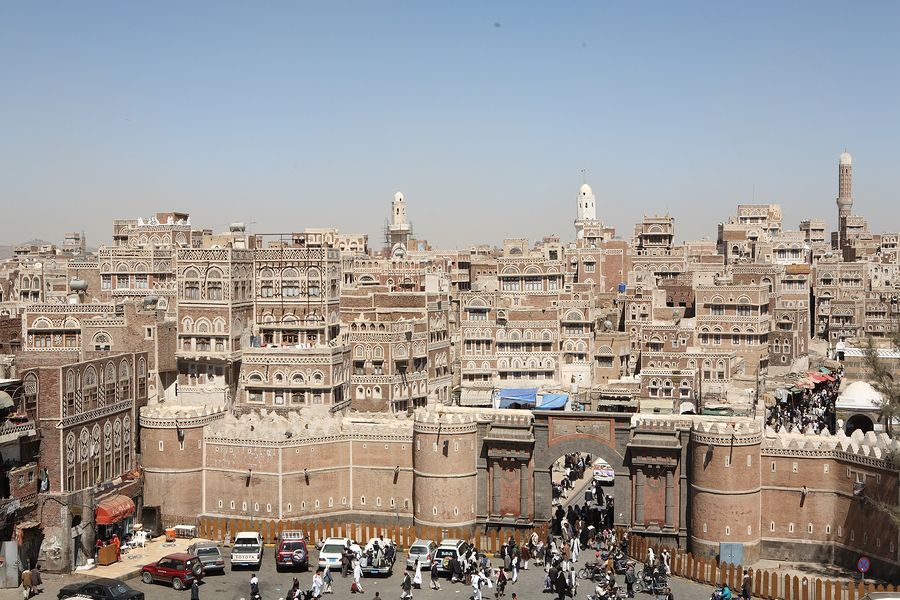
Sana'a, Yemen: The Ancient City of Timeless Architecture and Rich Cultural Heritage
Sana'a (also spelled Sanaa) is one of the oldest continuously inhabited cities in the world and serves as the historic capital of Yemen. Located in the Yemeni Highlands at an elevation of approximately 2,300 metres (7,500 feet) above sea level, Sana'a is renowned for its extraordinary mud-brick tower houses, centuries-old markets, historic mosques, and unique architectural heritage.
The city's Old City of Sana'a is recognised as a UNESCO World Heritage Site, celebrated for its distinctive multi-storey buildings decorated with white gypsum patterns and colourful stained-glass windows. For centuries, Sana'a was an important centre for trade, religion, learning, and culture on the Arabian Peninsula.
Despite the significant challenges Yemen has faced in recent years, Sana'a remains a symbol of the country's rich history, resilience, and cultural identity. Its long-term future holds potential for heritage preservation, reconstruction, sustainable development, tourism, and economic recovery.
Overview of Sana'a
Sana'a is Yemen's historic and political capital.
Quick Facts
-
Country: Yemen
-
Capital: Sana'a
-
Population: Approximately 3 million (metropolitan area)
-
Time Zone: Arabia Standard Time (UTC+3)
-
Official Language: Arabic
-
Widely Spoken Languages: Arabic; English is used in some business and educational settings
-
Currency: Yemeni Rial (YER)
-
Climate: Mild highland climate with warm days and cool nights
-
Major Economic Activities: Trade, Agriculture, Handicrafts, Small Manufacturing, Education, Government Services, Traditional Markets
History and Cultural Heritage
Sana'a has a history spanning more than 2,500 years and is considered one of the oldest continuously inhabited cities in the world. According to local tradition, the city was founded by Shem, the son of the Prophet Noah, although historical evidence points to its development as an important ancient Arabian settlement.
Throughout history, Sana'a served as a centre of trade linking Arabia with Africa and Asia. It flourished under various Islamic dynasties and became renowned for scholarship, craftsmanship, and commerce.
The Old City of Sana'a contains thousands of historic buildings, ancient mosques, public baths, gardens, and traditional houses, representing one of the finest examples of Islamic urban architecture.
A Rich and Diverse Culture
Sana'a reflects Yemen's deep cultural traditions and artistic heritage.
The city's cultural highlights include:
-
Traditional Yemeni architecture
-
Islamic heritage
-
Arabic literature
-
Traditional music
-
Folk dances
-
Handcrafted jewellery
-
Pottery
-
Textile weaving
-
Wood carving
-
Calligraphy
The people of Sana'a are known for their hospitality, strong family values, and preservation of centuries-old customs.
Famous Tourist Attractions
1. Old City of Sana'a
A UNESCO World Heritage Site featuring over 6,000 traditional tower houses, historic mosques, bustling streets, and unique architecture dating back centuries.
2. Al Saleh Mosque
One of Yemen's largest and most impressive mosques, recognised for its elegant Islamic architecture and expansive prayer halls.
3. Bab al-Yemen
The historic gateway to the Old City and one of Sana'a's most iconic landmarks, surrounded by traditional markets and historic buildings.
4. Souq al-Milh (Salt Market)
A centuries-old marketplace where visitors can explore spices, coffee, honey, handicrafts, silver jewellery, textiles, perfumes, and traditional Yemeni products.
5. National Museum of Yemen
A museum preserving Yemen's archaeological treasures, manuscripts, historical artefacts, and cultural heritage.
6. Great Mosque of Sana'a
One of the oldest mosques in the Islamic world, dating back to the 7th century and holding great religious and historical significance.
7. Dar al-Hajar (Rock Palace)
Located just outside Sana'a, this iconic palace built atop a massive rock formation is one of Yemen's most photographed landmarks.
8. Traditional Tower Houses
The city's beautifully decorated multi-storey mud-brick homes are architectural masterpieces unique to Yemen.
9. Historic Hammams
Traditional public bathhouses that have served local communities for centuries.
10. Al-Tahrir Square
An important public square surrounded by government buildings, shops, cafés, and cultural landmarks.
Natural Beauty and Outdoor Activities
Sana'a is surrounded by mountains, valleys, and scenic landscapes.
Popular activities include:
-
Heritage walking tours
-
Mountain hiking
-
Photography
-
Cultural exploration
-
Shopping in traditional markets
-
Historical sightseeing
-
Architectural tours
-
Local food experiences
-
Nature excursions
Nearby attractions include:
-
Dar al-Hajar
-
Wadi Dhahr
-
Haraz Mountains
-
Jabal Nabi Shu'ayb (the highest mountain in the Arabian Peninsula)
-
Historic mountain villages
Food and Culinary Scene
Sana'a is famous for its distinctive Yemeni cuisine.
Popular local dishes include:
-
Saltah
-
Mandi
-
Fahsa
-
Bint Al-Sahn
-
Aseed
-
Zurbian
-
Yemeni bread
-
Honey desserts
-
Fresh coffee
-
Qishr (coffee husk beverage)
The city also offers Middle Eastern, Indian, Turkish, and international cuisine in selected restaurants.
Economy and Business Environment
Historically, Sana'a has been an important centre for commerce and traditional industries.
Key economic sectors include:
-
Trade
-
Agriculture
-
Handicrafts
-
Coffee production
-
Honey production
-
Textiles
-
Small manufacturing
-
Construction
-
Education
-
Government services
In the future, economic recovery and reconstruction could create new opportunities across multiple industries.
Business Opportunities in Sana'a
As stability and reconstruction progress over time, potential investment opportunities may include:
Infrastructure and Reconstruction
Future opportunities may include:
-
Housing development
-
Road construction
-
Public infrastructure
-
Utilities
-
Engineering services
Heritage Restoration
Sana'a's unique architectural heritage creates opportunities in:
-
Historic building restoration
-
Cultural preservation
-
Archaeological conservation
-
Heritage tourism
Agriculture and Food Processing
Potential opportunities include:
-
Coffee production
-
Honey exports
-
Organic farming
-
Food processing
-
Agricultural technology
Renewable Energy
Solar energy offers significant long-term potential through:
-
Solar power projects
-
Rural electrification
-
Energy-efficient buildings
-
Sustainable infrastructure
Education and Skills Development
Future investment opportunities include:
-
Vocational training
-
Digital education
-
Professional development
-
Educational technology
Healthcare
Long-term development opportunities may include:
-
Hospital modernisation
-
Medical equipment
-
Telemedicine
-
Healthcare training
-
Pharmaceutical distribution
Education
Sana'a has historically been one of Yemen's leading educational centres.
Major institutions include:
-
Sana'a University
-
University of Science and Technology
-
Yemen International University
These institutions have played an important role in higher education, research, engineering, medicine, business, and science.
Transportation
Sana'a has a road network connecting it with other parts of Yemen. Historically, the city has also been served by Sana'a International Airport, although operations have been significantly affected by the country's ongoing conflict and may be subject to restrictions.
Transportation within the city includes:
-
Public minibuses
-
Taxis
-
Private vehicles
Infrastructure rehabilitation will be an important part of future development.
Shopping Destinations
Popular shopping areas include:
-
Souq al-Milh
-
Bab al-Yemen Market
-
Traditional craft markets
-
Local shopping centres
Visitors can purchase traditional silver jewellery, Yemeni coffee, honey, spices, textiles, handcrafted daggers (jambiyas), pottery, perfumes, and handmade crafts.
Cultural Festivals and Events
Historically, Sana'a has hosted:
-
Cultural heritage festivals
-
Traditional music performances
-
Religious celebrations
-
Craft exhibitions
-
Poetry events
-
Local food festivals
As conditions improve, these cultural events may continue to support tourism and heritage preservation.
Living in Sana'a
Sana'a has long been known for its strong community spirit and cultural traditions.
Residents value:
-
Family-oriented communities
-
Rich cultural heritage
-
Traditional architecture
-
Historic neighbourhoods
-
Local markets
-
Religious and cultural life
Current living conditions are heavily affected by the ongoing humanitarian and security situation, which has significantly impacted infrastructure, public services, and the economy.
Why Visit Sana'a?
When conditions allow safe travel, Sana'a offers remarkable experiences for visitors.
-
History enthusiasts can explore one of the world's oldest continuously inhabited cities.
-
Architecture lovers can admire UNESCO-listed mud-brick tower houses.
-
Culture enthusiasts can experience authentic Yemeni traditions and hospitality.
-
Photographers can capture one of the Middle East's most distinctive historic cityscapes.
-
Shoppers can discover traditional markets filled with handcrafted goods and local products.
-
Food lovers can enjoy authentic Yemeni cuisine and world-renowned Yemeni coffee.
Visitors should always check the latest official travel advisories before planning a trip due to the current security situation.
Future Growth and Emerging Opportunities
With long-term peace, stability, and reconstruction, Sana'a has the potential to develop in areas such as:
-
Heritage conservation
-
Sustainable tourism
-
Renewable energy
-
Smart infrastructure
-
Agriculture and food security
-
Healthcare
-
Education
-
Digital technology
-
Small business development
-
International partnerships
These sectors could contribute to economic recovery while preserving the city's unique cultural identity.
Conclusion
Sana'a is far more than the historic capital of Yemen—it is one of the world's oldest living cities and a remarkable symbol of Arabian civilisation. From the UNESCO-listed Old City and the iconic Bab al-Yemen to its traditional markets and extraordinary architecture, Sana'a reflects centuries of history, culture, and craftsmanship.
While the city continues to face significant challenges due to the ongoing conflict, its cultural heritage and resilient people remain central to Yemen's identity. With future peace and reconstruction, Sana'a has the potential to once again become a vibrant centre for culture, education, tourism, and sustainable development.
#Sanaa #Sanaa #Yemen #VisitYemen #TravelGuide #OldCityOfSanaa #UNESCO #BabAlYemen #YemeniCulture #YemeniArchitecture #BusinessOpportunities #Investment #HeritageTourism #RenewableEnergy #Agriculture #Coffee #Honey #Education #Healthcare #Entrepreneurship #MiddleEast #ArabianPeninsula #CulturalHeritage #EconomicDevelopment #Reconstruction #HistoricCities #TraditionalMarkets #SustainableDevelopment #ExploreYemen #AncientCities #lowkot