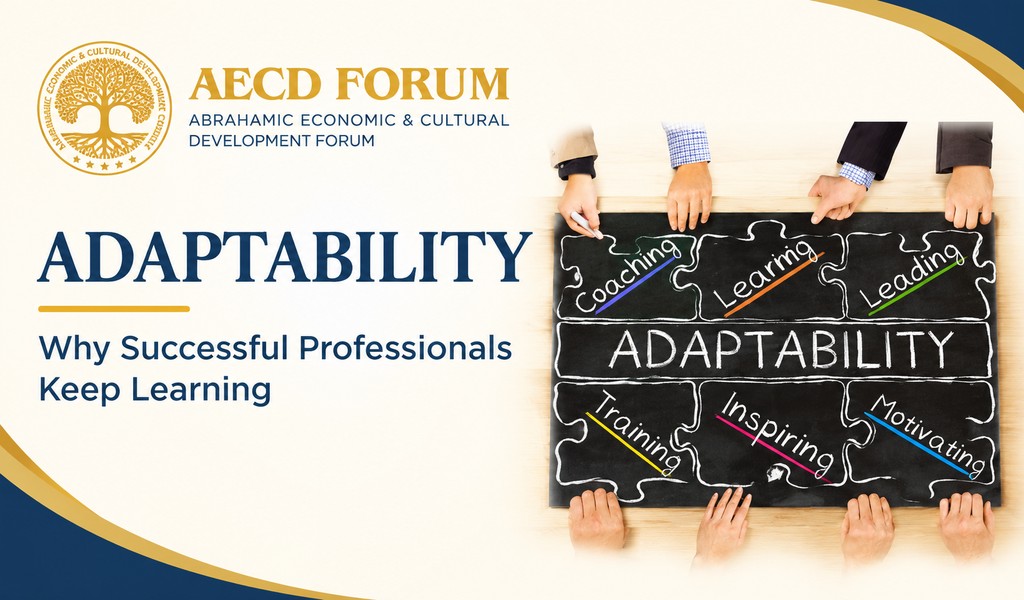
Adaptability begins with a willingness to learn.
The world of work is constantly changing. New technologies, evolving customer expectations, changing business practices, and global developments are influencing how people work and build their careers. Skills that were valuable a few years ago may need to be updated, while new opportunities often require people to learn unfamiliar methods and ideas.
In this environment, adaptability has become an important professional skill. It helps people respond to change, solve problems, and remain open to new possibilities. Adaptable professionals do not need to know everything. Instead, they are willing to learn, ask questions, accept feedback, and adjust their approach when circumstances change.
Continuous learning is at the heart of this ability. Whether someone is beginning a career, managing a team, running a business, or working in education, the willingness to keep learning can support professional development and long-term growth.
What Is Adaptability in the Workplace?
Adaptability is the ability to respond constructively to new situations, changing priorities, and unfamiliar challenges. It involves adjusting your approach without losing sight of your goals and responsibilities.
An adaptable employee, for example, may need to learn new software, collaborate with colleagues from different backgrounds, or manage a project when its original plan no longer works. Rather than resisting every change, they try to understand the situation and identify the best way forward.
Adaptability does not mean accepting every change without question. It also involves critical thinking, recognising risks, and deciding when an established method remains the better option.
Adaptability and Continuous Learning
Adaptability and learning strengthen each other. Learning provides new knowledge and skills, while adaptability helps people apply them in different situations.
Consider a marketing professional who has relied on traditional advertising for years. As customer behaviour changes, the professional may need to understand digital platforms, analyse campaign results, and experiment with new communication methods. Their previous experience remains valuable, but continued learning helps them use that experience more effectively.
This principle applies across industries. Healthcare, education, finance, manufacturing, entrepreneurship, and public services all require professionals to update their knowledge as their working environments evolve.
Why Successful Professionals Keep Learning?
1. Workplaces and Technologies Change
Digital tools, automation, and artificial intelligence are changing how many tasks are completed. Some responsibilities become easier, while others require new technical knowledge, judgement, or communication skills.
Professionals who keep learning are better prepared to evaluate new tools and understand how they might improve their work. They can also recognise when a tool is unsuitable, inaccurate, or inappropriate for a particular task.
The goal is not to follow every trend. It is to understand relevant changes and develop the skills needed to respond to them thoughtfully.
2. Learning Helps People Solve Problems
Professional challenges rarely arrive with complete instructions. Employees and business owners often need to make decisions with limited information, manage unexpected difficulties, or find better ways to use available resources.
Learning encourages people to explore different perspectives and question familiar assumptions. It also helps them recognise gaps in their knowledge before those gaps become larger problems.
For example, a team leader facing repeated project delays might study project planning, consult experienced colleagues, and review how responsibilities are assigned. By applying what they learn, the leader can address the underlying problem instead of simply asking the team to work faster.
3. Adaptability Supports Career Development
Career paths are not always straightforward. People change industries, take on new responsibilities, return to education, or discover interests they did not previously consider.
Transferable skills such as communication, teamwork, critical thinking, and time management can help professionals move between roles. Additional learning can make those skills more relevant to a new position.
An administrative professional, for instance, may develop data analysis and project coordination skills before moving into operations management. The transition becomes more manageable when existing experience is combined with deliberate learning.
4. Continuous Learning Builds Confidence
Facing an unfamiliar task can be uncomfortable, particularly when the expectations are high. However, learning step by step helps people become more comfortable with new responsibilities.
Confidence does not come from pretending to have every answer. It grows when people understand how to find reliable information, ask for assistance, practise new skills, and learn from mistakes.
This approach is especially valuable for young professionals and people entering a new field. They can treat early challenges as opportunities to improve rather than proof that they are not capable.
5. Learning Improves Collaboration
Modern workplaces often bring together people with different experiences, professional backgrounds, cultures, and ways of thinking. Effective collaboration requires a willingness to listen and reconsider assumptions.
Adaptable professionals are more likely to ask questions, clarify misunderstandings, and learn from colleagues whose approaches differ from their own.
For example, a project team working across countries may have different expectations about communication, deadlines, or decision-making. Taking time to understand these differences can reduce confusion and support stronger working relationships.
How to Develop Adaptability Through Continuous Learning?
Adaptability is not limited to people who naturally enjoy change. It can be developed through regular practice and conscious effort.
Build a Personal Learning Routine
Learning does not always require a formal degree or an expensive course. Reading industry publications, attending webinars, completing short courses, practising a new skill, or discussing challenges with experienced colleagues can all contribute to development.
Choose a realistic routine that fits your responsibilities. Even a small, consistent learning goal can help you make progress over time.
The most important step is to move from occasional interest to purposeful practice.
Seek Feedback and Use It Constructively
Feedback helps people identify strengths and areas that need improvement. Ask colleagues, supervisors, mentors, or clients for specific observations about your work.
Instead of responding defensively, consider which suggestions are useful and how you can apply them. Not every piece of feedback will be correct, but thoughtful evaluation can reveal valuable opportunities to improve.
Learn Outside Your Immediate Role
Exploring subjects beyond your current responsibilities can broaden your understanding of how organisations and industries operate.
A finance professional might learn about customer experience, while a teacher might explore digital learning tools. An entrepreneur might study negotiation or basic data analysis.
Cross-disciplinary learning can help people connect ideas, communicate with different teams, and identify solutions they might otherwise overlook.
Practise Applying What You Learn
Information becomes more useful when it is put into practice. After completing a course or reading about a new method, identify one real task where you can use the knowledge.
For example, someone learning presentation skills could apply a new structure in their next team meeting. A professional studying data analysis could use a spreadsheet to identify patterns in a project.
Review the result afterwards. What worked? What needs improvement? What would you do differently next time?
This process turns learning into practical experience.
Treat Mistakes as Opportunities to Improve
Mistakes can reveal gaps in knowledge, unclear processes, or assumptions that need to be reconsidered. The value lies in examining what happened and deciding what to change.
A constructive response includes taking responsibility, identifying the cause, seeking guidance when necessary, and applying the lesson to future work.
This does not mean ignoring serious errors or repeating avoidable mistakes. It means using experience to make better decisions in the future.
The Role of Leaders in Creating a Learning Culture
Adaptability is not only an individual responsibility. Organisations and leaders also influence whether people have the opportunity to learn.
Encourage Questions and Open Discussion
Employees are more likely to share ideas and raise concerns when they can ask questions without unnecessary embarrassment. Leaders can encourage this by listening carefully, welcoming constructive disagreement, and responding respectfully to mistakes.
An open learning environment helps teams identify problems earlier and consider alternative approaches.
Make Professional Development Accessible
Training opportunities should be practical and relevant to employees' responsibilities. Organisations can support learning through mentoring, peer knowledge-sharing, workshops, job rotations, and access to appropriate educational resources.
Where possible, leaders should also provide time for learning. Asking employees to develop new skills without giving them the resources or time to do so can make professional development difficult.
Recognise Progress, Not Just Results
Results matter, but so does the process of improvement. Leaders can recognise employees who develop useful skills, share knowledge, respond constructively to feedback, and help colleagues learn.
This encourages a workplace culture where professional growth is viewed as an ongoing responsibility rather than a one-time achievement.
Adaptability, Education, and the Future of Work
Education provides an important foundation for adaptability, but learning should not end when formal studies are complete. As professional responsibilities change, people may need additional training, practical experience, and opportunities to update their skills.
Educational institutions, employers, community organisations, and training providers can help by connecting learning with real-world needs. Practical projects, internships, mentoring, digital learning resources, and career guidance can help learners prepare for unfamiliar situations.
Access matters, too. Not everyone has the same time, financial resources, internet access, or professional networks. Flexible learning options and inclusive training opportunities can help more people participate in professional development.
For young people, this means developing both technical knowledge and transferable skills. For experienced professionals, it means recognising that past achievements provide a foundation for future learning, not a reason to stop.
For communities and economies, a stronger culture of lifelong learning can support people as they navigate changing employment opportunities and develop new capabilities.
AECD Forum Perspective
The Abrahamic Economic & Cultural Development (AECD) Forum focuses on areas that include education, skill development, leadership, youth development, women's empowerment, professional training, entrepreneurship, and international cooperation. Adaptability connects these areas by highlighting the importance of preparing people to learn, respond to change, and contribute constructively to their communities.
Education can provide knowledge, while practical training helps people apply it. Leadership development can strengthen decision-making and collaboration, and professional development can help individuals prepare for new responsibilities. Entrepreneurship also benefits from a willingness to learn from customers, assess challenges, and adjust plans when circumstances change.
Cross-cultural exchange adds another dimension. By learning from people with different experiences and perspectives, individuals can improve their understanding of unfamiliar situations and develop more thoughtful approaches to shared challenges.
Through initiatives that encourage learning, dialogue, and professional growth, organisations such as AECD Forum can contribute to a culture in which people continue developing their skills throughout their lives.
Practical Action Points
-
Identify one skill to improve. Choose a skill that supports your current responsibilities or future career goals.
-
Set a manageable learning target. Dedicate a regular period each week to reading, training, practice, or reflection.
-
Ask for specific feedback. Find out what you are doing well and which area would benefit from improvement.
-
Try a new approach. Use a different method to solve a familiar problem and review the outcome.
-
Learn from other people. Speak with a mentor, colleague, educator, or professional working in another field.
-
Reflect on challenges. After a difficult task, write down what happened, what you learned, and what you would change.
-
Review your progress regularly. At the end of each month, assess what you have learned and decide on your next development goal.
Adaptability is increasingly important in a working world where knowledge, tools, and expectations continue to evolve. Professionals who remain curious and willing to learn can approach change with greater understanding and make more informed decisions about their development.
However, adaptability is not about knowing everything, following every trend, or changing direction without purpose. It is about recognising when learning is needed, evaluating new information, and applying useful knowledge to real situations.
Individuals can begin with small steps: asking questions, seeking feedback, practising new skills, and learning from experience. Leaders and organisations can support this process by creating accessible development opportunities.
Ultimately, successful professionals do not stop learning when they become experienced; they use their experience to keep learning better. A commitment to continuous learning can help people build stronger careers, contribute to their organisations, and respond more thoughtfully to the challenges and opportunities ahead.