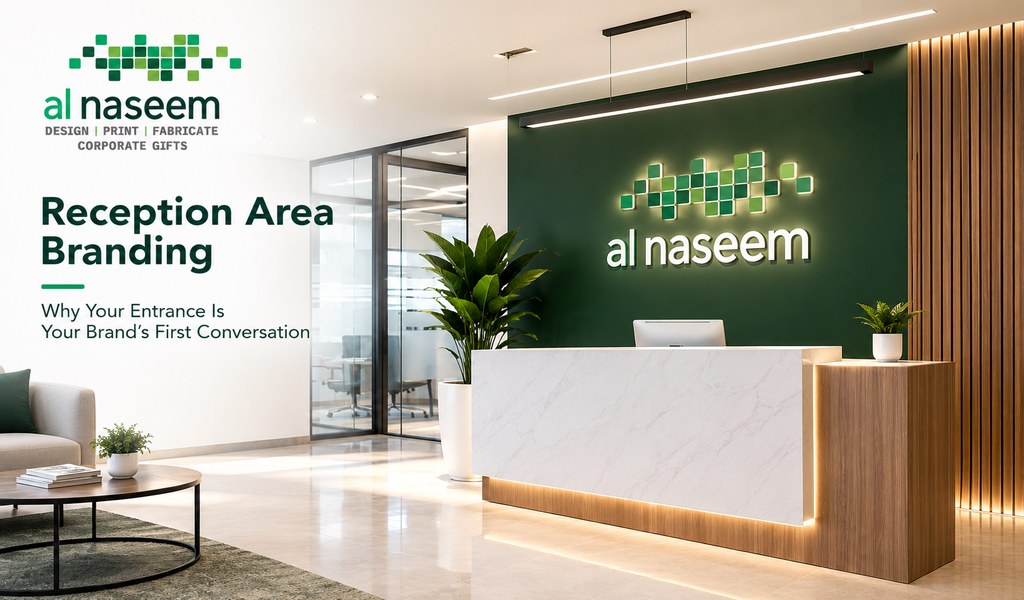
Your Reception Speaks Before You Do
When a client, business partner, job applicant, or visitor walks into your office, their experience begins before anyone says a word. The entrance, reception desk, company logo, lighting, colours, and overall presentation all contribute to their first impression of your business.
This is why reception area branding is more than decorating an office wall. It is an opportunity to communicate your company's identity, values, and professionalism through the physical environment.
A thoughtfully designed reception area can help visitors recognise your brand, understand your business identity, and feel comfortable from the moment they arrive.
For companies in Dubai and across the UAE, where businesses operate in competitive professional environments, a well-planned reception can become an important part of corporate branding.
But what makes reception branding effective? And how can businesses create a space that looks professional without feeling excessive or impersonal?
Let's explore the details.
1. Why Is Reception Area Branding Important?
The reception area is often the first physical point of contact between your business and its visitors. Its design can influence how people navigate the space and perceive the organisation.
Creates a Consistent Brand Identity
Your website, business cards, marketing materials, uniforms, and office interiors should communicate a consistent visual identity.
Reception branding brings that identity into the workplace through logos, brand colours, typography, signage, and materials.
When these elements work together, the office feels like a natural extension of the business rather than a generic workspace.
Supports a Professional Image
A clean, organised reception with well-executed signage can help communicate attention to detail.
For example, an accurately produced company logo, carefully selected materials, and balanced lighting can make a reception feel more considered and professional.
However, expensive materials alone do not guarantee a strong impression. Good design, quality workmanship, and suitability for the business matter just as much.
Helps Visitors Identify Your Business
Clear reception signage tells visitors they have arrived at the correct location.
This is particularly useful in shared office buildings, business centres, commercial towers, and workplaces that receive frequent clients or suppliers.
Improves the Visitor Experience
Branding should support practical use as well as appearance. Clear directions, visible reception signage, and an organised waiting area help visitors understand where to go and whom to approach.
A good reception makes the arrival experience straightforward and welcoming.
2. Choose the Right Reception Wall Branding
The wall behind the reception desk is often a natural focal point. It provides a suitable location for displaying the company logo and creating a recognisable visual feature.
However, the best design depends on the available space, brand identity, lighting, and surrounding interior.
Common options include:
-
3D acrylic lettering: Creates depth and a contemporary appearance.
-
Stainless-steel lettering: Offers a refined metallic finish.
-
Illuminated logos: Uses integrated lighting to increase visibility.
-
Backlit signage: Illuminates selected logo elements or sign panels.
-
Printed wall graphics: Incorporates brand imagery, patterns, or supporting messages.
-
ACP or other panel systems: Provides a structured background for selected signage applications.
The aim is to make the company identity easy to recognise without overcrowding the wall.
A simple logo with carefully planned spacing can often create a stronger result than a wall filled with unnecessary text and decorative elements.
3. Select Materials That Suit Your Brand and Space
Material selection affects how reception signage looks, feels, and performs over time.
Before choosing a material, consider the desired finish, wall surface, installation method, lighting, cleaning requirements, and maintenance access.
These materials serve different purposes and are not interchangeable in every situation. The appropriate specification depends on the design and installation conditions.
For example, acrylic lettering may suit a modern technology office, while brushed metal lettering may complement a corporate consultancy or premium professional services firm.
The most effective choice is one that supports the brand identity and works well with the existing interior.
4. Use Lighting to Highlight Your Brand
Lighting can change the way reception signage is perceived.
A carefully illuminated logo can become a focal point, while poorly positioned lighting may create glare, uneven brightness, or distracting reflections.
Popular approaches include:
-
Front-lit lettering
-
Backlit logos
-
Halo illumination
-
Integrated LED lighting
-
Accent lighting around a feature wall
When planning illuminated signage, consider the logo's dimensions, material transparency, letter depth, lighting distribution, wiring, and access for maintenance.
The lighting colour should also complement the brand palette and the surrounding interior.
Good reception lighting makes your brand easier to see without overwhelming the space.
5. Match Reception Branding to Your Business Identity
Different businesses communicate different qualities, and their reception areas should reflect those differences.Technology and Innovation Companies
Clean typography, minimalist layouts, contemporary finishes, and carefully integrated digital displays can support a modern brand identity.Consultancies and Professional Services
Balanced layouts, understated colours, quality finishes, and clear lettering can communicate order and professionalism.Creative and Marketing Agencies. Distinctive graphics, expressive colour combinations, and creative logo treatments can reflect the company's personality.
These are design approaches rather than strict rules. The final solution should reflect the company's actual brand guidelines, audience, and workplace requirements.
6. Keep Your Reception Design Functional
An attractive reception should also work well for everyday operations.
Branding should not interfere with visitor movement, staff activities, accessibility, or essential information.
Consider the following practical details:
-
Ensure the company name is visible from the entrance.
-
Keep the reception desk accessible and easy to identify.
-
Use readable text for directions and visitor information.
-
Avoid placing important branding behind furniture or equipment.
-
Provide suitable lighting for both the logo and the reception desk.
-
Keep pathways clear and consider visitors with different accessibility needs.
-
Allow access to electrical components and illuminated sign systems for maintenance.
A successful reception balances visual impact with comfort, usability, and safety.
7. Common Reception Branding Mistakes to Avoid
Even a well-funded office project can lose its impact when branding decisions are not properly coordinated.
Too Much Information
A reception wall does not need to display the company's entire service list, mission statement, and contact details.
Prioritise the logo and the most relevant information. Supporting details can be displayed elsewhere.
Inconsistent Brand Colours
Using colours that differ from the company's established visual identity can create a disconnected appearance.
Confirm the correct colour specifications before production, particularly when combining printed graphics, paint, acrylic, and metallic finishes.
Poorly Sized Logos
A logo that is too small may disappear against a large wall. One that is too large can dominate the space and disrupt the interior proportions.
Mock-ups and accurate measurements help establish an appropriate scale.
Low-Quality Finishing
Visible adhesive marks, uneven lettering, rough edges, or inconsistent spacing can undermine the final presentation.
Careful fabrication, surface preparation, installation, and inspection are essential.
Ignoring the Existing Interior
Reception signage should work with the desk, flooring, wall finishes, furniture, and lighting.
Planning the branding as part of the overall interior helps create a more cohesive result.
8. Why Professional Design, Printing, and Fabrication Matter?
Reception branding often combines several disciplines. The design must be visually appropriate, the materials must suit the application, and the finished elements must be accurately fabricated and installed.
A professional process generally includes:
-
Site assessment: Measuring the wall and reviewing the installation surface.
-
Design development: Planning logo placement, scale, colours, materials, and lighting.
-
Material selection: Choosing appropriate signage components and finishes.
-
Artwork approval: Confirming dimensions, colour specifications, and final presentation.
-
Fabrication: Producing the lettering, panels, or graphics to the approved specifications.
-
Installation: Positioning and fixing the components accurately.
-
Final inspection: Checking alignment, finish, visibility, and illumination where applicable.
Planning these stages together can reduce installation problems and help the finished reception match the approved design.
For businesses in Dubai, coordinating design, production, and installation is particularly useful when office access, fit-out schedules, or building requirements limit the available working time.
9. Think About Long-Term Maintenance
Reception branding is usually intended to remain in place for an extended period, so maintenance should be considered during the design stage.
Ask your signage provider:
-
How should the materials be cleaned?
-
Will the finish show fingerprints or dust easily?
-
Can damaged letters or panels be replaced individually?
-
Is the lighting accessible for servicing?
-
Will the branding need to change if the company updates its identity?
-
Can the installation be removed without unnecessary wall damage?
A design that is easy to maintain and update can remain useful as the business evolves.
If your company is planning a rebrand or office relocation, modular panels and replaceable graphics may offer additional flexibility.
Make Your Reception an Extension of Your Brand
Your reception area is more than a waiting space. It is where visitors begin to experience your company in person.
Thoughtful reception area branding can help communicate your identity, support a professional image, improve wayfinding, and create a more consistent workplace experience.
The strongest results come from combining clear design, suitable materials, accurate fabrication, balanced lighting, and professional installation.
For businesses looking for reception signage or office branding in Dubai, planning these elements together can help create an entrance that feels welcoming, practical, and aligned with the company's identity.
At Al Naseem, design, printing, and fabrication can play an important role in bringing corporate branding into physical spaces. From reception logos and wall graphics to custom signage and branded panels, the objective is to create a cohesive presentation that reflects the business.