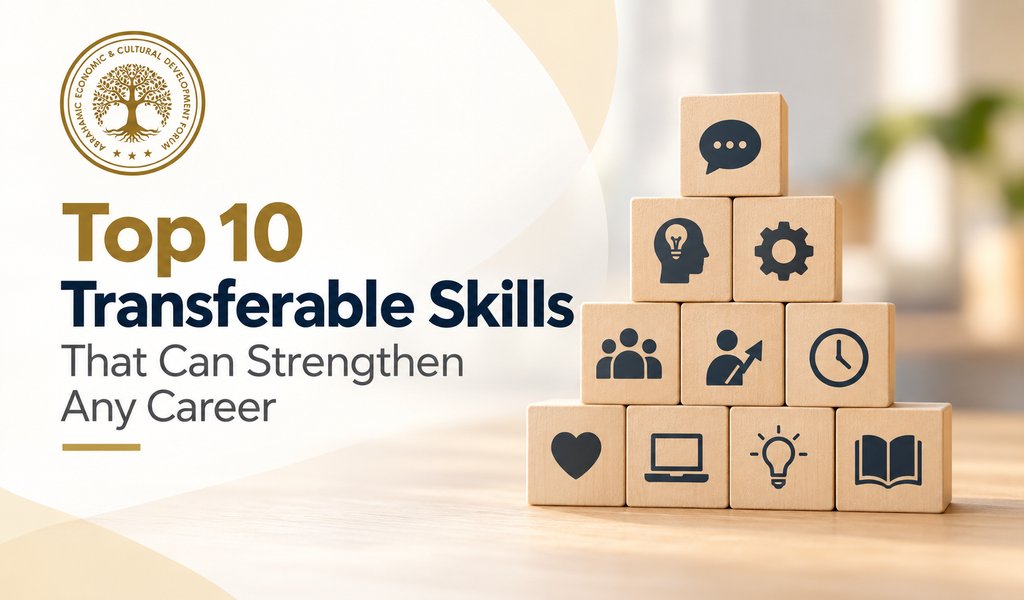
Your career can change. Your skills can grow with you.
Building a successful career is about more than earning qualifications or gaining experience in a single role. It also depends on the skills that help people communicate, solve problems, work with others, and adapt to new challenges.
As industries evolve and professional opportunities change, transferable skills are becoming increasingly valuable. These are abilities that people can use across different jobs, industries, and working environments. Whether someone is a student entering the workforce, a professional seeking career growth, an entrepreneur building a business, or a leader managing a team, transferable skills can support long-term development.
For example, an employee who develops strong communication skills may apply them in customer service, project management, business development, or leadership. Similarly, someone who learns to solve problems effectively can use that ability in almost any professional setting.
The good news is that transferable skills are not limited to people with years of experience. They can be developed through education, volunteering, training, teamwork, personal projects, and everyday responsibilities.
Understanding these skills—and learning how to demonstrate them—can help people become more confident, adaptable, and prepared for future opportunities.
What Are Transferable Skills?
Transferable skills are abilities that can be applied in different roles, workplaces, and professional situations. Unlike certain technical skills that are specific to a particular job, transferable skills remain useful when responsibilities or career paths change.
For instance, an individual working in education may develop presentation, planning, and conflict-resolution skills. These abilities can also be valuable in business, training, community development, and management.
Transferable skills are particularly useful when:
-
Entering the workforce for the first time.
-
Changing careers or industries.
-
Returning to work after a break.
-
Moving into a leadership position.
-
Starting a business or independent project.
-
Working with international or multicultural teams.
Although these skills are broadly applicable, their value depends on how effectively a person uses them in real situations.
The Top 10 Transferable Skills That Can Strengthen Any Career
1. Communication
Communication is the ability to express ideas clearly, listen carefully, and share information in a way that others can understand.
In professional environments, good communication reduces misunderstandings, supports collaboration, and helps people build stronger working relationships. It includes speaking, writing, listening, asking questions, and adapting messages to different audiences.
Example: A project coordinator who explains deadlines and responsibilities clearly can help a team avoid confusion and work more efficiently.
How to develop it:
-
Practise writing concise, professional emails.
-
Listen without interrupting.
-
Ask questions when instructions are unclear.
-
Organise your thoughts before presentations or meetings.
-
Request feedback on your communication style.
2. Critical Thinking
Critical thinking involves examining information carefully, questioning assumptions, comparing evidence, and reaching reasoned conclusions.
Professionals often encounter incomplete information, competing priorities, and difficult decisions. Critical thinking helps them distinguish facts from opinions and consider possible consequences before taking action.
Example: Instead of immediately accepting a proposed business strategy, an employee might examine customer feedback, available resources, costs, and potential risks before recommending a decision.
How to develop it:
-
Ask what evidence supports a claim.
-
Consider alternative explanations.
-
Compare different sources of information.
-
Identify assumptions before making decisions.
-
Reflect on the outcomes of previous choices.
3. Problem-Solving
Problem-solving is the ability to identify a challenge, understand its causes, evaluate possible solutions, and take appropriate action.
Every workplace experiences problems, from missed deadlines and customer concerns to limited resources and unexpected changes. Employers and teams benefit from people who can approach these challenges calmly and constructively.
Example: If a team repeatedly misses deadlines, a problem-solver investigates the cause. The issue might be unclear responsibilities rather than a lack of effort. Clarifying ownership could be more effective than simply asking everyone to work faster.
How to develop it:
-
Define the problem before choosing a solution.
-
Separate the underlying cause from its visible symptoms.
-
List possible options.
-
Evaluate the risks and benefits of each option.
-
Review the result and learn from it.
4. Adaptability
Adaptability is the ability to adjust to new circumstances, changing priorities, unfamiliar responsibilities, and different ways of working.
Technology, customer expectations, workplace structures, and business needs can change over time. Adaptable professionals are willing to learn, reconsider established methods, and respond thoughtfully when plans change.
Adaptability does not mean accepting every change without question. It means understanding what has changed, identifying what remains important, and adjusting your approach where necessary.
Example: An employee asked to use a new digital platform can learn its basic functions, practise with colleagues, and identify where additional training is needed.
How to develop it:
-
Learn a new tool or process regularly.
-
Treat constructive feedback as an opportunity to improve.
-
Volunteer for unfamiliar but manageable responsibilities.
-
Stay open to different perspectives.
-
Reflect on how you respond to uncertainty.
5. Teamwork and Collaboration
Teamwork means contributing to a shared goal while respecting the abilities, responsibilities, and perspectives of others.
Strong collaboration requires more than dividing tasks. It involves reliability, mutual respect, constructive disagreement, and a willingness to support colleagues when challenges arise.
In international workplaces, people may have different communication styles, cultural backgrounds, or professional experiences. Collaboration helps bring these differences together productively.
Example: A team preparing an international event may include people responsible for logistics, communication, research, and partnerships. The event is more likely to run smoothly when each person understands how their work connects with the others.
How to develop it:
-
Meet agreed deadlines.
-
Share information with relevant colleagues.
-
Respect different viewpoints.
-
Give credit to others for their contributions.
-
Address disagreements professionally.
6. Leadership and Initiative
Leadership is not limited to people with formal titles. It also involves taking responsibility, supporting others, making thoughtful decisions, and helping a group move towards a common objective.
Initiative means recognising what needs to be done and taking appropriate steps without always waiting for instructions. Together, these abilities can help people contribute more meaningfully at any career stage.
Example: A junior employee notices that new team members repeatedly struggle with the same process. They create a simple guide and suggest it to their manager. This demonstrates initiative and a willingness to improve the team's work.
How to develop it:
-
Take ownership of your responsibilities.
-
Offer practical suggestions when you identify a problem.
-
Help colleagues when appropriate.
-
Follow through on commitments.
-
Learn to accept responsibility for mistakes.
7. Time Management and Organisation
Time management is the ability to plan tasks, prioritise responsibilities, and use available time effectively. Organisation supports this by keeping information, schedules, and resources manageable.
These skills are valuable in almost every profession, especially when several deadlines compete for attention.
Effective time management does not mean filling every minute with work. It also involves recognising limits, allowing time for important tasks, and communicating early when a deadline may be difficult to meet.
Example: A professional handling multiple assignments can identify urgent tasks, schedule focused work periods, and agree on realistic deadlines with colleagues.
How to develop it:
-
Create a realistic daily or weekly task list.
-
Break large assignments into smaller steps.
-
Identify priorities before starting work.
-
Reduce avoidable distractions.
-
Review progress and adjust plans when necessary.
8. Emotional Intelligence
Emotional intelligence involves recognising and managing your own emotions while responding thoughtfully to the emotions of others.
It can support workplace relationships, conflict management, teamwork, and leadership. People with strong emotional awareness are better positioned to pause before reacting, consider another person's perspective, and communicate respectfully during difficult situations.
Emotional intelligence does not mean avoiding disagreement or suppressing emotions. It means handling them in ways that support constructive communication and sound judgement.
Example: During a tense meeting, a team member listens to a colleague's concern, asks clarifying questions, and focuses the discussion on possible solutions rather than responding defensively.
How to develop it:
-
Notice your emotional reactions to pressure.
-
Pause before responding during disagreements.
-
Practise empathy without making assumptions.
-
Accept feedback without immediately becoming defensive.
-
Learn to discuss difficult issues respectfully.
9. Digital Literacy
Digital literacy is the ability to use digital tools confidently, evaluate online information, communicate through technology, and understand basic digital safety.
It is increasingly relevant across industries, including education, healthcare, administration, entrepreneurship, research, and public services. Digital literacy does not require everyone to become a software engineer. It means understanding the tools needed for your work and using them responsibly.
This includes protecting sensitive information, recognising suspicious messages, evaluating the reliability of online sources, and understanding the limitations of artificial intelligence tools.
Example: A small business owner may use spreadsheets to track expenses, video meetings to communicate with suppliers, and digital platforms to reach customers while taking care to protect customer information.
How to develop it:
-
Improve your skills with commonly used workplace software.
-
Learn basic cybersecurity practices.
-
Check the reliability of digital information.
-
Explore relevant productivity and collaboration tools.
-
Use AI-generated information carefully and verify important claims.
10. Creativity and Continuous Learning
Creativity is the ability to generate ideas, explore alternatives, and find useful ways to approach challenges. Continuous learning is the commitment to developing knowledge and skills over time.
Together, these abilities help professionals respond to new demands rather than relying only on familiar methods. Creativity can improve an existing process, while continuous learning helps a person discover new approaches and understand changing professional expectations.
Example: A teacher may combine classroom discussions, practical exercises, and digital learning resources to help students understand a difficult concept. The approach can evolve as the teacher observes what works best for different learners.
How to develop them:
-
Read about developments in your field.
-
Take relevant short courses or workshops.
-
Ask questions and seek feedback.
-
Experiment with different approaches to familiar tasks.
-
Reflect on what you learned from both successes and mistakes.
Why Transferable Skills Matter for Career Growth?
They Support Career Changes
Changing industries can be challenging because professional knowledge does not always transfer directly from one role to another. However, many underlying abilities do.
A person moving from teaching into corporate training, for example, may already have experience in communication, presentation, planning, and explaining complex information. Recognising these strengths can help them identify relevant opportunities and understand which additional skills they need.
They Strengthen Employability
Qualifications and technical knowledge remain important, but employers also need people who can communicate, cooperate, manage responsibilities, and respond to problems.
Transferable skills help candidates explain what they can contribute beyond their previous job titles. They are particularly useful for students, recent graduates, career changers, and people returning to employment.
They Support Leadership
Leaders need to communicate expectations, manage competing priorities, make decisions, and respond to different people and situations. Transferable skills provide a foundation for these responsibilities.
Leadership development should therefore include practical opportunities to build judgement, collaboration, accountability, and emotional awareness—not just technical expertise.
They Help People Navigate Workplace Change
As organisations introduce new systems and adjust their priorities, employees may need to learn unfamiliar processes or take on different responsibilities.
Transferable skills can make these transitions easier. Adaptability helps people respond to change, critical thinking supports informed decisions, and continuous learning helps them identify the knowledge they still need.
They Encourage Entrepreneurship
Entrepreneurs need more than a business idea. They must understand customers, communicate with partners, organise resources, solve problems, and make decisions under uncertainty.
Transferable skills can help business owners manage these responsibilities, learn from customer feedback, and adjust their plans when circumstances change.
How to Demonstrate Transferable Skills to Employers?
Developing a skill is important, but being able to demonstrate it is equally valuable.
Use Specific Examples
Rather than simply stating that you are a good communicator, describe a situation in which your communication made a difference.
For example: “I coordinated information between five volunteers and helped ensure that everyone understood their responsibilities before the event.”
The example gives an employer something concrete to evaluate.
Connect Skills to Results
Explain what you did, why you did it, and what happened as a result. Results do not always need to be financial or numerical. They might include clearer processes, improved coordination, fewer misunderstandings, or successful completion of a project.
Be accurate about your contribution and avoid claiming outcomes you cannot support.
Highlight Experience Beyond Paid Employment
Transferable skills can be developed through volunteering, student projects, community activities, family responsibilities, and personal initiatives.
A student who organises a university event may develop planning and teamwork skills. A volunteer who helps coordinate a community programme may gain experience in communication, problem-solving, and responsibility.
These experiences can be valuable when they are relevant to the role and described honestly.
Include Skills in Your CV and Interviews
A CV should connect skills to evidence rather than relying on a long list of adjectives. In interviews, prepare examples that show how you handled a challenge, worked with others, learned something new, or improved a process.
This makes your experience easier for employers to understand, even if your previous role differs from the position you are seeking.
AECD Forum Perspective
The Abrahamic Economic & Cultural Development (AECD) Forum focuses on areas including education, skill development, leadership, youth development, women's empowerment, entrepreneurship, and international cooperation. Transferable skills connect these areas by helping people apply what they learn to practical challenges.
Education becomes more meaningful when learners can use their knowledge to solve problems, communicate ideas, and contribute to their communities. Professional development becomes more effective when people have opportunities to practise skills, receive feedback, and reflect on their progress.
For young people, transferable skills can support the transition from education to employment. For women returning to work or exploring new professional opportunities, recognising skills gained through previous employment, community involvement, or other responsibilities can help make existing experience more visible. For entrepreneurs and community leaders, these abilities can support collaboration and more thoughtful decision-making.
A strong approach to development should combine technical knowledge with practical experience, mentorship, continuous learning, and opportunities to work with people from different backgrounds.
By encouraging learning, cooperation, and professional growth, AECD Forum's broader mission aligns with the idea that useful skills should help people participate more confidently in economic and community life.
Practical Action Points: How to Strengthen Your Transferable Skills
1. Assess Your Current Strengths
Choose five skills you use regularly. For each one, write down an example of when you applied it. Identify which skills you would like to improve.
2. Set One Clear Learning Goal
Instead of trying to improve everything at once, select one skill for the next month. For example, practise giving clearer presentations or improving your time management.
3. Volunteer for Practical Experience
Take part in a project, event, student activity, or community initiative that requires teamwork, organisation, communication, or leadership.
4. Ask for Constructive Feedback
Invite a trusted colleague, teacher, mentor, or supervisor to identify one strength and one area for improvement. Use the feedback to guide your next steps.
5. Keep a Record of Achievements
Maintain a simple record of projects completed, problems solved, responsibilities managed, and lessons learned. This can help you prepare a CV, application, or interview.
6. Learn to Use Relevant Digital Tools
Identify the digital tools commonly used in your field. Practise the ones that support your work, and pay attention to privacy, security, and responsible use.
7. Review Your Progress Regularly
At the end of each month, ask yourself three questions: What did I learn? Where did I use it? What should I practise next? This turns professional development into a continuing habit.
A strong career is built through a combination of knowledge, experience, relationships, and the ability to apply skills in different situations. Transferable skills help connect these elements, allowing people to move between roles, work effectively with others, and respond to unfamiliar challenges.
The process does not require mastering every skill at once. It begins with recognising existing strengths, identifying areas for improvement, and taking practical steps to develop them.
For students, this may mean gaining experience through projects and volunteering. For professionals, it may involve learning new tools or improving communication. For entrepreneurs and leaders, it may mean strengthening decision-making, collaboration, and adaptability.
Whatever your career stage, the most useful question is not simply, “What skills do I have?” It is also, “How can I apply these skills, demonstrate their value, and continue developing them?”
When learning becomes a regular part of professional life, people are better prepared to recognise opportunities, contribute to their communities, and build careers that can grow with changing circumstances.
#TransferableSkills #CareerDevelopment #ProfessionalDevelopment #EmployabilitySkills #SkillDevelopment #Leadership #ContinuousLearning #FutureOfWork #DigitalLiteracy #CriticalThinking #CareerGrowth #YouthDevelopment #Entrepreneurship #LifelongLearning #AECDForum