Your career grows when your skills grow.
Career success depends on more than technical knowledge, qualifications, and experience. The ability to understand emotions, communicate clearly, manage disagreements, and work effectively with different people is equally important. These abilities are closely connected to emotional intelligence (EQ), a skill that can support professional growth at every stage of a career.
Modern workplaces bring together people with different personalities, backgrounds, expectations, and working styles. Employees may face tight deadlines, difficult conversations, changing responsibilities, and pressure to make important decisions. In these situations, technical expertise alone may not be enough. How people respond to challenges and interact with others can influence teamwork, trust, and the quality of their decisions.
Emotional intelligence helps people recognize their emotions, understand how those emotions affect their behaviour, and respond thoughtfully to the feelings of others. It is not about hiding emotions or avoiding difficult conversations. Instead, it involves using emotional awareness to communicate, solve problems, and build stronger professional relationships.
For students, early-career professionals, entrepreneurs, managers, and experienced leaders, developing emotional intelligence can be a valuable part of long-term professional development.
What Is Emotional Intelligence?
Emotional intelligence is the ability to recognize, understand, and manage emotions while responding appropriately to the emotions of other people.
In a professional setting, this can mean staying composed during a challenging meeting, recognizing when a colleague needs support, accepting constructive criticism, or addressing a disagreement without making it personal.
Consider two employees who receive the same critical feedback from their manager. One reacts defensively and dismisses the comments. The other takes time to understand the feedback, asks questions, and identifies areas for improvement. Their technical abilities may be similar, but their responses create different opportunities for learning and collaboration.
Emotional intelligence does not mean agreeing with everyone, avoiding conflict, or putting other people's needs ahead of your own. It means understanding the emotional side of a situation and responding with awareness, respect, and sound judgement.
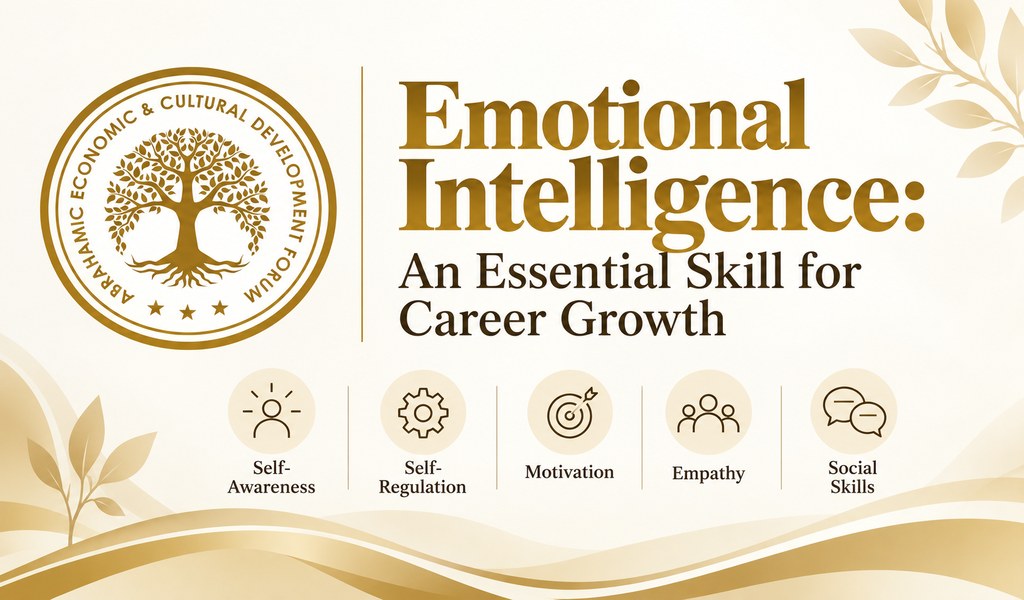
The Five Important Elements of Emotional Intelligence
1. Self-Awareness: Understand Your Emotions
Self-awareness is the ability to recognize what you are feeling and understand how those feelings may influence your decisions and behaviour.
For example, a professional who feels frustrated after receiving negative feedback may notice the urge to respond immediately. By recognizing that frustration, the person can pause, reflect, and respond more constructively.
Self-awareness also includes understanding personal strengths, limitations, values, and common reactions under pressure.
How to develop it:
-
Reflect on situations that trigger strong emotional reactions.
-
Ask yourself why a particular conversation made you feel uncomfortable.
-
Request honest feedback from trusted colleagues or mentors.
-
Review important decisions to understand whether emotions influenced your judgement.
The more clearly people understand themselves, the easier it becomes to identify areas for improvement.
2. Self-Regulation: Respond Rather Than React
Self-regulation involves managing emotional reactions and choosing responses that fit the situation.
Workplaces inevitably involve pressure, misunderstandings, setbacks, and competing priorities. Responding impulsively can damage relationships or make a manageable problem more complicated.
Imagine a project manager whose team misses an important deadline. An angry reaction may make team members reluctant to explain what went wrong. A calm discussion can help identify the cause, clarify responsibilities, and establish a realistic recovery plan.
Self-regulation does not mean suppressing frustration or pretending that everything is fine. It means expressing concerns appropriately and avoiding unnecessary harm.
How to develop it:
-
Pause before responding to an upsetting message.
-
Separate facts from assumptions.
-
Use calm, specific language when discussing problems.
-
Focus on solutions and next steps rather than assigning blame.
These habits can help professionals maintain composure without ignoring genuine concerns.
3. Motivation: Stay Focused on Meaningful Goals
Emotional intelligence also involves understanding what motivates you and maintaining commitment when progress becomes difficult.
Professional development rarely follows a perfectly smooth path. People may experience rejection, mistakes, changing responsibilities, or periods when their efforts do not produce immediate results.
A motivated professional views setbacks as opportunities to review their approach rather than automatic proof of failure. This does not mean ignoring obstacles. It means identifying what can be learned and deciding what to do next.
How to develop it:
-
Set clear, realistic professional goals.
-
Break large tasks into manageable steps.
-
Recognize progress instead of focusing only on final results.
-
Connect daily responsibilities with a larger personal or professional purpose.
Sustained motivation is often supported by clear goals, useful feedback, and a willingness to learn.
4. Empathy: Understand Other People's Perspectives
Empathy is the ability to recognize and consider another person's feelings, circumstances, and point of view.
In diverse workplaces, people may approach the same problem differently because of their experiences, responsibilities, cultural backgrounds, or communication styles. Empathy helps professionals understand these differences without immediately judging them.
For instance, a colleague who appears disengaged during a meeting may be dealing with competing responsibilities or may be uncomfortable speaking in a large group. Asking a respectful question can reveal more than making assumptions.
Empathy does not require agreeing with every opinion. It means listening carefully enough to understand what another person is communicating.
How to develop it:
-
Listen without interrupting.
-
Ask open-ended questions before offering advice.
-
Consider how a decision may affect different team members.
-
Avoid assuming that everyone communicates or responds in the same way.
Empathy can support more respectful working relationships and help teams discuss difficult issues constructively.
5. Social Skills: Build Effective Professional Relationships
Social skills involve communicating clearly, collaborating with others, managing disagreements, and maintaining productive relationships.
These abilities matter in almost every profession. A technically capable employee may still struggle if they cannot explain ideas clearly, coordinate tasks, or work through differences with colleagues.
A team leader, for example, needs to communicate expectations, recognize contributions, address performance concerns, and help team members work towards shared objectives.
How to develop it:
-
Practise clear and respectful communication.
-
Give feedback that focuses on behaviour and outcomes.
-
Address misunderstandings early.
-
Recognize the contributions of colleagues.
-
Adapt your communication style to the situation without compromising honesty.
Strong social skills help turn individual expertise into effective teamwork.
Why Emotional Intelligence Matters for Career Growth?
Better Communication and Collaboration
Good communication involves more than speaking confidently. It also requires listening, understanding context, asking useful questions, and recognizing how a message may be received.
Emotional intelligence helps professionals communicate concerns without unnecessary hostility and express disagreement without damaging working relationships.
For example, instead of saying, "You never complete your work on time," a colleague might explain, "When the report arrives late, the team has less time to review it. Can we agree on an earlier handover time?"
The second approach focuses on the problem and encourages a practical solution.
Stronger Leadership and Decision-Making
Leadership requires people to make decisions, explain priorities, handle uncertainty, and respond to different needs. Emotional intelligence can help leaders consider both the practical facts and the human impact of their decisions.
A manager who listens to concerns before introducing a major change may identify implementation problems earlier. A leader who acknowledges a mistake can also encourage greater openness and accountability.
However, emotional intelligence does not replace technical knowledge, ethical judgement, or sound decision-making. It complements these abilities by helping leaders understand people and communicate decisions responsibly.
More Constructive Conflict Resolution
Disagreements are a normal part of working with others. People may have different priorities, limited resources, or competing ideas about how a task should be completed.
Without emotional awareness, a disagreement can quickly become personal. With it, people are better positioned to separate the issue from the individual, understand competing viewpoints, and identify common ground.
A useful starting point is to ask: What problem are we trying to solve, and what information do we need to reach a fair decision?
This shifts the discussion from winning an argument towards resolving the issue.
Greater Openness to Feedback and Learning
Professional growth requires people to recognize what they do well and where they need improvement. Yet feedback can feel uncomfortable, particularly when it challenges a person's self-image or established habits.
Emotional intelligence helps professionals listen without immediately becoming defensive. They can consider whether the feedback is useful, ask for examples, and decide which changes are appropriate.
Not all feedback is accurate or fair, so accepting feedback does not mean agreeing with everything. The goal is to evaluate it thoughtfully and use relevant information to improve.
More Effective Work Across Cultures
International teams bring together people with different languages, social expectations, communication habits, and approaches to decision-making.
Emotional intelligence supports curiosity and patience when these differences create misunderstandings. A direct communication style, for example, may be viewed as efficient by one person and unnecessarily blunt by another.
Rather than assuming that one style is universally correct, emotionally intelligent professionals clarify expectations and adapt where appropriate.
This ability is valuable for international cooperation, entrepreneurship, education, and leadership across diverse communities.
Can Emotional Intelligence Be Developed?
Emotional intelligence is not simply a fixed personality trait. Many of its practical elements can be strengthened through reflection, feedback, deliberate practice, and experience.
Progress usually comes from changing everyday habits rather than making one major adjustment.
Practise Emotional Reflection
At the end of a challenging workday, consider three questions:
-
What situation affected my emotions most strongly?
-
How did I respond, and what was the result?
-
What could I do differently if a similar situation occurs again?
This reflection can help identify patterns and make future responses more deliberate.
Improve Active Listening
During conversations, give the other person your attention instead of preparing your reply while they are speaking. Summarize the main point in your own words and ask whether you have understood correctly.
This simple habit can reduce misunderstandings and help colleagues feel heard.
Learn to Accept Constructive Feedback
When receiving feedback, listen first and ask for specific examples where necessary. Take time to reflect before deciding what action to take.
You can also ask a trusted mentor or colleague to identify one communication habit you could improve.
Practise Difficult Conversations
Avoiding every uncomfortable conversation can allow problems to grow. Prepare for difficult discussions by identifying the issue, gathering relevant facts, considering the other person's perspective, and deciding what outcome would be reasonable.
The aim is not to control the other person's reaction. It is to communicate your concerns clearly and respectfully.
Seek Learning Opportunities
Workshops, mentoring, leadership training, peer discussions, and reflective exercises can help people practise emotional intelligence in different situations.
The most useful learning opportunities connect concepts with real workplace challenges and allow participants to reflect on their behaviour.
Emotional Intelligence in the Age of Digital Work
Digital communication has made it easier to collaborate across locations, but it can also remove important social cues. An email or short message may appear rude or dismissive even when that was not the sender's intention.
Remote and hybrid teams therefore need to be especially thoughtful about tone, clarity, responsiveness, and expectations.
Before sending a sensitive message, consider whether the wording is clear and respectful. If a misunderstanding develops, a direct conversation may be more effective than exchanging increasingly frustrated messages.
Technology can support communication, but it cannot remove the need for human judgement. Emotional intelligence remains relevant wherever people work together, whether in person, online, or across time zones.
Common Misconceptions About Emotional Intelligence
Misconception 1: Emotionally intelligent people never get upset.
In reality, emotional intelligence is about recognizing and managing emotions, not eliminating them.
Misconception 2: Empathy means always agreeing with others.
People can understand another perspective while maintaining different opinions, boundaries, and responsibilities.
Misconception 3: Emotional intelligence is only important for managers.
Students, entry-level employees, experienced professionals, entrepreneurs, and community leaders all benefit from communication, self-awareness, and collaboration.
Misconception 4: Technical skills matter less than emotional intelligence.
Both matter. The balance depends on the role, and neither automatically compensates for serious weaknesses in the other.
Misconception 5: Emotional intelligence develops automatically with age.
Experience can provide opportunities to learn, but improvement also requires reflection, feedback, and a willingness to change..
AECD Forum Perspective
Professional development is about more than acquiring qualifications or technical knowledge. It also involves developing the judgement, communication skills, and self-awareness needed to apply knowledge responsibly.
For the Abrahamic Economic & Cultural Development (AECD) Forum, emotional intelligence connects naturally with areas such as education, leadership, skill development, youth development, women's empowerment, entrepreneurship, and international cooperation.
Educational and training environments can help participants practise teamwork, discuss different perspectives, receive feedback, and develop confidence in handling challenging situations. Mentoring and professional development initiatives can also encourage people to reflect on their strengths and identify areas for further growth.
These skills are particularly relevant in diverse communities and international settings, where progress often depends on respectful dialogue and the ability to work with people whose experiences differ from our own.
By recognizing emotional intelligence as part of lifelong learning, individuals and institutions can give greater attention to the human skills that complement academic knowledge and professional expertise.
Practical Action Points: How to Improve Your Emotional Intelligence
-
Pause before reacting. When a situation frustrates you, take a moment to consider your response before speaking or sending a message.
-
Practise active listening. Give people time to explain their views and ask questions to confirm your understanding.
-
Request specific feedback. Ask a trusted colleague or mentor which communication habit you could improve.
-
Reflect on difficult situations. Identify what triggered your reaction, what worked, and what you might change next time.
-
Approach disagreements with curiosity. Seek to understand the problem and the other person's reasoning before proposing a solution.
-
Develop cultural awareness. Learn about different communication styles and avoid making assumptions based on background or appearance.
-
Make learning continuous. Use mentoring, relevant training, reading, and workplace experience to strengthen your interpersonal and leadership skills.
Emotional intelligence is an important part of professional development because careers are built not only through knowledge but also through decisions, relationships, communication, and the ability to learn from experience.
Understanding emotions, listening carefully, responding thoughtfully, and handling disagreements constructively can help people work more effectively with colleagues and navigate professional challenges with greater awareness.
These skills are not developed overnight. They grow through consistent practice, honest reflection, and a willingness to consider different perspectives.
For students preparing to enter the workplace, professionals seeking new responsibilities, and leaders guiding teams, emotional intelligence offers a practical area for continued learning. Combined with technical competence, ethical judgement, and a commitment to improvement, it can help people contribute more thoughtfully to their workplaces and communities.
Career growth is not only about what a person knows. It is also about how that knowledge is applied, how others are treated, and how effectively people work together.
#EmotionalIntelligence #CareerGrowth #ProfessionalDevelopment #LeadershipSkills #WorkplaceSkills #SelfAwareness #Empathy #CommunicationSkills #PersonalGrowth #LifelongLearning #Teamwork #CareerDevelopment #AECDForum