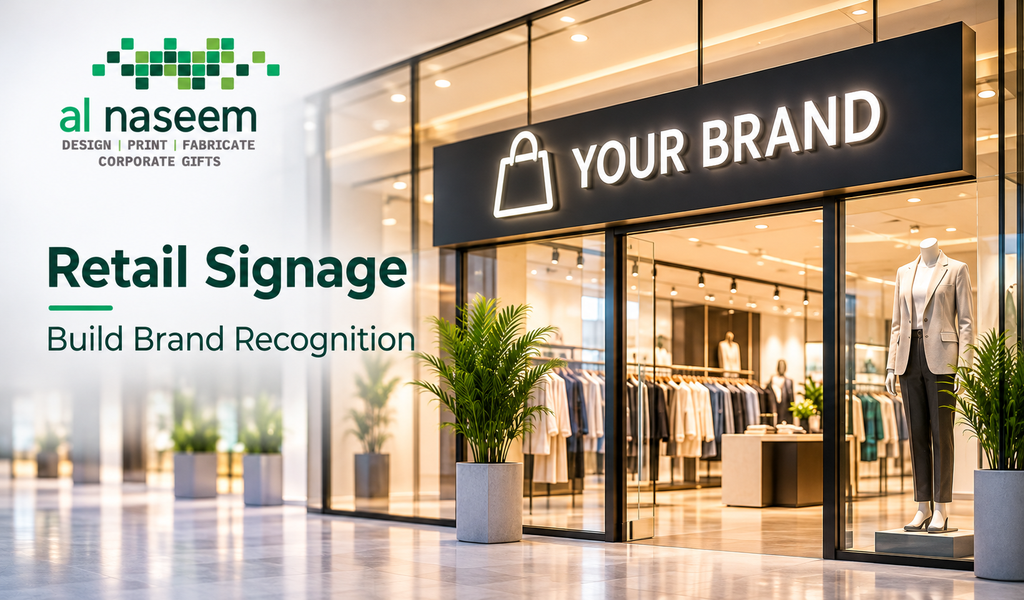
Your Signage Is More Than Just a Store Name
When customers walk through a shopping street, visit a shopping mall, or explore a commercial area, they encounter dozens of businesses competing for their attention. Some stores immediately catch their eye, while others blend into the background.
What makes the difference?
In many cases, effective signage plays an important role.
For retail businesses, restaurants, shops, and showrooms, signage is one of the most visible parts of their brand identity. It helps customers recognise a business, understand what it offers, locate its premises, and remember it after their visit.
A well-designed sign does more than display a business name. It communicates the personality, positioning, and identity of a brand.
In competitive markets such as Dubai, where retail and hospitality businesses operate in busy commercial environments, professional signage can become an important part of a company's branding and marketing strategy.
Let's understand how signage helps businesses build stronger brand recognition and create a consistent customer experience.
1. Creates a Strong First Impression
Before customers enter a shop, they often notice its storefront, logo, colours, and signage.
These visual elements help shape their initial perception of the business.
For example:
-
A premium showroom may use elegant dimensional lettering and refined finishes.
-
A fashion boutique may use modern typography and distinctive illuminated signage.
-
A restaurant may use attractive storefront signage that reflects its dining concept.
-
A supermarket may use bold, clearly visible signage to communicate convenience and accessibility.
The objective is to create a visual identity that matches the business and appeals to its intended audience.
A poorly designed or difficult-to-read sign can make even an attractive retail space less noticeable.
This is why businesses should consider signage as part of their overall brand presentation rather than an afterthought.
2. Makes Your Business Easier to Recognise
Brand recognition develops when customers repeatedly encounter consistent visual elements associated with a business.
Your logo, brand colours, typography, and signage all contribute to this process.
Imagine a retail brand operating several outlets across Dubai. If every location uses different signage styles, colours, or logo placements, customers may find it harder to connect the stores with the same brand.
However, when the same visual identity is maintained across all locations, recognition becomes easier.
Important elements of consistent retail signage include:
-
Correct logo usage
-
Consistent brand colours
-
Recognisable typography
-
Similar signage layouts
-
Appropriate lighting
-
Consistent material finishes
Over time, these repeated visual elements can help customers become more familiar with the business.
Consistency is one of the foundations of recognisable branding.
3. Helps Attract Attention in Competitive Retail Locations
Retail businesses often operate in areas where multiple shops compete for visibility.
Think about a shopping street with several restaurants, clothing stores, beauty outlets, and electronics shops. Each business needs a way to communicate its presence.
Effective signage can help a store stand out without relying entirely on promotional campaigns.
Illuminated signs use lighting to improve visibility, particularly in low-light environments and during evening trading hours.
Common options include front-lit lettering, backlit signs, and LED-based displays.
3D Letter Signage
Three-dimensional lettering creates depth and can give a storefront or interior wall a more distinctive appearance.
Materials such as acrylic, stainless steel, and aluminium can be selected according to the desired finish and application.
Window Graphics
Window graphics can display brand elements, product information, promotional messages, and seasonal campaigns.
They also help businesses make use of otherwise underutilised glass surfaces.
The right solution depends on the location, storefront design, viewing distance, lighting conditions, and applicable signage requirements.
4. Communicates What Your Business Offers
A good sign should not only tell customers the name of a business. It should also help them understand what they can expect.
For example:
-
A restaurant can use signage to communicate its cuisine or dining concept.
-
A beauty store can highlight its beauty and skincare products.
-
A furniture showroom can communicate its interior and home furnishing offerings.
-
A clothing boutique can use its visual identity to reflect its fashion category.
-
An electronics retailer can display its business category through clear storefront branding.
Supporting information should be simple and easy to understand.
Avoid filling signs with too much text. Customers usually need only a few seconds to understand the main message.
The most effective signage communicates the essential information clearly.
5. Builds Trust Through Professional Presentation
Customers often form impressions based on how a business presents itself.
Clean storefront signage, accurate branding, quality materials, and professional installation can contribute to a more organised and credible appearance.
Consider two retail stores offering similar products.
One has faded graphics, inconsistent branding, and poorly maintained signage. The other has a clean storefront, properly aligned lettering, and consistent visual presentation.
Although signage alone cannot establish product quality or guarantee customer trust, the overall presentation can influence how professionally a business is perceived.
This is particularly relevant for businesses that depend on repeat customers and long-term relationships.
6. Supports Brand Recognition Across Multiple Locations
For retail chains, restaurants, franchises, and showroom businesses, maintaining consistent signage across locations is especially important.
A customer visiting one outlet should be able to recognise another branch through familiar branding.
Businesses can establish signage guidelines covering:
-
Logo dimensions and placement
-
Brand colour specifications
-
Typography
-
Signboard proportions
-
Lighting styles
-
Material selection
-
Window graphics
-
Interior branding
These guidelines help maintain consistency even when different locations have different architectural layouts.
For businesses expanding across Dubai and the UAE, a standardised signage approach can support a more recognisable brand presence.
7. Improves the Customer Experience Inside the Store
Signage is not limited to outdoor advertising or storefront branding.
Interior signage also plays an important role in helping customers navigate a retail environment.
Useful interior signage includes:
Directional signage: Helps visitors locate different sections, departments, or service areas.
Category signage: Identifies product categories and makes shopping more convenient.
Promotional signage: Communicates seasonal offers, new arrivals, and special campaigns.
Reception and counter signage: Makes service points easier to identify.
Informational signage: Provides useful details about products, services, or store facilities.
When designed properly, these signs reduce confusion and make the shopping environment easier to navigate.
A good customer experience involves more than attractive decoration. It also requires clear communication throughout the store.
8. Why Material Selection Matters in Retail Signage?
The material used for signage influences its appearance, durability, maintenance, and suitability for different environments.
Choosing a material simply because it looks attractive in a sample may not be enough.
Businesses should consider where the sign will be installed and how it will be used.
For outdoor retail signage in Dubai, businesses should also consider exposure to sunlight, heat, dust, and other environmental conditions.
Material specifications, protective finishes, and installation methods should be selected according to the actual application.
Professional material selection can help businesses avoid unnecessary maintenance and premature replacement.
9. Seasonal and Promotional Signage Keeps Your Brand Relevant
Retail businesses frequently update their promotions, products, and campaigns.
Signage provides a practical way to communicate these changes.
For example:
-
Ramadan and Eid promotions
-
Summer and winter sales
-
New product launches
-
Festive offers
-
Store openings
-
Clearance sales
-
Special events
Window graphics, printed promotional panels, standees, and display boards can be updated according to campaign requirements.
However, promotional signage should complement the main brand identity rather than compete with it.
Maintaining a consistent colour palette, logo placement, and typography helps customers recognise the business even when promotional messages change.
10. Common Retail Signage Mistakes Businesses Should Avoid
Even a good business can lose branding opportunities through poorly planned signage.
Here are some common mistakes:
1. Overcrowded designs
Too many words, images, and promotional messages make signs difficult to understand.
2. Poor visibility
Small lettering, weak contrast, or unsuitable placement can make signage difficult to read from a distance.
3. Inconsistent branding
Different colours, fonts, and logo variations across locations can weaken brand recognition.
4. Unsuitable materials
Materials that are not appropriate for the installation environment may deteriorate more quickly.
5. Poor installation
Uneven alignment, exposed wiring, and unfinished edges can affect the overall presentation.
6. Ignoring maintenance
Faded graphics, damaged lettering, and non-functioning illumination can make a business look neglected.
7. Ignoring local requirements
Retail signage may be subject to building management rules and applicable local approvals. Businesses should verify the requirements before fabrication and installation.
11. How to Choose the Right Signage for Your Retail Business?
Before investing in new signage, consider these important questions:
-
What is the purpose? Is the sign intended for brand recognition, directions, promotions, or product information?
-
Who is the target audience? The design should reflect the customers your business wants to reach.
-
Where will it be installed? Indoor and outdoor signage have different requirements.
-
What is the viewing distance? Letter size and contrast should suit the location.
-
Which materials are appropriate? Consider appearance, durability, maintenance, and budget.
-
Does the design match your brand? Maintain consistency with your existing identity.
-
Who will handle fabrication and installation? Proper execution is just as important as the initial design.
Taking time to answer these questions can help businesses make better decisions and achieve more effective signage.
Make Your Brand Visible, Recognisable, and Memorable
For retail businesses, signage is one of the most practical ways to bring brand identity into the physical customer environment.
From storefront signboards and illuminated logos to window graphics, promotional displays, and interior directional signs, every element can contribute to how customers recognise and experience a business.
The strongest signage combines clear communication, consistent branding, suitable materials, attractive design, and professional installation.
For shops, restaurants, showrooms, and retail chains in Dubai, investing in thoughtfully planned signage can help create a stronger visual presence and a more organised customer experience.
At Al Naseem, design, printing, and fabrication come together to support businesses with professional signage and branding solutions. Whether you need storefront signage, illuminated letters, window graphics, promotional displays, or interior branding, choosing the right approach can help your business communicate its identity effectively.