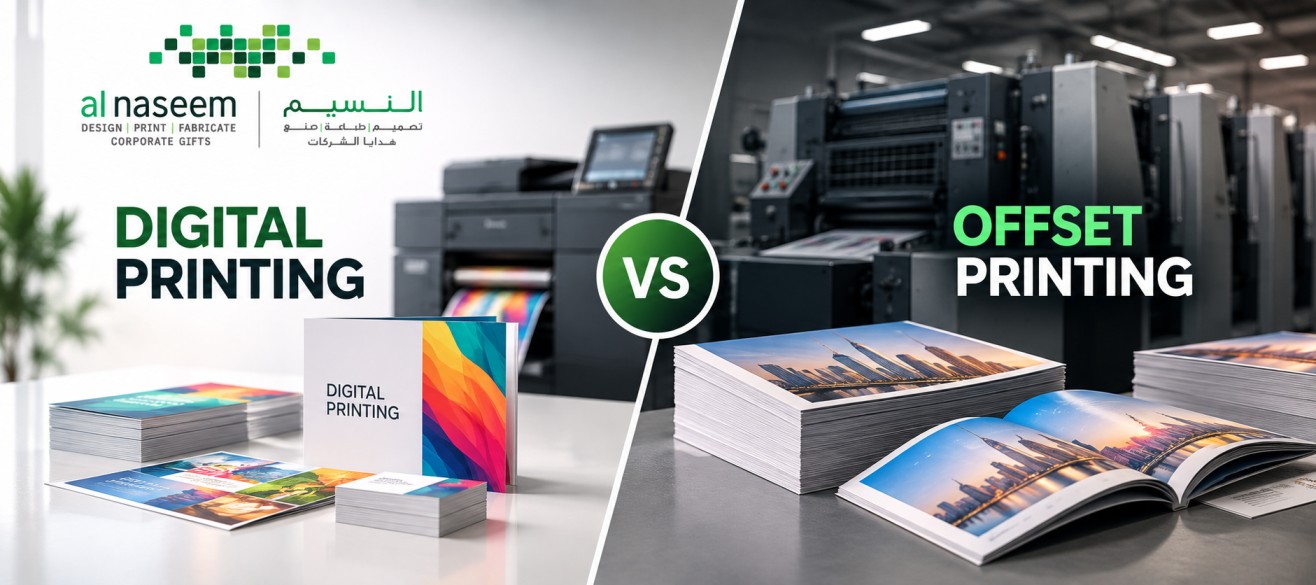
Choosing the Right Printing Method
When a business needs brochures, business cards, flyers, catalogues, packaging, stationery, or promotional materials, one of the first decisions is choosing the right printing method.
Two of the most commonly considered options are digital printing and offset printing.
Both can produce professional results, but they are designed for different types of printing requirements. The right choice depends on factors such as quantity, turnaround time, colour requirements, paper type, customization, finishing, and budget.
Understanding the difference can help businesses avoid unnecessary costs and choose a printing solution that matches their actual project needs.
What Is Digital Printing?
Digital printing transfers a digital file directly onto the printing surface without requiring traditional printing plates.
It is particularly useful for projects where speed, flexibility, and smaller quantities are important.
Digital printing is commonly used for:
- Business cards
- Flyers
- Posters
- Brochures
- Invitations
- Menus
- Short-run catalogues
- Promotional materials
- Personalized marketing materials
One of its biggest advantages is that businesses can print relatively small quantities without preparing traditional printing plates.
Why Businesses Choose Digital Printing?
Digital printing can be a practical option when you need:
Faster turnaround: It generally involves fewer preparation steps than traditional offset printing.
Smaller quantities: You don't necessarily need to order a very large quantity to make the project worthwhile.
Personalization: Individual copies can be customized, making digital printing useful for variable-data campaigns and personalized marketing materials.
Flexibility: If your design changes frequently, digital printing can make it easier to produce updated versions.
What Is Offset Printing?
Offset printing is a traditional commercial printing process in which the image is transferred from a printing plate to a rubber blanket and then onto the printing surface.
It is widely used for larger-volume commercial printing projects where consistent production and high-quality results are important.
Common applications include:
- Corporate brochures
- Magazines
- Books
- Large-volume flyers
- Catalogues
- Corporate stationery
- Marketing collateral
- Packaging materials
Offset printing involves more preparation than digital printing, but for suitable high-volume projects, it can offer production and cost advantages.
Which Printing Method Is Better for Small Quantities?
For a small quantity, digital printing is often the more practical option.
For example, imagine a business needs only 100 promotional brochures for an upcoming meeting. Digital printing can allow the business to produce the required quantity without committing to a much larger print run.
This can reduce unnecessary inventory and make it easier to update the artwork for the next campaign.
What About Large Print Runs?
For larger quantities, offset printing can become increasingly attractive.
When the setup costs are spread across a large number of printed pieces, the per-unit economics can improve.
For example, a company planning thousands of brochures, catalogues, or other marketing materials may want to compare offset printing with digital production before making a decision.
The most economical option should always be determined from an actual quotation because pricing varies according to specifications.
Digital Printing Is Useful for Personalization
One area where digital printing has a particularly useful advantage is personalization.
Businesses can create campaigns where different printed pieces contain different information.
For example:
- Different customer names
- Different promotional codes
- Different offers
- Personalized direct-mail materials
- Location-specific marketing
- Different versions of a campaign
This can make digital printing valuable for targeted marketing campaigns where every printed piece doesn't necessarily need to be identical.
Offset Printing Can Be Valuable for Consistent Large-Scale Production
Offset printing is often considered when businesses need a large number of identical printed materials.
Once the press is prepared, large quantities can be produced efficiently while maintaining consistency throughout the run.
This makes it suitable for projects where businesses already know the required quantity and don't need frequent changes between individual copies.
Don't Forget Paper and Finishing
Choosing between digital and offset printing is only part of the decision.
The paper and finishing can have a major influence on the final appearance.
Depending on the project, businesses may consider:
- Paper weight
- Matte or gloss finish
- Coated or uncoated stock
- Lamination
- Foil effects
- Embossing
- Spot finishes
- Die cutting
- Folding
- Binding
A premium business brochure, for example, may require a completely different combination of paper and finishing from a simple promotional flyer.
That's why a professional printer should look at the complete project specification, rather than recommending a printing process based only on quantity.
How Should You Choose?
Before requesting a printing quotation, consider these questions:
1. How many copies do you need?
Quantity is one of the most important factors when comparing digital and offset printing.
2. How quickly do you need them?
If the project has a tight deadline, turnaround time and production requirements should be discussed before placing the order.
3. Does every copy need to be identical?
If you require personalization or multiple versions, digital printing may offer greater flexibility.
4. What type of paper do you want?
Paper availability and compatibility can influence the choice of printing process.
5. Do you need special finishing?
If your project requires particular finishes or complex finishing work, discuss these requirements with the printer before finalizing the production method.
6. What is the total project budget?
Don't compare only the price per printed piece. Consider setup, finishing, minimum quantities, delivery, and potential waste or excess inventory.
Digital Printing vs Offset Printing: There Is No Universal Winner
The question isn't really "Which printing method is better?"
The more useful question is:
"Which printing method is better for this particular project?"
A small, urgent, personalized job may be better suited to digital printing, while a large-volume standardized project may justify offset printing.
The best decision comes from balancing quantity, quality, turnaround time, customization, materials, finishing, and total cost.
Professional Printing Starts With the Right Production Method
A good printing project begins long before the machine starts running.
At Al Naseem, understanding the purpose of a project helps businesses select an appropriate printing approach, material, finish, and production specification.
Whether you need business cards, brochures, flyers, catalogues, corporate stationery, promotional materials, or large-volume commercial printing, discussing your requirements with an experienced printing team can help you make a more informed decision.