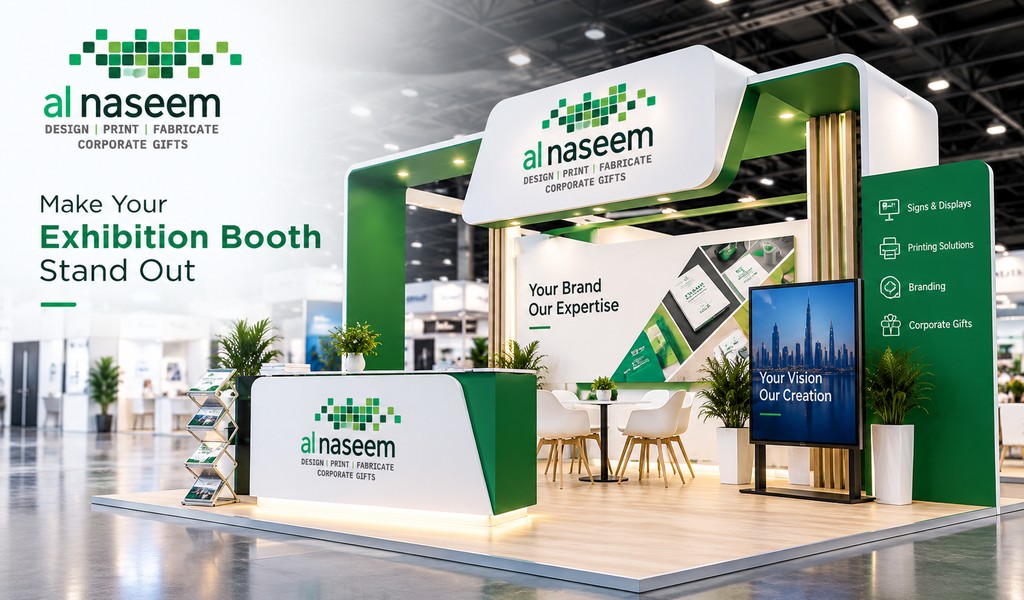
Make Your Exhibition Booth Stand Out
Effective exhibition branding combines visual identity, clear messaging, thoughtful space planning, quality printing, and a welcoming visitor experience.
Whether your company is participating in a trade show, launching a product, or presenting its services to potential clients, the way your booth looks and communicates can influence how visitors perceive your business.
So, how can you make your exhibition booth stand out for the right reasons?
Let's explore the practical steps.
1. Start With a Clear Exhibition Branding Strategy
Before selecting colours, printing graphics, or designing displays, define what you want your booth to achieve.
Different businesses attend exhibitions for different reasons. Some want to generate qualified leads, while others aim to launch products, demonstrate equipment, build partnerships, or strengthen brand awareness.
Your objective should guide every branding decision.
Ask yourself:
-
Who is your target audience?
-
What should visitors understand about your business?
-
Which products or services deserve the most attention?
-
What action should visitors take after seeing your booth?
-
How will your team measure the exhibition's success?
For example, a technology company demonstrating a new product may need interactive displays and demonstration areas. A corporate services provider may benefit more from clear messaging, professional graphics, and comfortable meeting space.
When the objective is clear, it becomes easier to make practical decisions about the booth's layout, signage, printing, and promotional materials.
2. Create a Strong Visual Identity
Your exhibition booth should be recognisable as part of your brand, not like a collection of unrelated promotional materials.
Use your company's logo, brand colours, typography, and visual style consistently across the booth.
Important branding elements may include:
-
Main backdrop graphics
-
Illuminated logos
-
Reception counters
-
Product display panels
-
Directional signage
-
Brochures and catalogues
-
Staff uniforms
-
Digital screens
Consistency helps visitors connect the booth with your business and creates a more organised appearance.
Avoid filling every available surface with graphics. A well-planned design gives the most important elements enough space to attract attention.
The goal is not to display everything your company does. It is to make your most important message easy to recognise and understand.
3. Use Large, Clear, and Readable Graphics
Exhibition halls can be busy, noisy, and visually crowded. Visitors often decide which booths to approach while walking past them.
This makes readability particularly important.
Your main headline should communicate what your company offers without requiring visitors to stop and study a paragraph.
For example, instead of using a long company introduction, a business could highlight a direct message such as:
-
Custom Printing and Branding Solutions
-
Smarter Packaging for Growing Businesses
-
Innovative Technology for Modern Workplaces
-
Complete Exhibition and Event Branding
These examples illustrate the approach; the best message depends on your actual products and audience.
What makes exhibition graphics effective?
Readable typography: Use text sizes appropriate for the viewing distance.
Strong contrast: Ensure text stands out clearly against the background.
Visual hierarchy: Make the headline prominent, followed by supporting information.
High-quality artwork: Prepare files according to the printing provider's specifications.
Careful placement: Avoid putting important information where furniture, visitors, or display equipment will obscure it.
For large-format exhibition printing, artwork resolution, colour handling, material selection, and finishing should be discussed before production begins.
4. Make Your Booth Visible From a Distance
A booth should communicate its identity before visitors reach the counter.
Depending on the venue and stand configuration, useful features may include:
-
Overhead brand signs
-
Large-format backdrops
-
Illuminated logos
-
Suspended signage, where permitted
-
Tall graphic panels
-
Distinctive product displays
The correct approach depends on the exhibition's rules, available space, sightlines, and neighbouring stands.
For a smaller booth, a strong backdrop and carefully positioned logo may be more effective than adding multiple structures.
For a larger stand, layered signage and overhead branding can help visitors recognise the company from different directions.
Always check the organiser's requirements for signage height, suspended structures, electrical installations, and permitted materials before approving the final design.
5. Choose the Right Printing Materials
A visually impressive design can lose its impact if the printed materials are unsuitable for the application.
Exhibition branding may involve several materials, each serving a different purpose.
Material selection should consider appearance, weight, transport, installation, lighting, durability, and reuse.
For example, a lightweight display intended for repeated events may require a different solution from a one-time backdrop designed for a particular venue.
It is also important to consider how graphics will be transported, stored, cleaned, and replaced after the exhibition.
6. Use Lighting to Highlight Your Brand
Lighting can influence how visitors perceive your booth and its displays.
Well-planned illumination can help logos stand out, draw attention to products, and make important graphics easier to see.
Depending on the design, businesses may consider:
-
Backlit graphics
-
Illuminated logos
-
LED accent lighting
-
Focused product lighting
-
Lighting integrated into display structures
Lighting should complement the brand rather than overpower it.
Avoid excessive glare, uneven illumination, or reflections that make text and product displays difficult to view. Electrical requirements and installation should also comply with the venue's specifications.
For premium corporate booths, subtle lighting combined with clean graphics and suitable materials can create a polished appearance without unnecessary visual clutter.
7. Plan the Visitor Journey
A booth can look impressive but still perform poorly if visitors cannot navigate it comfortably.
Space planning is therefore just as important as visual design.
Consider how visitors will enter the booth, where they will view products, and where conversations or demonstrations will take place.
A practical layout may include:
-
Welcome area: A clear place for initial conversations.
-
Brand communication zone: Main graphics explaining the company's offering.
-
Product display area: Space to examine products or demonstrations.
-
Meeting area: A suitable place for more detailed discussions.
-
Storage area: A discreet location for brochures, supplies, and personal belongings.
Avoid blocking entrances with counters or displays. Ensure staff can move comfortably and visitors can access the main features without crowding.
Accessibility, safe circulation, and compliance with the organiser's layout requirements should be considered from the beginning.
8. Make Your Booth Interactive
Exhibitions provide an opportunity to engage visitors beyond static graphics.
Interactive elements can help demonstrate what a company offers and encourage meaningful conversations.
Depending on the business, options include:
-
Live product demonstrations
-
Touchscreen presentations
-
Short videos
-
Sample products
-
Interactive displays
-
Guided demonstrations
-
QR codes linking to product information or brochures
The interaction should support the exhibition objective.
For instance, a manufacturer might demonstrate a product's operation, while a service provider could use a short presentation to explain its process.
QR codes can help visitors access additional information, but they should be large enough to scan easily and direct people to a relevant, mobile-friendly page.
Avoid adding technology simply because it looks impressive. Each feature should offer a useful reason for visitors to engage.
9. Prepare Promotional Materials That Support the Booth
Exhibition branding should extend beyond the main stand.
Printed materials give visitors something useful to take away and can support conversations after the event.
Depending on your industry, consider:
-
Product brochures
-
Company profiles
-
Service catalogues
-
Business cards
-
Product specification sheets
-
Branded folders
-
Promotional gifts
-
Follow-up cards
These materials should follow the same visual identity as the booth.
Make the information practical and easy to navigate. Include relevant contact details, website information, and a clear next step where appropriate.
Avoid printing excessive quantities before estimating demand. Reviewing previous event attendance and the number of expected conversations can help with planning.
10. Maintain Quality Across Every Branding Element
Visitors may notice details that businesses overlook during preparation.
Misaligned graphics, inconsistent colours, damaged panels, poor lighting, and unfinished edges can detract from an otherwise attractive booth.
A quality review should cover the complete display, including:
-
Logo accuracy and placement
-
Colour consistency
-
Print clarity
-
Material finish
-
Panel alignment
-
Lighting performance
-
Electrical safety
-
Structural stability
-
Fixings and edges
-
Cleanliness before opening
For Dubai exhibitions, installation schedules and venue access windows can be tight. Finalising artwork, materials, measurements, and production requirements early helps reduce last-minute pressure.
A pre-event checklist and a final site inspection can help identify issues before visitors arrive.
11. Think Beyond the Exhibition Day
The value of exhibition branding does not have to end when the event closes.
Where practical, design display elements for reuse across multiple exhibitions, product launches, conferences, and corporate events.
Reusable display systems can reduce the need to produce an entirely new setup for every event.
When planning for reuse, consider:
-
Modular display structures
-
Replaceable graphic panels
-
Portable signage systems
-
Easy-to-transport components
-
Durable materials
-
Simple assembly and storage
-
Adaptable layouts for different booth sizes
Some elements, such as event-specific dates or product-launch messages, may need to be replaced. A modular design makes it easier to update these details without rebuilding the entire booth.
For businesses attending several events throughout the year, this approach can improve consistency and make better use of their branding investment.
12. Measure Whether Your Exhibition Branding Worked
A successful booth should support business objectives, not just look attractive.
Before the exhibition, decide how you will evaluate performance.
Useful measures include:
-
Relevant visitor conversations
-
Qualified leads collected
-
Product demonstrations completed
-
Meetings arranged
-
Follow-up requests received
-
Website visits from exhibition-specific links
-
Sales opportunities created after the event
You can also ask staff which displays attracted the most interest and which questions visitors asked most frequently.
These observations can help you improve future booth designs, messaging, and promotional materials.
Remember that not every visitor will become an immediate customer. Exhibition results should be evaluated against the event's objectives and followed up consistently after the show.
Common Exhibition Branding Mistakes to Avoid
Even a generous exhibition budget cannot compensate for poor planning.
Watch out for these common problems:
-
Too much information: Crowded graphics make the main message difficult to understand.
-
Weak visual hierarchy: Visitors cannot immediately identify the company or its offering.
-
Poor material selection: The display may not suit the venue, lighting, transport, or intended reuse.
-
Ignoring the booth layout: Counters and furniture obstruct movement or product visibility.
-
Inconsistent branding: Different colours, fonts, or logos create a disjointed appearance.
-
Last-minute production: Rushed printing and installation increase the risk of errors.
-
No lead follow-up plan: Valuable conversations may be lost if enquiries are not recorded and followed up.
A strong exhibition strategy addresses these issues before production begins.
Make Your Exhibition Presence Count
Exhibitions give businesses an opportunity to meet potential customers, demonstrate products, strengthen relationships, and present their brand in a professional environment.
But standing out requires more than an attractive booth. It takes a coordinated approach to design, printing, material selection, signage, lighting, space planning, and visitor engagement.
For companies participating in Dubai exhibitions, investing in well-planned exhibition branding can help create a more recognisable and organised presence.
At Al Naseem, professional branding and printing solutions bring together visual communication, material selection, fabrication, and finishing to help businesses present their identity consistently across physical marketing environments.
Whether you need exhibition graphics, branded panels, promotional printing, illuminated signage, or supporting marketing materials, start with a clear objective and a design that puts your audience first.