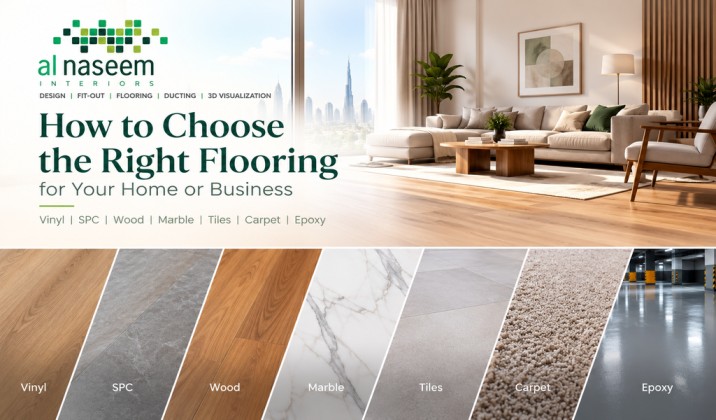
Choose Flooring That Fits Your Lifestyle and Space
Flooring is one of the most important decisions in any interior design project. It influences the appearance of a space, the comfort of the people using it, the ease of maintenance, and the long-term cost of ownership. Whether you are designing a modern villa, renovating an apartment, upgrading an office, or fitting out a commercial property, choosing the right flooring can make a significant difference.
With so many options available, it can be difficult to decide which material best suits your requirements. Marble may offer a luxurious appearance, vinyl can provide a practical and versatile finish, wood introduces natural warmth, and epoxy can be suitable for demanding environments. However, no single flooring material is ideal for every room or business.
The best choice depends on how the space will be used, the expected foot traffic, moisture exposure, maintenance requirements, budget, and the overall design concept.
In this guide, we explore seven popular flooring options and explain how to choose the right solution for your home or business.
1. Why Is Flooring Selection Important?
Flooring does more than complete the appearance of an interior. It provides the surface people walk on every day and must perform well under regular use.
Before selecting a flooring material, consider the following factors:
-
Durability: Can the flooring withstand the expected level of foot traffic and everyday wear?
-
Moisture resistance: Is it suitable for kitchens, bathrooms, entrances, or other areas exposed to water?
-
Maintenance: How much cleaning and ongoing care will it require?
-
Comfort: Does it provide the right level of warmth, softness, or underfoot support?
-
Appearance: Does it complement the furniture, wall finishes, lighting, and architectural style?
-
Installation: Is the existing subfloor suitable, and what preparation will be necessary?
-
Cost: What are the combined costs of materials, preparation, installation, finishing, and maintenance?
Considering these factors early can help prevent unsuitable material choices and unnecessary expenses later.
2. Vinyl Flooring: Versatile and Practical
Vinyl flooring is a popular option for residential and selected commercial interiors because it is available in a wide variety of colours, patterns, and finishes.
Modern vinyl flooring can reproduce the appearance of timber, stone, or decorative surfaces while offering a different set of maintenance and installation requirements.
Key benefits
-
Available in many designs and finishes
-
Generally comfortable underfoot compared with hard stone surfaces
-
Easy to clean when properly installed and maintained
-
Many products offer good resistance to everyday moisture
-
Available in different formats, including planks, tiles, and sheets
Where is vinyl flooring suitable?
Vinyl can be considered for bedrooms, living rooms, selected kitchens, apartments, offices, retail areas, and other spaces where a practical decorative surface is required.
What should you consider?
Vinyl products vary considerably in thickness, wear-layer quality, construction, and performance. The product specification should match the expected traffic and intended use.
The subfloor also needs to be properly prepared because unevenness or surface defects can affect the finished appearance. Water resistance at the surface does not automatically mean that the entire floor assembly is waterproof.
Best for: Homeowners and businesses seeking a versatile, relatively easy-to-maintain flooring option with a broad choice of designs.
3. SPC Flooring: A Rigid-Core Alternative
SPC stands for stone plastic composite or stone polymer composite. It is a type of rigid-core vinyl flooring commonly manufactured with a mineral-filled core and a decorative surface layer.
SPC flooring is often chosen for interiors that need the appearance of wood or stone without using those materials in their natural form.
Key benefits
-
Rigid construction that helps maintain dimensional stability
-
Available in wood-look and stone-look designs
-
Many products offer water-resistant or waterproof core construction
-
Generally straightforward routine cleaning
-
Often available in click-lock installation systems
Where is SPC flooring suitable?
Depending on the manufacturer's specifications, SPC flooring may be suitable for living rooms, bedrooms, apartments, offices, and selected retail environments.
What should you consider?
Although many SPC products resist water effectively, moisture can still affect the subfloor or enter through joints and perimeter details. Installation requirements, expansion allowances, and underlay compatibility should be checked carefully.
SPC flooring can also feel harder underfoot than some flexible vinyl products, and acoustic performance depends on the product and floor assembly.
Best for: Spaces where a rigid, decorative, low-maintenance floor is desired, provided the selected product is appropriate for the installation conditions.
4. Wood Flooring: Natural Warmth and Character
Wood flooring brings natural grain, texture, and warmth to an interior. It is particularly popular in living rooms, bedrooms, villas, and selected offices where a welcoming, refined appearance is desired.
Solid wood and engineered wood are different products. Solid wood is made from a single piece of timber, while engineered wood uses a real-wood surface layer over a constructed base.
Key benefits
-
Natural appearance and distinctive grain patterns
-
Adds warmth and character to interiors
-
Can complement classic, contemporary, and minimalist designs
-
Some solid and engineered products can be refinished, depending on their construction and thickness
Where is wood flooring suitable?
Wood flooring can work well in bedrooms, living areas, private offices, and other relatively dry spaces where the product can be maintained within its recommended environmental conditions.
What should you consider?
Wood is sensitive to changes in moisture and humidity. Excessive moisture can cause swelling, movement, gaps, or other damage.
Bathrooms and other persistently wet areas are generally unsuitable for conventional wood flooring. Direct sunlight, cleaning methods, and furniture movement can also influence its long-term appearance.
In the UAE, indoor temperature and humidity conditions should be considered, particularly where air conditioning operates for long periods.
Best for: Homeowners and businesses prioritising natural character, warmth, and a premium finish in suitable indoor environments.
5. Marble Flooring: A Premium, Timeless Finish
Marble is a natural stone valued for its distinctive veining, colour variations, and elegant appearance. It is often used in luxury villas, entrance halls, living rooms, hotel interiors, and selected commercial spaces.
Because marble is a natural material, each slab can have its own pattern and character.
Key benefits
-
Distinctive natural appearance
-
Suitable for sophisticated and luxury interiors
-
Available in different colours, patterns, and finishes
-
Can create a sense of continuity across large interior areas
Where is marble flooring suitable?
Marble can be considered for living rooms, entrance areas, reception spaces, and other interiors where its appearance is a priority.
What should you consider?
Marble is a natural stone and is susceptible to scratching, staining, and etching from acidic substances. Appropriate sealing may help reduce staining, but it does not make the surface immune to damage.
Polished marble can also become slippery when wet. The finish should therefore be selected with the intended use and slip-resistance requirements in mind.
Professional installation, suitable cleaning products, and periodic maintenance are important to preserve its appearance.
Best for: Projects seeking a natural, high-end finish where the owner is prepared for the maintenance requirements of stone.
6. Tile Flooring: Durable and Adaptable
Tiles are among the most widely used flooring materials in residential and commercial interiors. Common options include ceramic and porcelain tiles, with different products offering different levels of water absorption, strength, and suitability.
Their wide range of sizes, colours, textures, and finishes makes them adaptable to many design styles.
Key benefits
-
Available in numerous colours, sizes, and patterns
-
Many products are suitable for areas exposed to moisture
-
Generally easy to clean
-
Porcelain tiles can offer high durability when correctly selected and installed
-
Available in finishes designed for different functional requirements
Where is tile flooring suitable?
Depending on the product, tiles can be suitable for kitchens, bathrooms, living areas, balconies, corridors, offices, retail premises, and other high-use environments.
What should you consider?
Not all tiles have the same performance characteristics. Water absorption, slip resistance, surface texture, abrasion resistance, and suitability for the intended traffic should be checked before purchase.
Grout joints require cleaning and maintenance, while hard tile surfaces can feel cold or uncomfortable during prolonged standing.
Outdoor tiles must be specifically suitable for exterior exposure and local environmental conditions.
Best for: Homes and businesses seeking a durable, design-flexible surface, particularly in areas where cleaning and moisture resistance are important.
7. Carpet Flooring: Softness and Acoustic Comfort
Carpet provides a softer surface than most hard flooring materials. It can also contribute to a quieter, more comfortable atmosphere when selected and maintained appropriately.
Carpet is available in different fibres, pile heights, patterns, and installation formats, including broadloom and carpet tiles.
Key benefits
-
Soft and comfortable underfoot
-
Can help absorb sound and reduce reflected noise
-
Offers a wide variety of colours and textures
-
Can contribute to a warmer, more inviting interior
-
Carpet tiles can allow individual damaged sections to be replaced
Where is carpet flooring suitable?
Carpet is commonly used in bedrooms, meeting rooms, selected office areas, hotel interiors, and spaces where acoustic comfort is a priority.
What should you consider?
Carpet can collect dust, dirt, and allergens, making appropriate vacuuming and periodic deep cleaning important. Spills may require prompt attention, and some materials are more difficult to clean than others.
It is generally less suitable for areas that experience frequent water exposure or heavy soiling.
For commercial interiors, fibre type, backing, stain resistance, traffic classification, and cleaning requirements should be assessed carefully.
Best for: Bedrooms, offices, meeting rooms, and other spaces where softness and sound absorption are desirable.
8. Epoxy Flooring: A Seamless Surface for Demanding Environments
Epoxy flooring is a resin-based floor coating system that is applied to a suitably prepared substrate, commonly concrete. Once cured, it can create a seamless surface with a range of colours and finishes.
It is often considered for commercial, industrial, and selected modern interior applications.
Key benefits
-
Seamless appearance with minimal joints
-
Easy routine cleaning when correctly installed
-
Available in different colours and decorative finishes
-
Can provide good resistance to abrasion and certain chemicals, depending on the system
-
Suitable for some environments requiring a durable, continuous surface
Where is epoxy flooring suitable?
Epoxy may be suitable for warehouses, workshops, garages, service areas, selected retail spaces, and commercial premises where the flooring system meets the operational requirements.
What should you consider?
The concrete substrate must be properly prepared, and moisture conditions should be assessed before installation. Poor preparation or unsuitable application conditions can contribute to coating failure.
Epoxy systems also vary in thickness, chemical resistance, flexibility, and slip resistance. Some finishes can become slippery when wet, so the correct surface specification is essential.
Epoxy is not automatically suitable for every home or commercial space; the system must be chosen according to the environment and intended use.
Best for: Areas requiring a seamless, hard-wearing floor system with specific performance characteristics.
9. How to Choose Flooring for Different Areas?
The most suitable flooring may vary from room to room, even within the same property.
Living Rooms and Bedrooms
Vinyl, SPC, wood, tiles, and carpet may all be suitable, depending on the desired appearance, comfort, and maintenance requirements.
Wood can add natural warmth, carpet can provide softness, and vinyl or SPC can offer practical decorative alternatives.
Kitchens and Bathrooms
Moisture resistance and slip resistance are important considerations. Suitable tiles and certain vinyl or SPC products may work well, provided the entire installation is appropriate for the area.
Pay attention to joints, edges, waterproofing, and cleaning requirements rather than relying solely on the surface material.
Offices and Retail Spaces
Commercial flooring should be selected according to foot traffic, furniture movement, cleaning frequency, acoustics, and the business's visual identity.
Tiles, suitable vinyl products, SPC, and carpet tiles may be appropriate for different zones.
Garages, Workshops, and Industrial Areas
Flooring must be assessed for vehicle loads, abrasion, chemical exposure, impact, and cleaning requirements.
A properly specified epoxy system may be suitable, but the coating must match the actual operating conditions.
10. What About Flooring Costs?
The purchase price of flooring is only one part of the total project cost.
A realistic budget should account for:
-
Material quantity and wastage
-
Subfloor levelling and preparation
-
Removal of existing flooring
-
Underlay or moisture-control systems where required
-
Adhesives and installation materials
-
Labour and installation complexity
-
Skirting and transition profiles
-
Sealing or protective treatments
-
Cleaning and long-term maintenance
Natural stone, for example, may involve additional finishing and maintenance costs, while a lower-priced product may require more frequent replacement if it is unsuitable for the environment.
Requesting a detailed quotation that explains the product specification and installation scope can make comparisons more meaningful.
11. Common Flooring Mistakes to Avoid
Choosing only by appearance: A beautiful surface may not perform well in a high-traffic or moisture-prone area.
Ignoring slip resistance: Glossy finishes can present risks in wet conditions, depending on the product and environment.
Skipping subfloor preparation: Unevenness, contamination, or moisture can affect installation quality and service life.
Overlooking maintenance: Different materials require different cleaning methods and levels of care.
Using one material everywhere: A coordinated interior does not necessarily require identical flooring in every room.
Ignoring product specifications: Confirm suitability for the intended application, including relevant performance ratings and manufacturer recommendations.
Choosing the cheapest quotation without comparing scope: Installation quality, preparation, accessories, and product specifications can vary significantly.
12. Why Professional Flooring Installation Matters?
Even a high-quality flooring product can perform poorly if it is installed incorrectly.
Professional flooring work begins with inspecting the existing surface, checking levels and moisture conditions where necessary, and confirming that the selected material is appropriate for the environment.
The installation team must follow the manufacturer's requirements for substrate preparation, adhesive selection, expansion gaps, jointing, curing, and finishing.
Attention to details such as skirting, door thresholds, transitions, and edges can make a significant difference to the final appearance.
For larger residential and commercial projects, coordinating flooring with interior design, joinery, lighting, and other fit-out activities can also help reduce avoidable delays and rework.
The right flooring should complement the design of a property while meeting its practical requirements.
Vinyl and SPC offer versatile decorative options, wood brings natural warmth, marble provides distinctive character, tiles deliver a broad range of functional finishes, carpet supports softness and acoustic comfort, and epoxy can serve demanding commercial or industrial applications.
There is no universal best flooring material. The right decision comes from understanding the intended use, environmental conditions, maintenance expectations, installation requirements, and overall budget.
At Al Naseem Interiors, flooring selection should be considered as part of a complete interior design and fit-out plan. By evaluating materials carefully and coordinating the installation with the wider project, homeowners and businesses can create interiors that are attractive, practical, and suited to everyday use.
Before making a final decision, compare product specifications, review samples in the actual space, and seek professional advice when the installation conditions or performance requirements are uncertain.