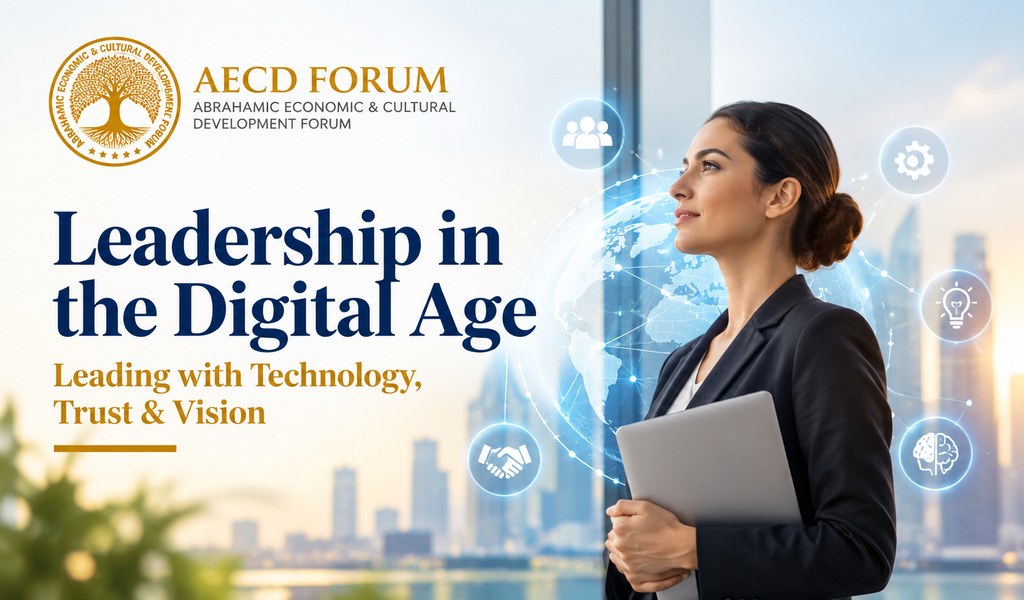
Leadership is changing. Human values still matter.
Leadership has always involved guiding people, making decisions, solving problems, and working towards shared goals. However, the digital age has changed how leaders communicate, manage teams, access information, and respond to challenges.
Today, teams may work across different countries and time zones. Important decisions can depend on digital information, while artificial intelligence (AI), automation, and new communication tools continue to influence workplaces and industries. Employees also expect leaders to communicate clearly, support professional growth, and create working environments where different perspectives are respected.
In this changing environment, effective leadership requires more than technical knowledge or traditional management experience. Leaders need adaptability, digital awareness, emotional intelligence, and a willingness to keep learning.
Understanding leadership in the digital age is important for business leaders, educators, entrepreneurs, policymakers, and young professionals preparing for future responsibilities. The central question is not simply how technology has changed leadership, but how leaders can use it responsibly while keeping people at the centre of their decisions.
1. From Traditional Management to Digital Leadership
Traditional leadership often relied on formal hierarchies, face-to-face meetings, established procedures, and information shared through limited channels. These approaches remain valuable in many situations, but digital technology has expanded the ways organisations operate.
Leaders can now coordinate projects online, communicate instantly with colleagues in different locations, and access information that previously required considerable time to collect.
This creates new opportunities, but it also introduces new responsibilities.
Digital leadership is not simply about using modern software. It involves understanding how technology affects people, decisions, communication, and organisational goals.
For example, a manager leading an international team must consider different working hours, communication preferences, cultural expectations, and access to digital tools. Success depends not only on the technology selected but also on how well the team works together.
The key change: Leadership is becoming less dependent on physical presence and more dependent on trust, communication, coordination, and the ability to guide people through change.
2. Digital Communication Has Changed How Leaders Connect
Communication is one of the most important responsibilities of a leader. Digital tools have made it easier to reach people quickly, but frequent communication does not always mean effective communication.
Emails, messaging platforms, video calls, and project management tools allow teams to exchange information across geographical boundaries. However, messages can be misunderstood, important details can be overlooked, and employees can feel overwhelmed by constant notifications.
Why clarity matters
Digital leaders should communicate expectations, responsibilities, deadlines, and decisions clearly. They must also choose the right communication method for the situation.
A short message may be sufficient for a routine update, while a sensitive discussion about performance or workplace concerns may require a private conversation.
Leaders should also create opportunities for employees to ask questions and share feedback. Communication should not become a one-way flow of instructions.
Building connection in remote teams
When people rarely meet in person, leaders need to make a deliberate effort to maintain team relationships. Regular check-ins, meaningful discussions, recognition of contributions, and respectful feedback can help people feel included.
The goal is not to hold more meetings. It is to make communication more useful, human, and purposeful.
3. Data Is Influencing Leadership Decisions
Digital systems allow organisations to collect and analyse information about customers, operations, performance, and changing market conditions. This can help leaders identify patterns, compare alternatives, and make more informed decisions.
For example, an education institution might review student feedback and assessment results to identify subjects where additional support is needed. A small business might examine customer enquiries to understand which products or services require improvement.
However, data should inform decisions rather than replace human judgement.
Understanding the limits of data
Information may be incomplete, outdated, biased, or interpreted incorrectly. A performance dashboard, for example, might show how many tasks an employee completes without revealing the complexity of those tasks or the support they provide to colleagues.
Responsible leaders therefore ask important questions:
-
Where did the information come from?
-
Is it accurate and relevant to the decision?
-
What might the data fail to show?
-
Whose experiences or perspectives are missing?
-
What are the possible consequences of acting on it?
Good decision-making combines evidence with experience, ethical judgement, consultation, and an understanding of the people affected.
4. Artificial Intelligence Requires Responsible Leadership
Artificial intelligence is increasingly being used to support tasks such as research, drafting, analysis, customer service, and planning. These tools may help people work more efficiently, but they also introduce questions about accuracy, privacy, fairness, accountability, and appropriate use.
Digital leaders do not need to become technical experts in every emerging technology. They do, however, need enough understanding to evaluate its potential benefits and limitations.
Using AI as a support tool
Consider a business team preparing a market report. An AI tool might help organise information or produce an initial draft. The team must still verify important claims, check the quality of its sources, and apply professional judgement before relying on the results.
Similarly, educational institutions may explore AI-supported learning while ensuring that students continue to develop independent thinking, research skills, and academic integrity.
Keeping accountability with people
Technology should not become an excuse to avoid responsibility. Leaders need clear guidelines about confidential information, human review, acceptable use, and the circumstances in which automated recommendations should not be followed.
The most responsible approach is to use technology where it adds genuine value while maintaining human oversight of consequential decisions.
5. Emotional Intelligence Is More Important Than Ever
As workplaces become more digitally connected, the human side of leadership remains essential.
Employees may face uncertainty when new systems are introduced, responsibilities change, or teams move to remote and hybrid working arrangements. Some may welcome new tools, while others may need time and support to adapt.
Leaders who listen carefully, recognise concerns, communicate honestly, and respond respectfully are better positioned to guide their teams through these changes.
Empathy and trust
Emotional intelligence includes understanding emotions, managing reactions, listening to others, and responding appropriately to difficult situations.
A leader introducing a new digital system, for example, should not assume that every employee has the same level of confidence or technical experience. Providing training and inviting feedback can help identify barriers before they become larger problems.
Trust also requires consistency. Leaders should explain decisions where appropriate, acknowledge mistakes, and treat people fairly.
Digital tools can make work easier to coordinate, but they cannot independently create a healthy team culture.
6. Adaptability and Continuous Learning Are Essential Leadership Skills
Technology, customer expectations, and professional requirements continue to evolve. Leaders who rely only on what they learned at the beginning of their careers may struggle when familiar methods no longer meet current needs.
Continuous learning helps leaders update their knowledge, understand emerging challenges, and make better-informed choices.
Learning beyond formal education
Professional development can take many forms, including:
-
Attending workshops, seminars, and professional training.
-
Learning from experienced colleagues and mentors.
-
Reading research and credible industry publications.
-
Participating in professional communities.
-
Reviewing the results of past decisions.
-
Developing practical digital and communication skills.
Leaders should also encourage learning within their teams. Employees need opportunities to ask questions, experiment responsibly, and learn from mistakes without unnecessary embarrassment.
A learning culture is particularly valuable when organisations introduce new technology or respond to unfamiliar challenges.
7. Digital Leadership Must Include Ethics and Inclusion
Technology can connect people across borders, but access to digital resources, skills, and opportunities is not equal for everyone. Some individuals may face barriers related to cost, connectivity, disability, language, or limited training.
Leaders need to consider these differences when making decisions about digital systems and workplace practices.
Making opportunities more inclusive
An organisation introducing online training, for example, should consider whether employees have suitable devices, accessible learning materials, and enough time to participate.
Similarly, a leader managing a multicultural team should avoid assuming that everyone communicates, collaborates, or responds to authority in the same way.
Inclusive leadership involves listening to different perspectives, identifying unnecessary barriers, and making reasonable adjustments where possible.
Ethical leadership also requires protecting personal information, addressing discriminatory practices, and being transparent about how technology influences decisions.
A digitally advanced organisation is not necessarily a responsible one. Progress should be assessed not only by efficiency but also by fairness, accountability, and the effect on people.
8. The Role of Young People in the Future of Leadership
Young people are entering professional environments shaped by digital communication, rapid learning, international collaboration, and emerging technologies. Their experiences can bring fresh perspectives, new ideas, and familiarity with modern digital tools.
However, effective leadership requires more than technological confidence. It also requires sound judgement, communication, reliability, ethical awareness, and the ability to work with people whose experiences differ from one's own.
Young professionals can prepare for leadership by taking responsibility for projects, seeking constructive feedback, learning from mentors, and practising decision-making.
Organisations can support emerging leaders by offering meaningful responsibilities, professional development opportunities, and environments where people can learn from experienced colleagues.
Leadership development should be viewed as an ongoing process rather than a position that people reach at a particular age or career stage.
9. How Organisations Can Prepare for Digital Leadership?
Adapting to the digital age requires more than purchasing new tools. Organisations need a clear purpose, appropriate training, responsible policies, and leadership that connects technology with real human needs.
Practical steps include:
Assess current skills: Identify the digital, communication, and management skills employees need.
Provide relevant training: Offer learning opportunities suited to different roles and experience levels.
Set clear expectations: Establish guidelines for communication, data protection, AI use, and accountability.
Encourage feedback: Ask employees what is working, what is difficult, and what support they need.
Review outcomes: Evaluate whether new systems improve the quality of work, collaboration, accessibility, or decision-making.
Keep people involved: Include the perspectives of employees and other affected groups when introducing significant changes.
Digital leadership works best when technology supports a clear organisational purpose rather than becoming an objective in itself.
AECD Forum Perspective
The Abrahamic Economic & Cultural Development (AECD) Forum focuses on areas including education, skill development, leadership, youth empowerment, professional development, entrepreneurship, international cooperation, and sustainable development. Digital leadership connects these priorities by highlighting the skills and values people need to participate responsibly in a changing world.
Education and training can help individuals develop digital awareness alongside communication, critical thinking, and ethical decision-making. Leadership development can prepare professionals to manage change while respecting different perspectives and experiences.
Young people, women, entrepreneurs, educators, and established professionals can all benefit from opportunities to learn from one another and build practical skills. Cross-cultural exchange is particularly relevant because digital collaboration often brings together people from different countries, communities, and professional backgrounds.
From this perspective, effective digital leadership is not simply about adopting new technology. It is about helping people use knowledge responsibly, work together across differences, and make decisions that support long-term social and economic progress.
Practical Action Points
Here are seven steps readers can take to strengthen their digital leadership skills:
-
Review your digital skills. Identify the tools and technologies relevant to your role and select one area for improvement.
-
Practise clear communication. Match the communication method to the message and invite questions when expectations are unclear.
-
Strengthen your research skills. Check the credibility, accuracy, and relevance of information before using it to make decisions.
-
Learn to use AI responsibly. Understand its limitations, protect confidential information, and verify important outputs.
-
Ask for feedback. Learn how colleagues experience your communication, decision-making, and leadership style.
-
Build a learning network. Connect with mentors, peers, educators, and professionals who can share different perspectives.
-
Make inclusion part of your decisions. Consider accessibility, different skill levels, and the potential effects of new systems on people.
These actions can help both emerging and experienced leaders develop a more thoughtful, adaptable approach to their responsibilities.
Leadership in the digital age has changed in important ways, but its central purpose remains the same: to guide people towards shared goals and make responsible decisions.
Technology has expanded what leaders can do. It has made collaboration across borders easier, increased access to information, and introduced new ways to organise work. At the same time, it has created challenges involving privacy, accountability, communication, and unequal access to opportunities.
Effective leaders recognise that digital skills must work alongside human qualities. They continue learning, listen to others, question information, use technology carefully, and take responsibility for their decisions.
For organisations, educational institutions, and communities, the next step is to prepare people not merely to use new tools but to understand their effects and apply them wisely.
The future of leadership will depend not only on how well people understand technology, but also on how responsibly they use it to serve others.
#DigitalLeadership #LeadershipDevelopment #FutureOfLeadership #LeadershipSkills #ProfessionalDevelopment #DigitalTransformation #EthicalLeadership #ArtificialIntelligence #ContinuousLearning #YouthLeadership #SkillDevelopment #BusinessLeadership #Education #AECDForum