Category: Trading & International Business
Global supply chains have become more connected than ever. A business in the UAE may source technology from China, industrial equipment from Europe, specialized products from Turkey, and distribute them to customers across the Middle East.
But connecting an international supplier with a regional customer is not always straightforward.
This is where trading companies can play an important role.
A professional trading company can help bridge the gap between manufacturers, international suppliers, distributors, and buyers by supporting activities such as product sourcing, supplier coordination, procurement, logistics, documentation, and regional distribution.
In a modern supply network, the role of a trading company can go far beyond simply buying and selling products.
What Is a Trading Company?
A trading company is a business that facilitates the movement and commercial exchange of products between suppliers and buyers.
Depending on its business model, a trading company may:
-
Source products internationally
-
Connect buyers with manufacturers
-
Import products
-
Export or re-export goods
-
Coordinate procurement
-
Manage supplier relationships
-
Support logistics
-
Distribute products regionally
-
Provide market knowledge
-
Coordinate technical or commercial requirements
The exact role varies by company and transaction.
The common objective is to make the connection between supply and demand more efficient.
Why Trading Companies Matter in Global Supply Networks
International trade involves multiple parties.
A typical transaction might involve:
Manufacturer → Trading Company → Logistics Provider → Regional Distributor → Business Customer
Each party has a different responsibility.
A trading company can help coordinate these relationships and make international procurement easier for businesses that may not have the resources or experience to manage every stage independently.
1. Connecting Global Suppliers With Regional Buyers
One of the most important roles of a trading company is creating connections between suppliers and customers in different markets.
A manufacturer may have excellent production capabilities but limited knowledge of a particular regional market.
A local or regional trading company may understand:
-
Customer requirements
-
Product demand
-
Procurement practices
-
Distribution channels
-
Local business relationships
-
Market expectations
This can help connect international supply with regional opportunities.
2. Supporting International Product Sourcing
Finding a suitable supplier is only the beginning of procurement.
Trading companies can assist businesses in identifying products based on requirements such as:
-
Technical specifications
-
Quantity
-
Quality
-
Budget
-
Availability
-
Delivery timeline
For specialized products, this process can require knowledge of both the product category and international supplier market.
The goal should be to identify the right product from the right source, rather than simply finding the lowest quotation.
3. Helping Businesses Access International Suppliers
Not every business has an established network of overseas manufacturers.
A trading company may already have relationships with suppliers in markets such as:
-
China
-
Turkey
-
India
-
Europe
-
Southeast Asia
-
Other international manufacturing regions
These relationships can provide businesses with additional sourcing options.
However, supplier relationships should still be evaluated according to the requirements and risks of each transaction.
4. Supplier Evaluation and Coordination
A supplier may offer an attractive price but still fail to meet the buyer's requirements.
Trading companies can help coordinate areas such as:
-
Product specifications
-
Supplier quotations
-
Production capacity
-
Lead times
-
Packaging
-
Documentation
-
Quality requirements
For larger or technically complex orders, this coordination can become especially important.
Clear communication between the buyer and supplier helps reduce misunderstandings.
5. Supporting Procurement Efficiency
International procurement can involve multiple activities:
Requirement → Supplier Search → Quotation → Negotiation → Order → Production → Quality Check → Shipping → Delivery
Managing all these stages internally can require considerable time and expertise.
A trading partner may help coordinate some or all of these activities, depending on the agreement.
This can allow businesses to focus more on their customers and core operations while maintaining access to international supply networks.
6. Managing Product Specifications
Technical specifications are particularly important when sourcing technology, telecommunications, electrical, industrial, or infrastructure products.
A product may look similar to another product but have significant differences in:
-
Performance
-
Compatibility
-
Materials
-
Capacity
-
Certifications
-
Dimensions
-
Operating conditions
-
Warranty
A trading company involved in technical procurement needs to understand the customer's requirements clearly and communicate them accurately to suppliers.
This can reduce the risk of receiving products that are unsuitable for the intended application.
7. Supporting Quality Verification
Quality is a major consideration in international sourcing.
When products travel long distances, resolving quality problems after delivery can be costly.
Depending on the product, trading companies may coordinate:
-
Sample approval
-
Product inspections
-
Quantity verification
-
Testing
-
Packaging checks
-
Documentation checks
-
Pre-shipment inspection
The level of quality verification should depend on the product's value, complexity, and risk.
8. Coordinating International Logistics
Trading companies can also help coordinate the movement of goods.
A typical process may involve:
Supplier → Factory → Export Handling → International Shipping → Customs → Warehouse → Customer
Logistics coordination can include:
-
Shipping arrangements
-
Freight coordination
-
Packaging requirements
-
Shipment tracking
-
Documentation
-
Warehousing
-
Regional delivery
Effective logistics planning can help businesses manage both cost and delivery expectations.
9. Helping Businesses Understand Total Cost
A supplier's quoted price does not always represent the final procurement cost.
Businesses may also need to consider:
-
Packaging
-
Freight
-
Insurance
-
Inspection
-
Customs or duties
-
Handling
-
Storage
-
Local delivery
-
Other transaction-related costs
This is why trading companies and procurement teams should evaluate total landed cost where appropriate.
A slightly higher supplier price can sometimes provide better overall value if it comes with improved quality, availability, or delivery.
10. Supporting Regional Distribution
Trading companies can play an important role after products enter a regional market.
They may support distribution to:
-
UAE businesses
-
Contractors
-
Project companies
-
Resellers
-
Regional distributors
-
Other commercial customers
This creates a connection between international manufacturing and regional demand.
A simplified model is:
Global Manufacturer → Trading Company → Regional Distribution → Customer
11. Helping Businesses Manage Supplier Risk
Modern supply chains can be affected by unexpected disruptions.
Examples include:
-
Manufacturing delays
-
Capacity shortages
-
Shipping disruptions
-
Product shortages
-
Price increases
-
Regulatory changes
A trading company can potentially help businesses identify alternative suppliers or sourcing markets.
For critical products, businesses may consider:
Primary Supplier + Qualified Alternative Supplier
The appropriate strategy depends on the product and business requirements.
12. Providing Access to Multiple Product Categories
Trading companies often operate across several product categories.
Depending on their specialization, this may include:
-
Telecommunications equipment
-
Networking products
-
IT infrastructure
-
Electrical products
-
Industrial equipment
-
Construction materials
-
Technology products
-
Specialized components
For businesses purchasing products from several categories, working with an experienced trading partner can simplify supplier coordination.
13. Supporting Technology and Telecommunications Projects
Technology and telecommunications projects often require products from multiple manufacturers.
A project may need:
-
Fiber infrastructure
-
Networking equipment
-
Cables
-
Connectivity products
-
Racks and accessories
-
Power-related equipment
-
Technical components
A trading company can help coordinate sourcing across different suppliers while keeping project requirements in focus.
This can be particularly valuable when product compatibility and technical specifications are important.
14. Helping Businesses Navigate International Communication
International procurement often involves suppliers operating in different:
-
Time zones
-
Languages
-
Business cultures
-
Working schedules
A trading company can act as a communication bridge between buyers and suppliers.
Clear communication can help ensure that both sides understand:
-
What is required
-
When it is required
-
What quality is expected
-
How it should be packaged
-
Where it should be delivered
Documentation is still essential, but effective communication can make international transactions more efficient.
15. Supporting Market Expansion
Trading companies can also help businesses explore new markets.
A company that has strong supplier relationships but limited regional distribution may partner with a trading business to reach new customers.
Likewise, a regional business may use a trading company to identify international products that can be introduced to its market.
This creates a two-way connection:
International Supply ↔ Regional Market Demand
16. Creating Value Beyond Buying and Selling
Modern trading companies increasingly provide value through coordination and problem-solving.
Their role can include:
Sourcing + Procurement + Supplier Management + Quality + Logistics + Distribution
This makes them an active part of the supply chain rather than simply a middleman.
The value comes from helping businesses manage complexity, access international suppliers, and coordinate multiple stages of a transaction.
17. Trading Companies Can Support Supply-Chain Flexibility
Global businesses need flexibility when market conditions change.
A trading company with multiple supplier relationships can potentially help businesses explore:
-
Alternative manufacturers
-
Different sourcing countries
-
Replacement products
-
Additional capacity
-
Different logistics options
However, alternatives should always be checked for technical compatibility, quality, compliance, and commercial suitability.
18. Importance of Transparency in Trading Relationships
A strong trading relationship requires transparency.
Businesses should have clarity about:
-
Product specifications
-
Supplier identity where relevant
-
Pricing
-
Lead times
-
Quality requirements
-
Delivery terms
-
Warranty
-
Documentation
-
Applicable fees
Clear commercial terms can help reduce misunderstandings and establish stronger long-term relationships.
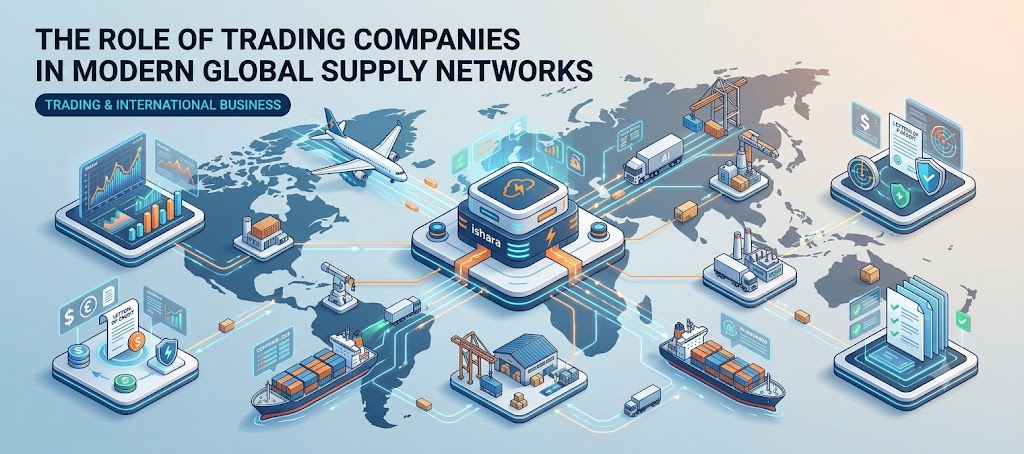
How Trading Companies Fit Into a Modern Supply Network
A modern global supply network can look like this:
Global Suppliers
Manufacturers and producers provide products and components.
↓
Trading & Sourcing Companies
Connect suppliers with buyers and coordinate commercial requirements.
↓
Logistics Providers
Move goods across international borders.
↓
Regional Distributors
Manage local or regional product movement.
↓
Businesses & Projects
Use the products for operations, construction, technology, or customer delivery.
↓
End Customers
Receive the final product or service.
The trading company can therefore serve as an important coordination point within the network.
How Businesses Should Choose a Trading Partner
Before working with a trading company, businesses should consider:
Industry Experience
Does the company understand the relevant product category?
Supplier Network
Does it have access to suitable international suppliers?
Technical Understanding
Can it understand and communicate product specifications?
Quality Process
How does it manage product verification?
Logistics Capability
Can it coordinate international delivery effectively?
Market Knowledge
Does it understand the UAE or target regional market?
Communication
Is information communicated clearly and consistently?
Reliability
Does the company have a track record of fulfilling commitments?
Choosing a trading partner should be based on overall capability rather than price alone.
Common Challenges Trading Companies Help Businesses Address
A professional trading partner can potentially help businesses manage challenges such as:
-
Finding reliable overseas suppliers
-
Comparing international quotations
-
Managing supplier communication
-
Coordinating quality checks
-
Handling complex procurement requirements
-
Organizing international logistics
-
Managing product availability
-
Identifying alternative sourcing options
-
Supporting regional distribution
The exact services depend on the trading company's capabilities and commercial agreement.
The Future of Trading Companies
Global supply networks are becoming more connected and more complex.
Businesses increasingly need:
-
Faster sourcing
-
Better supplier visibility
-
Reliable product availability
-
Stronger quality controls
-
More resilient supply chains
-
Regional distribution capabilities
This creates opportunities for trading companies that can combine international supplier access with strong procurement, technical, logistics, and market knowledge.
The role of a trading company is therefore evolving.
It is moving from simply buying and selling toward helping businesses manage the complete connection between global supply and regional demand.
Final Thoughts
Trading companies can play an important role in modern global supply networks by connecting international manufacturers, suppliers, logistics providers, distributors, and regional buyers.
Their value can extend across sourcing, procurement, supplier coordination, quality verification, logistics, and distribution.
For UAE businesses, this can be especially useful when sourcing technology, telecommunications equipment, infrastructure products, industrial goods, or other internationally manufactured products.
But choosing the right trading partner matters.
Businesses should look for a partner that understands their requirements, has access to reliable suppliers, communicates clearly, manages quality carefully, and can coordinate the supply process professionally.
Global supply networks create access to opportunities. Strong trading partners help businesses navigate the connections between those opportunities.