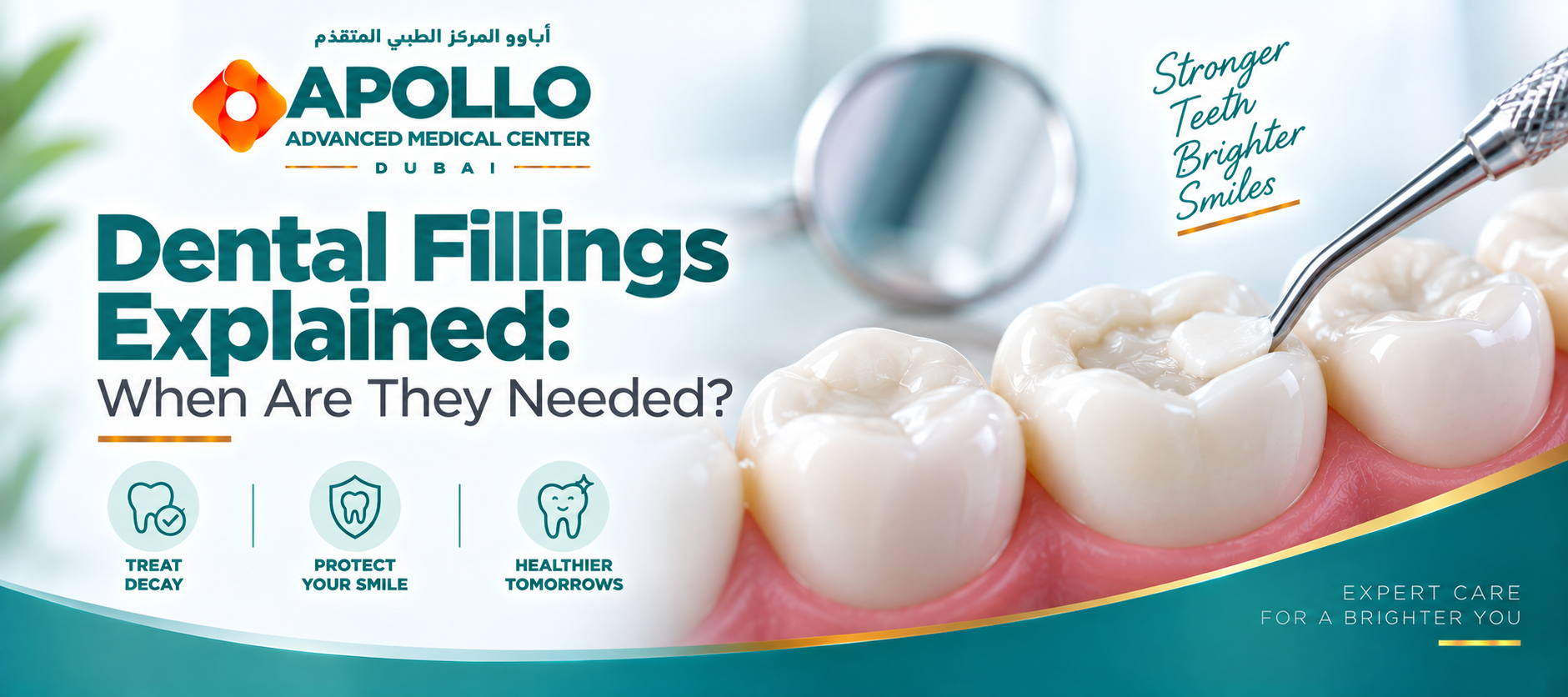
Do You Need a Dental Filling? Signs You Should Know
A tooth can begin developing a cavity long before it causes a toothache.
You may notice a little sensitivity when drinking something cold, a rough area on a tooth, food repeatedly getting stuck in the same place, or perhaps nothing at all. Early tooth decay often has no obvious symptoms, which is one reason routine dental examinations matter.
When decay progresses enough to create a cavity, a dental filling is one of the common ways dentists repair the damaged area. The basic idea is straightforward: the dentist removes the decayed tooth structure and fills the resulting space with an appropriate restorative material.
But not every discoloured area needs a filling, and not every early area of decay requires drilling. The right approach depends on how far the decay has progressed, where it is located and the condition of the tooth.
What Is a Dental Filling?
A dental filling is a restoration used to repair a tooth affected by a cavity or certain types of damage.
When tooth decay creates a hole in the tooth, the decayed tissue is removed and the space is restored with a filling material. The purpose is to restore the tooth's shape and function while replacing the damaged area.
Fillings are different from crowns.
A filling generally restores a portion of the tooth, whereas a crown covers the tooth more extensively and may be considered when a tooth has substantial structural damage or has become significantly weakened.
The choice between a filling, crown, root canal treatment or another approach depends on the condition of the individual tooth.
How Does Tooth Decay Develop?
To understand why fillings are needed, it helps to understand how a cavity develops.
The process usually involves several stages.
1. Plaque forms on the teeth
Dental plaque is a sticky film containing bacteria. It develops naturally on tooth surfaces and can build up when oral hygiene is not effective enough.
2. Bacteria use sugars and starches
When bacteria in plaque encounter sugars and starches from foods and drinks, they produce acids.
3. Acids remove minerals from enamel
Repeated acid attacks can cause minerals to be lost from the tooth's enamel. Early mineral loss may appear as a white spot. At this stage, the decay process can sometimes be stopped or reversed with fluoride and appropriate preventive care.
4. A cavity can eventually form
If mineral loss continues and the tooth structure breaks down, a permanent cavity can develop.
Once a true hole has formed, a dentist may need to repair the damaged area with a filling.
This distinction is important: early tooth decay and an established cavity are not necessarily treated in exactly the same way.
When Is a Dental Filling Usually Needed?
A filling is commonly considered when tooth decay has progressed to the point where there is a cavity that requires restoration.
Signs that may accompany a cavity include:
- Tooth sensitivity to hot, cold or sweet foods
- Toothache
- A visible hole or pit
- Brown, black or white changes on the tooth
- Pain when biting
- Food repeatedly becoming trapped around a particular tooth
However, symptoms are not always present. Early cavities can develop without pain, which means a person can have decay without knowing it.
A dental examination may include visual inspection, examination with dental instruments and, when appropriate, dental X-rays. X-rays can help identify decay that is not obvious from looking at the tooth alone.
Does Every Cavity Need a Filling?
Not necessarily.
This is an important point that is sometimes missed in conversations about dental fillings.
Very early tooth decay, before a cavity has formed, may sometimes be managed with preventive or remineralisation-focused approaches, including fluoride. Once a permanent cavity has formed, however, restorative treatment such as a filling may be necessary.
The decision should therefore be based on a professional assessment rather than simply on the colour or appearance of a tooth.
What Happens During a Dental Filling?
The exact process varies depending on the tooth, the size and location of the cavity, and the restorative material being used.
Generally, the treatment involves several stages.
Step 1: Examination
The dentist assesses the tooth and determines the extent of the decay. Depending on the situation, an X-ray may be recommended.
Step 2: Numbing the area
When necessary, local anaesthetic can be used to numb the area being treated. Local anaesthesia prevents pain signals from the treated area from reaching the brain while the patient remains awake.
Step 3: Removing the decayed tooth structure
The dentist removes the damaged or decayed portion of the tooth.
This is a central part of cavity treatment: the decayed tissue is removed before the space is restored.
Step 4: Cleaning and preparing the area
The tooth is prepared so that the restorative material can be placed appropriately.
Step 5: Placing the filling
The prepared area is restored using a suitable dental material.
Step 6: Shaping and checking the restoration
The restoration is shaped so the tooth can function properly. The dentist may also check how the upper and lower teeth come together when you bite.
The entire process can vary considerably depending on the size and position of the cavity and the material selected.
What Materials Are Used for Dental Fillings?
There is no single filling material that is ideal for every tooth or every situation.
Common direct restorative materials include:
- Resin-based composite
- Dental amalgam
- Glass ionomer
- Resin-modified glass ionomer
Factors such as the location of the tooth, the amount of chewing force involved, aesthetics and the size of the restoration can influence material selection.
Tooth-coloured composite fillings
Composite resin is popular because it can be matched relatively closely to the natural colour of the tooth.
However, tooth-coloured does not automatically mean that composite is the right material for every cavity. The clinical situation matters.
Amalgam fillings
Dental amalgam is a silver-coloured restorative material that has been used for many years. Its properties make it suitable for certain situations, particularly areas exposed to significant chewing forces, although aesthetic considerations can affect material selection.
The appropriate material should be selected based on the patient's dental needs rather than appearance alone.
Why Does Early Assessment Matter?
One of the biggest misconceptions about cavities is that pain is the signal to see a dentist.
In reality, tooth decay can be present before pain begins.
Early assessment matters because the treatment options can depend on how far the decay has progressed.
Early-stage mineral loss
When decay is detected before a cavity has formed, preventive measures such as fluoride may sometimes help stop or reverse the process.
Established cavity
Once the tooth structure has broken down and a cavity has formed, restoration may be needed.
Deeper decay
If decay progresses deeper into the tooth and reaches the pulp, more extensive treatment such as root canal treatment may be necessary. In severely damaged teeth, a crown or extraction may sometimes become necessary.
This does not mean every untreated cavity will inevitably require a root canal. Rather, it illustrates why identifying and assessing decay early is useful.
Common Symptoms That Should Not Be Ignored
Consider arranging a dental assessment if you notice:
Tooth sensitivity
Sensitivity to cold, hot or sweet foods can have several causes, including tooth decay.
A visible hole
A pit, opening or cavity on a tooth should be professionally assessed.
Persistent toothache
Pain may indicate that decay has progressed or that another dental problem is present.
Pain when biting
Discomfort while chewing can have several possible causes and should not automatically be assumed to be a simple cavity.
Brown, black or white changes
Discoloration can occur with tooth decay, but it can also have other causes. A dental examination is needed to determine what a particular change represents.
Food repeatedly getting stuck
If food consistently catches around one particular tooth, it may be worth having the area examined.
Common Mistakes People Make About Dental Fillings
“If it doesn't hurt, I don't need treatment.”
Not necessarily. Early cavities may have no symptoms.
“Every dark spot is a cavity.”
No. Tooth discoloration can have multiple causes. A dentist needs to assess the tooth rather than relying on colour alone.
“A filling fixes the cause of tooth decay.”
A filling repairs the damaged tooth, but it does not eliminate the factors that contributed to decay elsewhere or prevent future cavities.
Daily oral hygiene, fluoride exposure, dietary habits and regular dental care remain important.
“Once I get a filling, that tooth can never have a problem again.”
Fillings are restorations, not permanent guarantees.Fillings and crowns do not necessarily last a lifetime and may eventually require replacement.
“I can wait until the pain becomes severe.”
Waiting can allow decay to progress. Regular examinations can identify problems earlier, sometimes before symptoms develop.
How Can You Reduce the Risk of Future Cavities?
A filling can repair existing damage, but prevention remains an important part of dental care.
Brush twice daily with fluoride toothpaste
Fluoride helps strengthen enamel and prevent or slow the progression of tooth decay.
Clean between your teeth
Floss or use an appropriate interdental cleaner to remove plaque from areas a toothbrush cannot reach effectively.
Reduce frequent sugary snacks and drinks
Frequent exposure to sugars and starches can increase acid attacks on teeth.
Avoid tobacco
Tobacco use is associated with a range of oral health problems and is best avoided.
Keep up with dental examinations
Regular dental visits can help identify decay, worn restorations and other problems before they become more complicated.
A dental assessment can help determine whether a suspected cavity requires a filling or whether another approach may be more appropriate. The clinic's official information also lists dental care including examinations, scaling and polishing, root canal treatment, crowns and veneers.
The important point is not to choose a filling simply because a tooth looks different. The condition of the tooth should guide the treatment decision.
Dental fillings are a common way of repairing teeth after decay has progressed enough to create a cavity.
But the story begins much earlier.
Plaque bacteria interact with sugars and starches to produce acids that gradually remove minerals from enamel. In the earliest stages, this process may sometimes be stopped or reversed. If mineral loss continues and a cavity develops, the damaged tooth structure may need to be removed and restored with a filling.
The earlier a dental problem is assessed, the more clearly a dentist can determine what stage it is in and what treatment, if any, is appropriate.
So if you notice sensitivity, a visible hole, persistent discomfort or an unexplained change in a tooth, don't wait for the problem to become severe.
If you have noticed tooth sensitivity, a visible cavity, persistent tooth discomfort or a change in a tooth, consider having it assessed rather than waiting for symptoms to become more severe.
Apollo Advanced Medical Center provides dental care in Al Rigga, Union, Dubai, near Fish Roundabout.