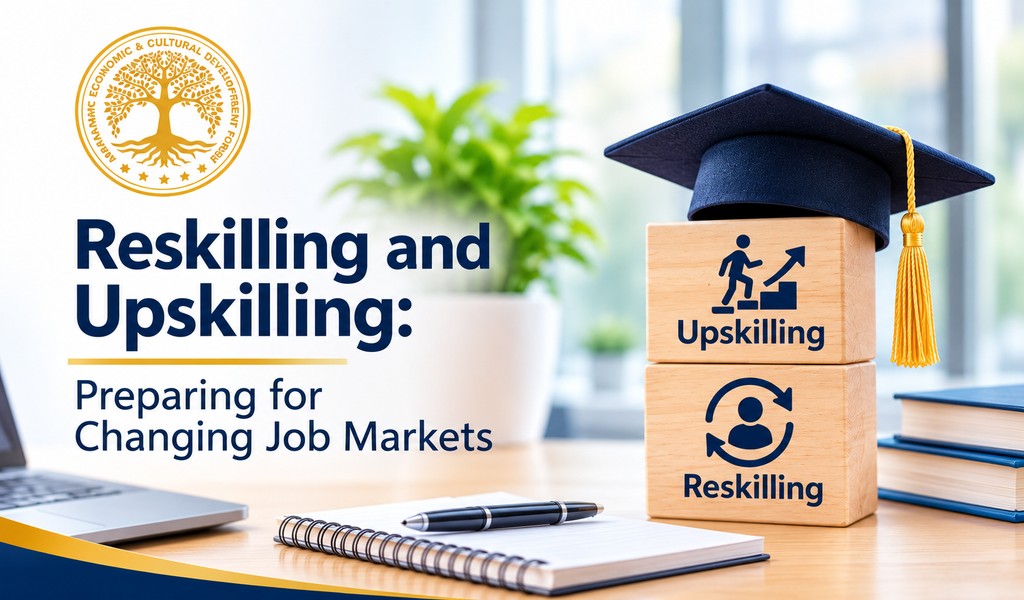
Are your skills ready for the changing job market?
The world of work is changing. Technology, automation, artificial intelligence, new business models, and changing customer expectations are influencing how organisations operate and what they expect from their employees. As a result, the skills that helped people succeed in the past may not always be enough for the opportunities of tomorrow.
For professionals, students, entrepreneurs, and young people, continuous learning is becoming an important part of career development. It is no longer enough to gain qualifications at the beginning of a career and rely on them indefinitely. People need to continually update their knowledge, strengthen existing abilities, and develop new skills as industries evolve.
This is where reskilling and upskilling become important. Both help individuals remain prepared for changing job markets, explore new opportunities, and contribute more effectively to their workplaces.
Understanding the difference between these approaches—and knowing how to apply them—can help individuals and organisations prepare for the future with greater confidence.
1. Understanding Reskilling and Upskilling
Reskilling and upskilling are two approaches to professional learning. Although they are closely connected, they serve different purposes.
What Is Upskilling?
Upskilling means developing additional knowledge or improving existing skills to perform better in a current role or profession.
For example, a marketing professional who learns data analytics, digital advertising, or AI-assisted marketing tools is upskilling. These new abilities strengthen their existing professional expertise and help them adapt to changing workplace requirements.
Other examples include:
-
A teacher learning to use digital classroom platforms.
-
An accountant developing advanced spreadsheet and financial analysis skills.
-
A business manager improving project management and leadership abilities.
-
A designer learning new digital design software.
Upskilling allows professionals to remain effective in their current careers while preparing for greater responsibilities.
What Is Reskilling?
Reskilling involves learning new skills to move into a different role, profession, or area of work.
For instance, an administrative professional interested in moving into data analysis may need to learn data handling, analytical tools, and basic programming. These skills may open a pathway to a different career direction.
Other examples include:
-
A retail employee training for a digital customer-support role.
-
A traditional sales professional learning e-commerce operations.
-
A manufacturing worker developing skills for operating advanced machinery.
-
A graduate learning digital marketing to enter a new industry.
Reskilling can help people respond to changing industry needs, explore new career options, and manage professional transitions.
The key difference: Upskilling strengthens the skills needed for an existing career, while reskilling prepares someone for a different role or career path.
2. Why Are Reskilling and Upskilling Important Today?
Several developments are changing the skills employers and organisations need.
Technology Is Changing Workplace Responsibilities
Digital tools and automation are changing how many tasks are completed. Activities that once required manual effort may now be supported by specialised software or automated systems.
However, technology also creates demand for people who can use these tools effectively, interpret information, solve problems, and make informed decisions.
For example, employees who understand both their professional field and relevant digital tools may be better prepared to contribute to technology-driven workplaces.
Job Requirements Continue to Evolve
Industries do not remain the same. Customer expectations, business practices, regulations, and market conditions can change over time.
A professional who continuously develops relevant skills is better positioned to respond to these changes.
For example, a finance professional may need to understand digital payment systems, cybersecurity awareness, and modern financial software alongside traditional accounting knowledge.
Career Paths Are Becoming More Flexible
Many people no longer follow one fixed professional path throughout their working lives. Some change industries, move into leadership, start businesses, or combine different areas of expertise.
Reskilling makes these transitions more manageable by helping individuals prepare for new responsibilities rather than relying entirely on previous experience.
Employers Need Adaptable Teams
Organisations benefit when employees are willing to learn and apply new knowledge. A workforce that can adapt to new systems, responsibilities, and customer needs can help businesses respond more effectively to change.
For employers, investing in employee development can also support knowledge-sharing, internal career progression, and long-term workforce planning.
3. Skills Worth Developing for the Future
The right skills depend on a person's profession, interests, and career goals. However, several broad skill areas are valuable across different industries.
Digital and Technological Skills
Digital knowledge is increasingly relevant in professional environments. Depending on the role, useful areas may include:
-
Digital communication and collaboration tools.
-
Data analysis and interpretation.
-
Artificial intelligence awareness and responsible use.
-
Cybersecurity awareness.
-
Digital marketing and online business tools.
-
Industry-specific software and platforms.
People do not necessarily need to become technology experts. They should, however, understand the tools relevant to their work and know how to use them responsibly.
Communication Skills
Clear communication helps professionals explain ideas, share information, work with colleagues, and build relationships with clients.
Written communication, presentations, active listening, and the ability to communicate across cultures are useful in many professional settings.
For example, an employee who can explain a complex project in simple language may help colleagues and decision-makers understand important information more quickly.
Critical Thinking and Problem-Solving
Workplaces regularly face challenges that require careful judgement. Critical thinking helps people evaluate information, identify possible solutions, and avoid making decisions based on assumptions.
These abilities are particularly valuable when dealing with unfamiliar situations or information generated by digital tools.
Leadership and Teamwork
Leadership is not limited to people with managerial titles. Taking responsibility, supporting colleagues, sharing knowledge, and making thoughtful decisions are valuable behaviours at every career stage.
Teamwork also requires flexibility, respect, accountability, and the ability to work with people who have different experiences and perspectives.
Creativity and Adaptability
Creativity helps people approach challenges from different angles, while adaptability allows them to adjust when priorities, tools, or working conditions change.
Together, these skills help professionals remain open to new ideas without losing sight of their responsibilities.
4. How Individuals Can Identify Their Skill Gaps?
Before choosing a training programme or learning a new skill, individuals should understand where they currently stand.
A skill gap is the difference between the abilities a person currently has and those required for a particular role or career goal.
Review Current Skills
Start by listing existing professional, technical, and personal skills.
Consider questions such as:
-
What tasks can I perform confidently?
-
Which responsibilities do I find challenging?
-
What skills have I developed through work or education?
-
What feedback have I received from colleagues or managers?
This review provides a starting point for deciding what to learn next.
Study Industry Requirements
Look at job descriptions, professional requirements, and developments within the relevant industry.
For example, someone interested in project management may notice repeated requirements for planning, budgeting, communication, risk management, and digital project tools.
These requirements can help identify relevant learning priorities.
Seek Feedback
Feedback from supervisors, mentors, colleagues, and professional networks can reveal areas for improvement that may not be immediately obvious.
A constructive discussion about strengths and development needs can help individuals make more informed decisions.
5. How to Build an Effective Reskilling or Upskilling Plan?
Learning becomes more useful when it follows a clear and realistic plan.
Step 1: Define a Career Goal
Begin with a specific objective.
Rather than saying, "I want to improve my skills," identify what you want to achieve.
For example:
-
Become more confident in data analysis.
-
Prepare for a team leadership role.
-
Develop digital marketing expertise.
-
Move from administration into human resources.
-
Learn tools relevant to a current profession.
A clear goal makes it easier to select suitable learning activities.
Step 2: Identify the Skills You Need
Once the goal is clear, list the skills required to achieve it.
Separate them into three categories:
-
Skills you already possess.
-
Skills that need improvement.
-
Skills you need to learn from the beginning.
This prevents unnecessary training and helps you focus on the most important areas.
Step 3: Choose Suitable Learning Methods
There is no single approach to professional learning. Individuals can select methods that fit their schedules, resources, and learning preferences.
Possible options include:
-
Online courses and professional certifications.
-
Workshops and training programmes.
-
Mentoring and coaching.
-
Workplace learning and job shadowing.
-
Professional books and educational resources.
-
Practical projects and volunteering.
-
Peer learning and professional communities.
The most suitable option is one that provides relevant knowledge and opportunities to apply it.
Step 4: Practise What You Learn
Completing a course is only one part of skill development. Practical application helps turn knowledge into an ability that can be used confidently.
For example, someone learning presentation skills should practise delivering presentations, not simply study presentation techniques.
Similarly, someone learning data analysis should work with sample datasets and explain the findings.
Step 5: Review Your Progress
Set realistic milestones and review your progress regularly.
Ask yourself:
-
What have I learned?
-
Can I apply the skill independently?
-
What challenges remain?
-
Does my learning plan still match my career goal?
Adjust the plan when necessary. Professional development should respond to changing needs rather than follow a fixed checklist.
6. The Role of Employers in Workforce Development
Reskilling and upskilling should not be treated as the responsibility of employees alone. Employers also have an important role in preparing their organisations for changing job markets.
Provide Relevant Training Opportunities
Organisations can offer workshops, internal training, online learning resources, and opportunities to develop role-specific skills.
Training should be connected to actual workplace needs rather than selected simply because a course is available.
Encourage Internal Career Growth
Employees may have the ability to take on different responsibilities if they receive suitable guidance and training.
Internal mobility can allow organisations to make better use of existing knowledge while giving employees opportunities to develop new professional interests.
Build a Culture of Continuous Learning
Managers can encourage employees to share knowledge, ask questions, experiment responsibly, and learn from mistakes.
When professional development becomes part of everyday work, employees are more likely to view learning as an ongoing activity rather than an occasional requirement.
Support Equal Access to Development
Training opportunities should be accessible to employees across different departments, experience levels, and backgrounds.
Employers should consider flexible schedules, accessible learning formats, and fair opportunities for career progression.
7. Making Reskilling and Upskilling More Inclusive
Access to learning is not equal for everyone. Financial limitations, location, digital access, caring responsibilities, and other circumstances can prevent individuals from participating in training.
An effective approach to workforce development must recognise these barriers.
Expand Access to Affordable Learning
Accessible online courses, community training programmes, scholarships, and public learning initiatives can help more people develop relevant skills.
Support Women and Underrepresented Groups
Professional development opportunities should reach people who may face additional barriers to education, employment, or career progression.
Flexible training schedules, mentoring, supportive learning environments, and transparent selection processes can make participation more practical.
Connect Education With Employment
Educational institutions, training providers, employers, and community organisations can work together to connect learning programmes with real workplace requirements.
For example, a training programme developed with employer input may combine classroom learning with practical projects, workplace exposure, or supervised experience.
This approach can help learners understand how their knowledge applies to actual professional responsibilities.
8. Measuring the Value of Skill Development
The value of reskilling and upskilling should be assessed through practical results, not only certificates.
Individuals can measure progress by examining whether they can:
-
Complete tasks more confidently.
-
Use new tools independently.
-
Solve problems more effectively.
-
Take on additional responsibilities.
-
Communicate and collaborate more successfully.
-
Demonstrate their abilities through projects or work samples.
Employers can also review whether training has improved work processes, supported internal career progression, or addressed identified skill gaps.
The purpose of learning is not simply to collect qualifications. It is to develop abilities that have meaningful value in professional and everyday life.
AECD Forum Perspective
Reskilling and upskilling connect closely with the Abrahamic Economic & Cultural Development (AECD) Forum's broader interests in education, skill development, professional growth, leadership, entrepreneurship, and sustainable economic development.
As industries evolve, individuals need opportunities to strengthen their capabilities and prepare for new responsibilities. Education and training can help bridge the gap between existing knowledge and changing professional requirements.
AECD Forum's focus on education, youth development, women's empowerment, professional development, and international cooperation reflects the importance of making learning opportunities more accessible and relevant to different communities.
This perspective also highlights the value of cooperation between educational institutions, employers, policymakers, training providers, and community organisations. When these groups share knowledge and understand workforce needs, they can contribute to more practical and inclusive skill-development opportunities.
Preparing for changing job markets is not only about helping individuals find employment. It is also about supporting productive workplaces, responsible entrepreneurship, stronger communities, and sustainable economic participation.
Practical Action Points
Here are seven steps individuals and organisations can take:
-
Review your current skills: Identify your strengths and the areas where improvement is needed.
-
Set a clear learning goal: Choose one professional objective that you want to achieve.
-
Research changing industry needs: Review relevant job descriptions and identify commonly required skills.
-
Choose practical training: Select courses, workshops, or programmes that connect directly with your career plans.
-
Apply your learning: Use new knowledge through projects, workplace assignments, or practical exercises.
-
Seek feedback and guidance: Learn from mentors, colleagues, educators, and industry professionals.
-
Make learning continuous: Review your progress regularly and update your development plan as your career evolves.
Changing job markets create challenges, but they also offer opportunities for people who are willing to learn and adapt. Reskilling and upskilling help individuals respond to new workplace expectations, strengthen their professional abilities, and explore different career directions.
However, successful skill development requires more than completing courses. It involves understanding industry needs, setting meaningful goals, practising new abilities, and remaining open to continuous improvement.
Individuals, employers, educational institutions, and policymakers all have a role in creating an environment where learning is accessible and relevant.
The future of work will continue to evolve. Those who make learning a regular part of their professional lives will be better prepared to contribute, grow, and respond to the opportunities ahead.
#Reskilling #Upskilling #FutureOfWork #SkillDevelopment #ProfessionalDevelopment #CareerGrowth #WorkforceDevelopment #LifelongLearning #DigitalSkills #CareerOpportunities #YouthDevelopment #WomenEmpowerment #EducationForAll #EconomicDevelopment #AECDForum