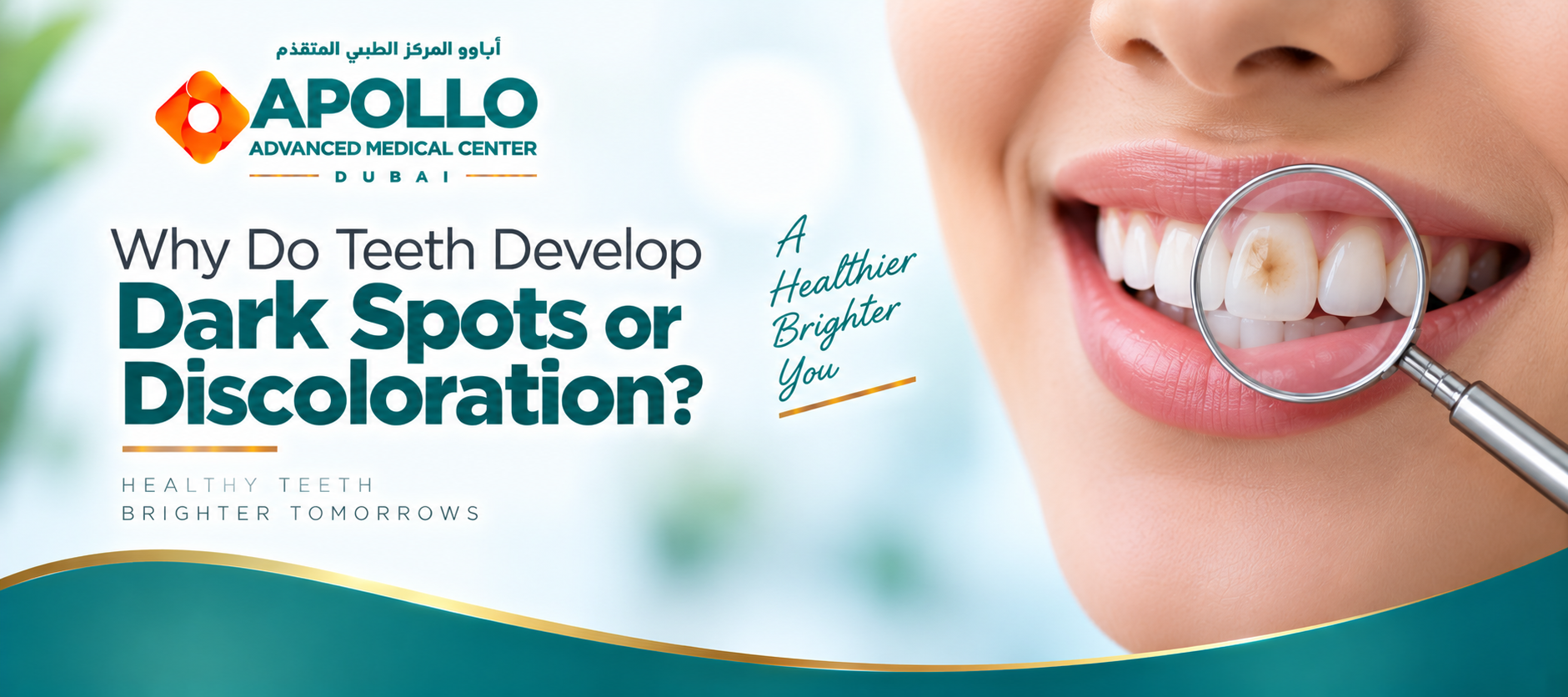
A Dark Spot on Your Tooth? Here’s What It Could Mean
A dark spot on a tooth can be easy to dismiss. Maybe it looks like a coffee stain. Perhaps it appeared after years of drinking tea. Or it could simply seem like a small cosmetic imperfection that can be handled with whitening toothpaste.
But tooth discoloration is not always that simple.
A dark, brown, grey, yellow or even white area on a tooth can have several possible causes. Some changes are related to surface staining, while others can reflect changes within the tooth, enamel mineral loss, previous dental treatment or tooth decay. In some situations, a single darkened tooth deserves particular attention because its cause may be different from generalized staining.
What Does Tooth Discoloration Actually Mean?
Tooth discoloration refers to a noticeable change in the normal color or translucency of a tooth.
Teeth are not naturally pure white. Their appearance is influenced by the translucent enamel on the outside and the underlying dentin, which is naturally more yellowish. As enamel changes with age, the underlying dentin can become more noticeable.
Discoloration can broadly be divided into two categories:
Extrinsic discoloration
This occurs primarily on the outside surface of the tooth. Pigments from foods, drinks, tobacco and other substances can accumulate on enamel.
Common contributors include:
- Coffee
- Tea
- Cola and other strongly coloured beverages
- Darkly pigmented foods
- Tobacco products
- Certain environmental exposures
- Plaque accumulation and inadequate oral hygiene
Surface stains may sometimes improve with appropriate professional cleaning or whitening approaches, depending on their cause.
Intrinsic discoloration
Intrinsic discoloration occurs within the tooth structure, involving enamel or dentin rather than simply a surface deposit.
Possible causes include aging, certain developmental changes, fluorosis, some medications taken during tooth development, trauma, dental materials and certain dental conditions.
This distinction matters because a whitening product designed primarily for surface staining may not address an underlying change within the tooth.
Common Reasons Teeth Develop Dark Spots
A dark mark does not have one universal explanation. Here are some of the more common possibilities.
1. Coffee, Tea and Other Dark-Coloured Foods and Drinks
Regular exposure to highly pigmented foods and beverages can cause extrinsic staining.
Coffee and tea are particularly common sources of surface discoloration. Cola, red wine and some deeply coloured foods can also contribute. Tobacco use can make surface staining more noticeable.
This type of discoloration may develop gradually, so people sometimes notice it only when comparing their current smile with older photographs.
What can help?
Good daily oral hygiene can help reduce the accumulation of surface deposits. Depending on the type and severity of staining, professional cleaning or dentist-supervised whitening may be considered.
However, whitening should not automatically be the first response to an unexplained dark spot.
2. Plaque and Poor Oral Hygiene
Dental plaque is a sticky film of bacteria that develops continuously on teeth. If plaque is not adequately removed, it can contribute to tooth decay and gum disease.
Plaque and hardened deposits can also make teeth look less clean and may contribute to surface discoloration.
Regular brushing with fluoride toothpaste and cleaning between the teeth are important for controlling plaque.
Still, it is useful to distinguish between surface buildup and an actual change in the tooth itself. A professional dental examination can help determine what is causing a particular area to look darker.
3. Tooth Decay Can Cause Brown, Black or White Spots
One of the most important reasons not to assume that every dark spot is cosmetic is tooth decay.
Tooth decay begins when bacteria use sugars and starches to produce acids. Repeated acid exposure can cause minerals to be lost from enamel. Early decay may appear as a white spot, while progressing decay can result in brown or black discoloration and eventually a cavity.
Importantly, early tooth decay may cause no noticeable symptoms.
That means waiting for pain before having a suspicious dark spot examined is not always advisable.
As decay progresses, symptoms can include sensitivity to hot, cold or sweet foods and drinks, toothache or, in more advanced cases, infection.
A useful distinction
A dark spot does not automatically mean that a cavity is present.
But a cavity can sometimes appear as a dark or brown area.
That is precisely why visual appearance alone is not enough to determine the cause.
4. Enamel Changes Can Alter the Appearance of Teeth
Enamel is the hard outer layer of the tooth. Changes in its mineral content, thickness or structure can affect how a tooth looks.
Early mineral loss associated with tooth decay can create white spots. Certain developmental conditions can also cause differences in enamel appearance. Dental fluorosis, for example, can range from subtle white markings to more noticeable changes depending on the level and timing of fluoride exposure during tooth development.
Enamel also becomes thinner and more translucent with age. As a result, the naturally yellower dentin underneath may become more visible, making teeth appear darker or more yellow over time.
So, a change in tooth colour is not necessarily a sign that the tooth is dirty.
5. Aging Can Naturally Change Tooth Colour
Many people expect teeth to remain the same shade throughout adulthood. In reality, tooth colour can gradually change.
As enamel becomes thinner and more translucent over time, the underlying dentin can have a greater influence on the overall appearance of the tooth. Lifestyle-related staining can also accumulate over the years.
This is one reason an older person's teeth may appear naturally darker than they did when they were younger.
That does not automatically mean something is wrong.
However, a new or rapidly changing discoloration, particularly in one tooth, is worth discussing with a dental professional.
6. Trauma Can Cause One Tooth to Change Colour
Sometimes a person notices that one tooth has become darker while the surrounding teeth look relatively unchanged.
A previous injury can be one possible contributor to single-tooth discoloration. Dental literature recognises trauma and changes involving the tooth's internal tissues among possible causes of a discoloured individual tooth.
This is one reason a single dark tooth should not automatically be treated as an ordinary coffee stain.
A dental examination may be needed to understand whether the discoloration is related to the tooth's internal condition, previous injury or another factor.
7. Previous Dental Treatment Can Affect Tooth Colour
Existing dental restorations can sometimes influence how a tooth appears.
The eperts notes that dental materials, including certain restorations, can contribute to tooth discoloration. It also points out that tooth-coloured restorations generally do not whiten in the same way natural teeth do.
This can become particularly noticeable when someone has whitening treatment performed on natural teeth while existing crowns, veneers or other restorations remain unchanged.
A dental examination can help identify whether a visible colour difference comes from the natural tooth, a restoration or both.
8. Certain Medications or Developmental Factors
Some discoloration begins while teeth are developing rather than after they have fully erupted.
For example, certain antibiotic exposure during childhood has been associated with intrinsic tooth discoloration. Developmental conditions affecting enamel or dentin can also alter tooth colour and appearance.
These types of discoloration are different from ordinary surface staining and may require a different approach.
This is another reason that a history of the tooth and the person's dental development can be useful when assessing discoloration.
Why a Dark Spot Should Not Automatically Be Whitened
One of the most common mistakes is assuming:
“It is dark, so it needs whitening.”
Whitening is designed to address certain types of tooth discoloration, but it does not treat every possible cause of a dark spot.
For example, if the dark area is related to tooth decay, simply whitening the tooth would not address the underlying problem.
Likewise, whitening will not change the colour of existing tooth-coloured restorations in the same way it changes natural tooth structure.
The cause should be understood before deciding how the colour should be managed.
Common Mistakes People Make With Dark Spots
Scrubbing harder
Aggressive brushing does not necessarily remove discoloration and can be counterproductive if it irritates the gums or contributes to unnecessary tooth wear.
A consistent, gentle oral hygiene routine is preferable to aggressive brushing.
Using whitening products repeatedly
More whitening is not automatically better. Frequent or inappropriate use of whitening products can also create sensitivity and other oral-health concerns.
Trying household “whitening hacks”
Acidic or abrasive home remedies can be inappropriate for tooth enamel. A product being marketed online as a natural whitening solution does not necessarily mean it is suitable for repeated use.
Ignoring a new dark spot because it does not hurt
Tooth decay can initially be symptom-free.
Therefore, lack of pain does not prove that a dark spot is harmless.
What Can You Do to Reduce Tooth Discoloration?
Not every cause can be prevented, but several habits can support good oral health and reduce avoidable surface staining.
Brush twice a day
Use fluoride toothpaste and brush thoroughly but gently. NIDCR recommends brushing twice daily as part of good oral hygiene.
Clean between your teeth
Plaque can remain between teeth even when the visible surfaces appear clean. Daily interdental cleaning can help remove it from areas a toothbrush cannot reach effectively.
Limit frequent sugary foods and drinks
Repeated exposure to sugars and starches can contribute to the acid attacks involved in tooth decay.
Avoid tobacco
Tobacco is associated with extrinsic tooth staining as well as broader oral health risks.
Don't treat every stain yourself
If a mark is new, persistent, isolated to one tooth or changing in appearance, professional assessment is more appropriate than repeatedly experimenting with whitening products.
When Should You See a Dentist About Tooth Discoloration?
Consider arranging a dental examination if you notice:
- A new dark, brown or black spot
- A spot that is becoming larger or changing
- One tooth becoming noticeably darker than the others
- A dark area accompanied by sensitivity
- Toothache or pain when chewing
- A visible hole or rough area
- Swelling around a tooth or gum
- Discoloration that does not improve with normal cleaning
- A tooth that changed colour after an injury
A dentist may examine the tooth visually and, when appropriate, use additional diagnostic methods such as dental X-rays to investigate the cause.
A dark spot on a tooth can have a surprisingly wide range of explanations.
Sometimes it is simply an external stain from coffee, tea, tobacco or other pigmented foods and drinks. In other situations, it may reflect enamel changes, aging, previous dental treatment or developmental factors. Tooth decay is another important possibility that should not be overlooked.
The key message is simple: not every discolored tooth needs whitening, and not every dark spot is purely cosmetic.
Good brushing, daily interdental cleaning, sensible dietary habits and regular dental care can help protect your teeth. When a discoloration is new, persistent, isolated or accompanied by symptoms, professional assessment is a sensible next step.
If you have noticed a dark spot, brown mark or unexplained change in tooth colour, don't assume that it is simply a stain. A dental assessment can help determine whether the change is cosmetic or whether the tooth needs further attention.
Apollo Advanced Medical Center is located at BA1 Mezzanine Floor, Bin Jarsh Building, near Fish Roundabout, Al Rigga, Union, Dubai.