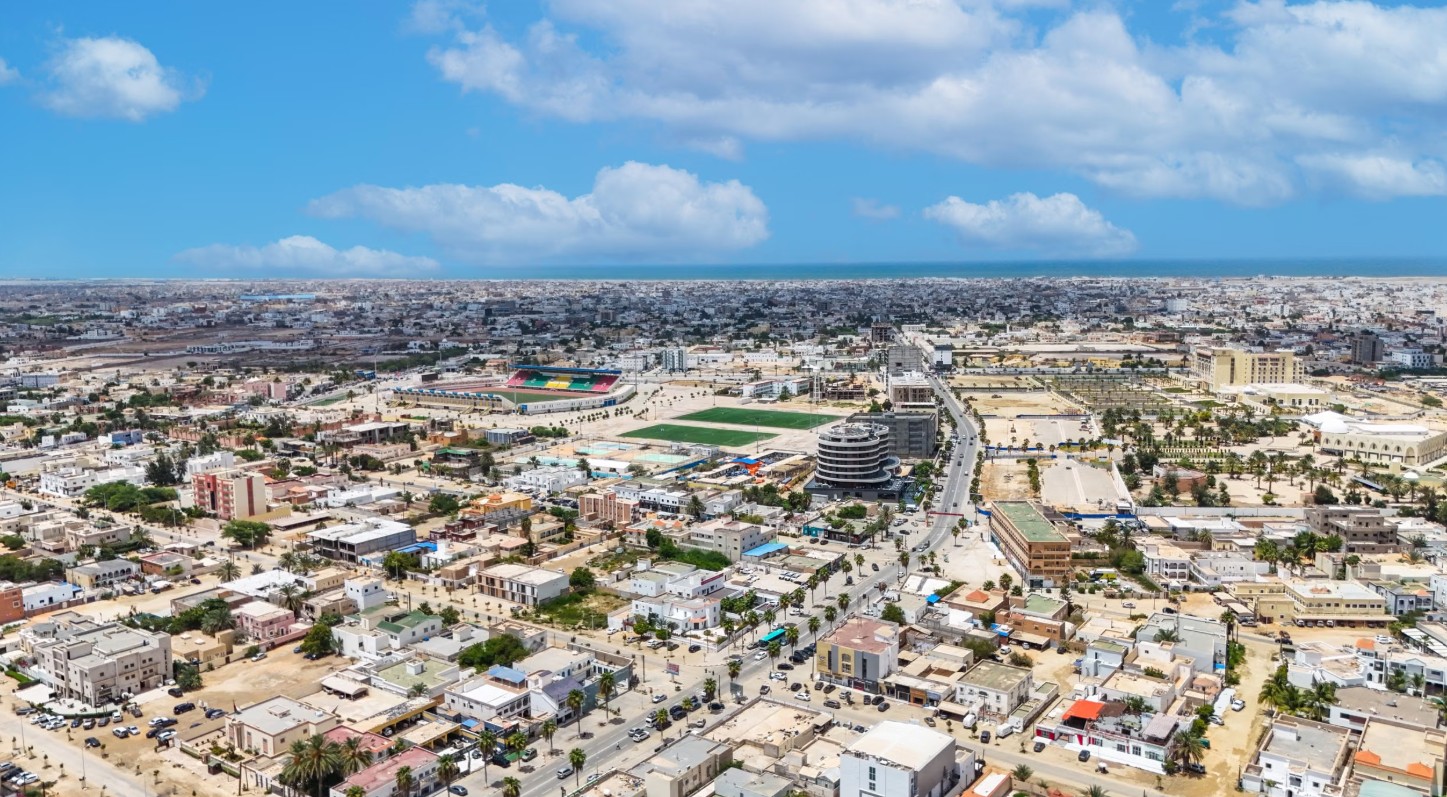
Nouakchott, Mauritania: The Desert Capital Where Africa, the Atlantic, Trade, and Opportunity Meet
Nouakchott is the capital and largest city of Mauritania, located in northwestern Africa between the Sahara Desert and the Atlantic Ocean.
Unlike many African capitals, Nouakchott developed relatively recently as a modern capital. Since becoming the national capital after Mauritania's independence in 1960, it has grown from a small settlement into the country's principal political, commercial, administrative, and economic centre.
The city has a distinctive landscape where desert traditions meet Atlantic coastal life. Its economy is connected to government, commerce, fishing, construction, services, and Mauritania's major mining industry.
Nouakchott also provides access to some of the country's most fascinating natural and cultural destinations, including the Atlantic coast, Banc d'Arguin region, Sahara landscapes, traditional markets, and desert communities.
## Quick Facts
| Fact | Details |
|---|---|
| Country | Mauritania 🇲🇷 |
| Capital City | Nouakchott |
| Region | North-West Africa |
| Location | Atlantic coast, Sahara region |
| Official Language | Arabic |
| Other Major Languages | Pulaar, Soninke, Wolof, French |
| Currency | Mauritanian Ouguiya (MRU) |
| Time Zone | Greenwich Mean Time (UTC+0) |
| Climate | Hot desert climate |
| Major Economic Activities | Mining, Fishing, Trade, Livestock, Construction, Services |
| Major Airport | Nouakchott–Oumtounsy International Airport |
| Major Port Facilities | Port of Nouakchott and fishing-related facilities |
| Major Natural Features | Sahara Desert, Atlantic Ocean, dunes, coastal wetlands |
| Known For | Sahara landscapes, fishing, iron ore, Islamic heritage, markets, and desert culture |
History of Nouakchott
Before becoming the national capital, the area around modern Nouakchott was a relatively small settlement.
Mauritania gained independence from France in 1960, and Nouakchott was selected as the country's capital.
The city was deliberately developed as a new administrative centre.
Over the following decades, drought, rural migration, population growth, and economic development transformed Nouakchott into a major urban area.
Its growth has been closely connected to Mauritania's changing economy and the movement of people from rural and nomadic communities toward the capital.
A Rich and Diverse Culture
Nouakchott reflects Mauritania's mixture of Arab, Berber, and West African cultural traditions.
Important communities and cultural influences include:
-
Moorish/Arab-Berber heritage
-
Pulaar traditions
-
Soninke culture
-
Wolof traditions
-
Haratin heritage
-
Nomadic desert traditions
-
Islamic cultural traditions
Important elements of local culture include:
-
Poetry
-
Traditional music
-
Storytelling
-
Islamic scholarship
-
Handicrafts
-
Traditional clothing
-
Camel culture
-
Desert hospitality
Mauritania's traditional clothing, particularly flowing garments suited to the desert climate, is an important part of local identity.
Famous Tourist Attractions
1. Grand Mosque of Nouakchott
The Grand Mosque is one of the city's most recognizable religious landmarks.
Islam is central to Mauritanian society, and the mosque reflects the country's strong Islamic heritage.
2. National Museum of Mauritania
The National Museum provides visitors with an introduction to:
-
Mauritanian history
-
Archaeology
-
Traditional culture
-
Ancient settlements
-
Art
-
Heritage
It is an excellent starting point for understanding the country's history.
3. Port de Pêche
The Nouakchott Fishing Port is one of the city's most fascinating places to experience coastal life.
Visitors can observe:
-
Fishing boats
-
Fishermen
-
Seafood trading
-
Traditional fishing practices
-
Local markets
It provides an impressive contrast between the Sahara and the Atlantic Ocean.
4. Marché Capitale
One of the city's traditional commercial areas.
Visitors can find:
-
Clothing
-
Fabrics
-
Spices
-
Food
-
Handicrafts
-
Household products
-
Traditional goods
5. Saudi Mosque
Another important religious landmark in the capital and a prominent part of Nouakchott's urban landscape.
Natural Beauty Around Nouakchott
Nouakchott's greatest geographical attraction is its location between two dramatically different environments:
Sahara Desert + Atlantic Ocean
This creates opportunities for:
-
Desert excursions
-
Dune photography
-
Coastal trips
-
Fishing experiences
-
Bird watching
-
Wildlife observation
-
Cultural tours
-
Photography
-
Off-road adventures
Banc d'Arguin National Park
One of Mauritania's most important natural destinations is Banc d'Arguin National Park, located along the Atlantic coast.
The park is famous for:
-
Migratory birds
-
Marine ecosystems
-
Sand dunes
-
Mudflats
-
Islands
-
Traditional fishing communities
It is an important ecological area and a UNESCO World Heritage Site.
Food and Culinary Scene
Mauritanian cuisine reflects desert, Islamic, Arab-Berber, and West African influences.
Popular foods include:
-
Rice dishes
-
Couscous
-
Grilled fish
-
Meat stews
-
Camel meat
-
Dates
-
Milk products
-
Tea
-
Millet-based dishes
-
Vegetable stews
Because Nouakchott is located on the Atlantic coast, fresh fish and seafood are particularly important.
Mauritanian tea culture is also an important part of hospitality and social life.
Economy and Business Environment
Nouakchott is the economic and administrative centre of Mauritania.
Major sectors include:
-
Mining
-
Fishing
-
Livestock
-
Trade
-
Construction
-
Transportation
-
Telecommunications
-
Financial services
-
Government services
-
Renewable energy
Mauritania is particularly well known for its iron ore industry, while gold and other mineral resources are also economically significant.
The country's Atlantic coastline supports an important fishing sector.
Business Opportunities in Nouakchott
1. Mining and Mining Services
Mauritania's mineral resources create opportunities in:
-
Mining equipment
-
Engineering
-
Heavy machinery
-
Logistics
-
Mineral processing
-
Geological services
-
Environmental management
-
Safety technology
-
Mining infrastructure
Iron ore remains a major part of Mauritania's export economy.
2. Fisheries and Seafood Processing
Mauritania has one of West Africa's most important fishing industries.
Potential opportunities include:
-
Fish processing
-
Cold storage
-
Seafood packaging
-
Export logistics
-
Aquaculture
-
Sustainable fishing technology
-
Refrigerated transportation
-
Fishing equipment
Improved local processing can increase value addition and create employment.
3. Renewable Energy
Nouakchott's desert environment provides excellent potential for renewable energy.
Opportunities include:
-
Solar power
-
Wind energy
-
Battery storage
-
Off-grid systems
-
Solar desalination
-
Solar irrigation
-
Green buildings
-
Clean cooking
Mauritania's combination of strong solar resources and Atlantic winds gives it considerable renewable-energy potential.
4. Green Hydrogen
Mauritania has attracted increasing attention for its potential in green hydrogen and renewable-energy projects.
Potential opportunities include:
-
Renewable power generation
-
Green hydrogen
-
Green ammonia
-
Electrolysis technology
-
Industrial infrastructure
-
Port development
-
Energy storage
This could become an important long-term economic sector.
5. Agriculture and Livestock
Despite the country's predominantly desert environment, agricultural and livestock activities remain important.
Potential sectors include:
-
Livestock
-
Poultry
-
Irrigated agriculture
-
Date production
-
Vegetable farming
-
Animal feed
-
Food processing
-
Cold-chain logistics
Modern irrigation and climate-smart farming could improve food security.
6. Logistics and Transportation
Nouakchott's position on the Atlantic and its role as the country's capital create opportunities in:
-
Freight forwarding
-
Warehousing
-
Trucking
-
Port logistics
-
Cold-chain systems
-
Supply-chain technology
-
Cross-border trade
Education
Nouakchott is Mauritania's main educational centre.
Important institutions include:
-
University of Nouakchott Al Aasriya
-
École Supérieure Polytechnique
-
Various vocational and technical institutions
-
Islamic education centres
Important fields include:
-
Engineering
-
Business
-
Economics
-
Law
-
Medicine
-
Science
-
Information Technology
-
Islamic studies
-
Public administration
Transportation
Nouakchott is the country's principal transportation hub.
Transportation includes:
-
Taxis
-
Minibuses
-
Private vehicles
-
Buses
-
Trucks
-
Desert transport
-
Regional road networks
Nouakchott–Oumtounsy International Airport provides international air connections.
The city's coastal location also supports maritime and fishing activities.
Shopping and Local Markets
Nouakchott's markets provide a window into Mauritanian daily life.
Visitors can find:
-
Traditional clothing
-
Jewellery
-
Leather goods
-
Carpets
-
Handicrafts
-
Spices
-
Dates
-
Tea
-
Seafood
-
Local food
Traditional Mauritanian handicrafts can make distinctive souvenirs.
Cultural Events and Traditions
Nouakchott's cultural life includes:
-
Islamic celebrations
-
Poetry gatherings
-
Traditional music
-
Cultural exhibitions
-
Handicraft events
-
Literary events
-
Community celebrations
-
National celebrations
Poetry has a particularly important place in Mauritanian culture.
Living in Nouakchott
Nouakchott is a rapidly growing city with a mixture of traditional and modern urban life.
The city offers:
-
Universities
-
Hospitals
-
Hotels
-
Restaurants
-
Markets
-
Shopping centres
-
Government institutions
-
Banks
-
International organisations
-
Business services
Important challenges include:
-
Water availability
-
Urban expansion
-
Waste management
-
Sand encroachment
-
Transportation
-
Housing
-
Coastal vulnerability
Why Visit Nouakchott?
Nouakchott provides an experience very different from most African capitals.
-
Desert lovers can explore the Sahara and surrounding dunes.
-
Nature enthusiasts can discover coastal wetlands and migratory birds.
-
Culture enthusiasts can experience Mauritanian traditions, poetry, clothing, food, and Islamic heritage.
-
Seafood lovers can visit the fishing port.
-
Adventure travellers can combine Atlantic coastal experiences with desert excursions.
-
Business travellers can explore mining, fisheries, renewable energy, logistics, and emerging green industries.
Future Growth and Emerging Opportunities
Nouakchott's economic future could increasingly involve:
-
Green Hydrogen
-
Renewable Energy
-
Solar Power
-
Wind Energy
-
Mining Technology
-
Fisheries Technology
-
Agritech
-
FinTech
-
Digital Services
-
E-commerce
-
Sustainable Tourism
-
Logistics Technology
-
Green Construction
Mauritania's combination of mineral resources, Atlantic access, renewable-energy potential, and strategic location gives the country several opportunities for long-term economic diversification.
Sustainable Development Opportunities
Nouakchott faces unique environmental challenges because of its location between the Sahara and Atlantic Ocean.
Important opportunities include:
-
Solar energy
-
Wind power
-
Water conservation
-
Desalination
-
Coastal protection
-
Sustainable fisheries
-
Waste recycling
-
Urban tree planting
-
Climate-smart agriculture
-
Drought-resistant infrastructure
-
Sustainable transport
Water management is particularly important for the city's long-term development.
Nouakchott as a Gateway to Mauritania
Nouakchott is the country's primary gateway for:
-
Government
-
International business
-
Tourism
-
Mining
-
Fisheries
-
Trade
-
Investment
-
Education
-
International development
Its Atlantic position also creates potential for greater regional and international connectivity.
Conclusion
Nouakchott is more than Mauritania's capital—it is a fascinating meeting point between the Sahara Desert and the Atlantic Ocean.
The city combines Islamic heritage, desert traditions, coastal fishing, traditional markets, modern commerce, and emerging industries.
Its strongest future opportunities are likely to emerge in mining services, fisheries, renewable energy, green hydrogen, logistics, agriculture, tourism, technology, and sustainable development.
For travellers, entrepreneurs, investors, researchers, and international organisations, Nouakchott offers a unique gateway to Mauritania and the wider North-West African region.
#Nouakchott #Mauritania #VisitMauritania #VisitNouakchott #WestAfrica #NorthAfrica #AfricanBusiness #BusinessOpportunities #Investment #MauritanianCulture #SaharaDesert #AtlanticOcean #BancdArguin #DesertTourism #EcoTourism #CulturalTourism #Mining #IronOre #GoldMining #MiningServices #Fisheries #Seafood #Aquaculture #RenewableEnergy #SolarEnergy #WindEnergy #GreenHydrogen #GreenAmmonia #Logistics #Port #Agriculture #Agribusiness #Livestock #Technology #FinTech #Agritech #ArtificialIntelligence #Education #Healthcare #Construction #DigitalTransformation #Entrepreneurship #EconomicDevelopment #SustainableDevelopment #ClimateResilience #ExploreAfrica #MauritaniaBusiness #FutureAfrica