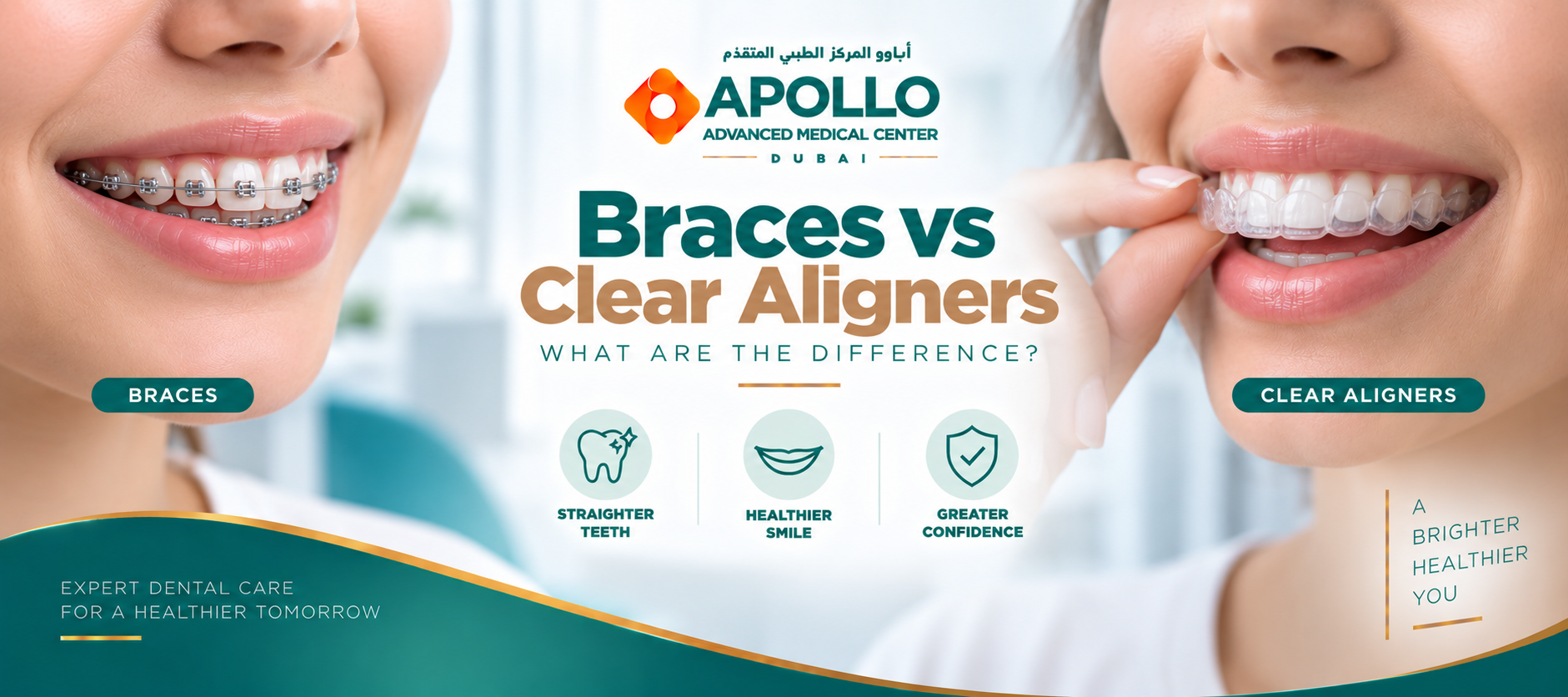
Braces or Clear Aligners? Understanding Which Option May Be Right for You
Braces and clear aligners can both improve tooth alignment, but they work differently.
A straighter smile is not only about appearance. Proper tooth alignment can also support a healthier bite, easier oral hygiene, and better overall dental function. Today, patients have several orthodontic options, with traditional braces and clear aligners being two of the most commonly discussed choices.
But which one is better?
The answer is not the same for everyone. Braces and clear aligners work differently, and the most suitable option depends on your tooth alignment, bite, the complexity of the orthodontic concern, your lifestyle, and your treatment goals.
What Are Traditional Braces?
Traditional braces use brackets and wires attached to the teeth. These components apply controlled forces that gradually guide teeth toward their planned positions.
Braces are an established orthodontic treatment and can be used for a wide range of alignment and bite concerns. Because they remain attached to the teeth throughout treatment, they provide continuous orthodontic guidance without relying on the patient to remember to wear them.
Modern braces can also come in different forms, including metal and tooth-coloured ceramic options.
What Are the Advantages of Braces?
Braces may be considered when:
- Teeth are crowded or significantly misaligned
- There are bite-related concerns
- More complex tooth movements are required
- A fixed orthodontic appliance is appropriate
- Consistent treatment control is important
However, braces require careful brushing and flossing around the brackets and wires. Certain hard, sticky, or chewy foods may also need to be avoided during treatment.
What Are Clear Aligners?
Clear aligners are a series of transparent, removable trays designed to gradually move teeth.
They are custom-made for the patient's teeth and are changed according to the orthodontist's treatment plan. Because they are transparent, they are generally much less noticeable than traditional braces.
One of their biggest advantages is removability. Patients can generally remove aligners for eating, brushing and flossing. However, this flexibility also means that patient compliance is essential. Aligners need to be worn for the recommended amount of time each day to work as planned.
Braces vs Clear Aligners: Key Differences
| Feature | Traditional Braces | Clear Aligners |
|---|---|---|
| Appearance | More noticeable because of brackets and wires | Generally discreet and transparent |
| Removability | Fixed throughout treatment | Removable |
| Eating | Some foods may need to be avoided | Removed during meals |
| Oral hygiene | Requires careful cleaning around brackets and wires | Teeth can be brushed and flossed normally when aligners are removed |
| Patient responsibility | Appliance remains fixed | Requires consistent wear as prescribed |
| Suitability | Can address a broad range of orthodontic concerns | Suitable for many cases, but not every orthodontic problem |
| Treatment choice | Based on individual diagnosis | Based on individual diagnosis and suitability |
Is One Better Than the Other?
This is one of the most common questions patients ask, but there is no universal winner.
The appliance is selected according to the patient's orthodontic problem, treatment objectives, and lifestyle needs.
For some patients, braces may provide the appropriate level of control for their orthodontic needs. For others, clear aligners may offer a suitable combination of discreet appearance and removability.
The important point is that the most attractive-looking option is not automatically the most appropriate option.
Why Professional Assessment Matters
Before choosing braces or clear aligners, an orthodontic assessment can help determine:
- The current position of your teeth
- Your bite and how the upper and lower teeth meet
- The complexity of the alignment problem
- Your oral health
- Your treatment goals
- Whether removable or fixed orthodontic treatment is more suitable
Your orthodontist may also use dental photographs, X-rays, scans or other diagnostic records to understand the complete situation before developing a treatment plan.
This is especially important because moving teeth changes more than their visible position. Orthodontic treatment affects the relationship between teeth, bite and supporting structures, so treatment should be professionally planned rather than selected simply because an option is popular.
Clear Aligners Require Commitment
The removable nature of clear aligners can be very convenient, but it also places responsibility on the patient.
Because aligners can be taken out, patients must remember to wear them according to their orthodontist's instructions. If they are not worn consistently, treatment may not progress according to plan.
This means clear aligners can be an excellent option for suitable patients who are comfortable following their treatment instructions carefully.
Braces Require Excellent Oral Hygiene
Because braces remain attached to the teeth, food particles and plaque can collect around brackets and wires. Maintaining good brushing and flossing habits throughout treatment is therefore particularly important.
Regular dental checkups should also continue during orthodontic treatment so that your overall oral health can be monitored.
What About Treatment Appearance?
Appearance is an important consideration for many patients, especially adults and teenagers.
Clear aligners are designed to be discreet, while traditional metal braces are more visible. Tooth-coloured ceramic braces can provide another option for patients who prefer fixed orthodontic treatment with a less noticeable appearance.
However, appearance should be considered alongside dental health, treatment requirements and suitability—not instead of them.
Braces and clear aligners are both valuable orthodontic treatment options, but neither is automatically better for everyone.
The right choice depends on your individual dental situation, including your tooth alignment, bite, complexity of the concern, lifestyle, treatment goals and professional assessment and treatment should be selected according to individual dental needs rather than simply choosing the option that looks more attractive.
If you're considering orthodontic treatment, a professional consultation is the best place to start. At Apollo Advanced Medical Center, Dubai, an orthodontic assessment can help you understand your options and make a more informed decision about your smile.