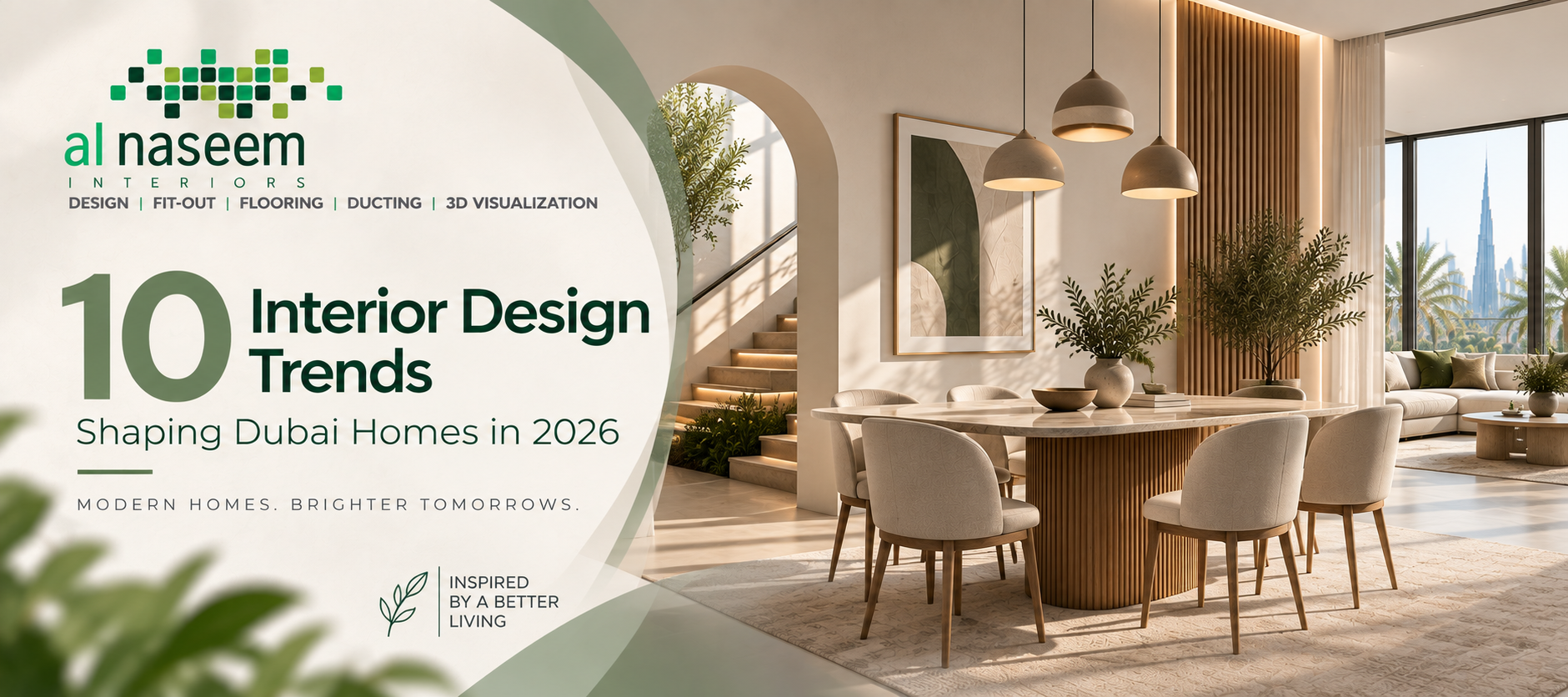
Modern UAE Residential Design Trends for Comfortable, Functional & Future-Ready Living
Dubai homes are evolving. While luxury and visual appeal remain important, residential interiors in 2026 are increasingly being shaped by comfort, functionality, sustainability, technology, wellness, and personalisation.
Recent UAE design discussions point towards warmer interiors, smarter use of space, stronger indoor-outdoor connections, sustainable materials, integrated technology, and homes designed around everyday lifestyles rather than appearance alone.
For homeowners planning a villa, apartment renovation, or new residential interior, understanding these trends can help create a home that feels contemporary without becoming dependent on short-lived fashions.
Here are 10 interior design trends influencing Dubai homes in 2026.
1. Warm Minimalism Is Replacing Cold Minimalism
Minimalism is still relevant, but the approach is becoming warmer and more comfortable.
Instead of relying heavily on stark white surfaces and extremely simple furniture, contemporary Dubai interiors are incorporating:
- Warm neutral colours
- Natural wood
- Soft textiles
- Textured walls
- Curved furniture
- Layered lighting
- Natural stone
- Subtle greenery
The result is a home that maintains clean architectural lines while feeling more welcoming and lived-in. Property Finder's 2026 overview also identifies warm minimalism as an important direction in Dubai interiors.
2. Smart Homes With Technology That Blends In
Smart-home technology is becoming increasingly integrated into residential interiors.
Lighting, climate control, entertainment, security and shading can now be incorporated into a home's overall design rather than appearing as separate technological additions.
The important shift is towards discreet technology.
Instead of filling a room with visible devices, homeowners can focus on systems that operate quietly in the background and improve convenience.
For Dubai homes, smart lighting, automated blinds, climate management and energy monitoring can be particularly useful when thoughtfully incorporated into the design.
3. Sustainability Becomes Part of the Design
Sustainability is moving from an optional feature towards a more important consideration in UAE residential design.
Designers are increasingly looking at:
- Energy-efficient lighting
- High-performance glazing
- Low-VOC paints and finishes
- Efficient cooling
- Responsible material selection
- Water-saving fixtures
- Natural ventilation where appropriate
- Sustainable or lower-impact materials
UAE design reporting has also highlighted shaded courtyards, improved glazing, insulation, energy-efficient systems and low-emission finishes as part of the changing approach to residential construction.
For homeowners, sustainability can therefore be considered alongside aesthetics, comfort and long-term operating requirements.
4. Biophilic Interior Design
Bringing elements of nature indoors continues to influence residential design.
Plants, natural wood, stone, daylight, organic forms and views of outdoor spaces can help create a calmer visual environment.
In Dubai, this trend is particularly interesting because indoor-outdoor living can be incorporated through terraces, balconies, courtyards, shaded areas and large openings where appropriate.
The objective isn't simply to add a few plants. It is to create a stronger relationship between the interior and natural elements.
5. Indoor-Outdoor Living
Dubai's residential architecture increasingly recognises outdoor areas as extensions of the home.
Terraces, gardens, balconies and courtyards can become spaces for:
- Family gatherings
- Dining
- Relaxation
- Entertaining
- Outdoor seating
- Wellness activities
Recent UAE residential design coverage highlights indoor-outdoor connections as an important part of modern villa design, particularly during the cooler months.
Thoughtful transitions between interior and exterior spaces can make a home feel more connected and flexible.
6. Flexible Rooms for Changing Lifestyles
The traditional idea that every room should have only one purpose is becoming less practical for many modern households.
A spare room might function as:
Home office + guest room
A family room could become:
Entertainment space + study area
A large balcony might serve as:
Relaxation area + outdoor dining space
Recent UAE luxury-home discussions point to growing interest in spaces that can adapt to different uses, including home offices, guest rooms and multipurpose family areas.
Flexible planning allows a home to adapt as family needs change.
7. Personalised Interiors Over Copy-Paste Luxury
Dubai is known for luxury interiors, but luxury design is increasingly becoming more personal.
Instead of simply selecting expensive materials and furniture, homeowners are looking for interiors that reflect their personality, interests and lifestyle.
This can include:
- Bespoke furniture
- Custom joinery
- Personal art collections
- Statement lighting
- Carefully selected accessories
- Locally inspired details
- Family-oriented layouts
Recent UAE interiors coverage identifies personalisation, bespoke furnishings and curated art as growing areas of interest in the luxury residential market.
A well-designed home should feel like your home, rather than a showroom.
8. Wellness-Focused Spaces
Wellness is becoming increasingly connected with residential design.
Homeowners may dedicate space to:
- Home gyms
- Yoga or meditation
- Relaxation
- Spa-inspired bathrooms
- Quiet reading areas
- Better natural lighting
- Comfortable outdoor spaces
The wider UAE residential market is also seeing greater emphasis on lifestyle and wellbeing when people consider what makes a home valuable and enjoyable to live in.
This doesn't mean every home needs a dedicated wellness room. Even a carefully designed corner for reading, stretching or relaxation can contribute to a more balanced interior.
9. Better Space Planning Instead of Simply Bigger Spaces
One of the more interesting changes in modern luxury design is the growing emphasis on how effectively a home uses its space.
A larger home is not automatically a better-designed home.
Good space planning considers:
- Circulation
- Storage
- Furniture proportions
- Natural light
- Privacy
- Views
- Family routines
- Entertaining requirements
- Work-from-home needs
Recent reporting on UAE luxury homes describes a shift towards efficient layouts and spaces that work harder for contemporary lifestyles.
For homeowners, this means thoughtful planning can sometimes create a greater sense of spaciousness without simply increasing the floor area.
10. Dubai's Modern Regional Identity
Dubai's interiors continue to combine international design influences with elements that respond to the UAE's cultural and environmental context.
Contemporary interiors may incorporate:
- Geometric patterns
- Natural stone
- Warm desert-inspired colours
- Screens and partitions
- Arabic-inspired detailing
- Contemporary interpretations of traditional craftsmanship
This creates an interesting balance between global contemporary design and regional identity. Property Finder's 2026 interior-design overview similarly points to cultural fusion as an emerging direction in Dubai residential interiors.
The result can be sophisticated without losing a sense of place.
Designing for the Way People Live
The biggest change in Dubai residential interior design may not be a particular colour, material or furniture style.
It is the growing focus on how a home actually works for the people living in it.
A successful interior should consider comfort, functionality, lifestyle, maintenance, technology, sustainability and personal expression alongside visual appeal.
For homeowners planning a new villa or apartment interior in Dubai, the best approach is therefore not to follow every trend. Instead, select ideas that genuinely support the way you and your family live.
The future of Dubai residential interiors is not simply about making homes look luxurious. It is about making them more comfortable, intelligent, sustainable, personal and adaptable.
When thoughtful design is combined with quality materials, practical space planning and professional execution, a home can remain relevant long after a particular trend has passed.