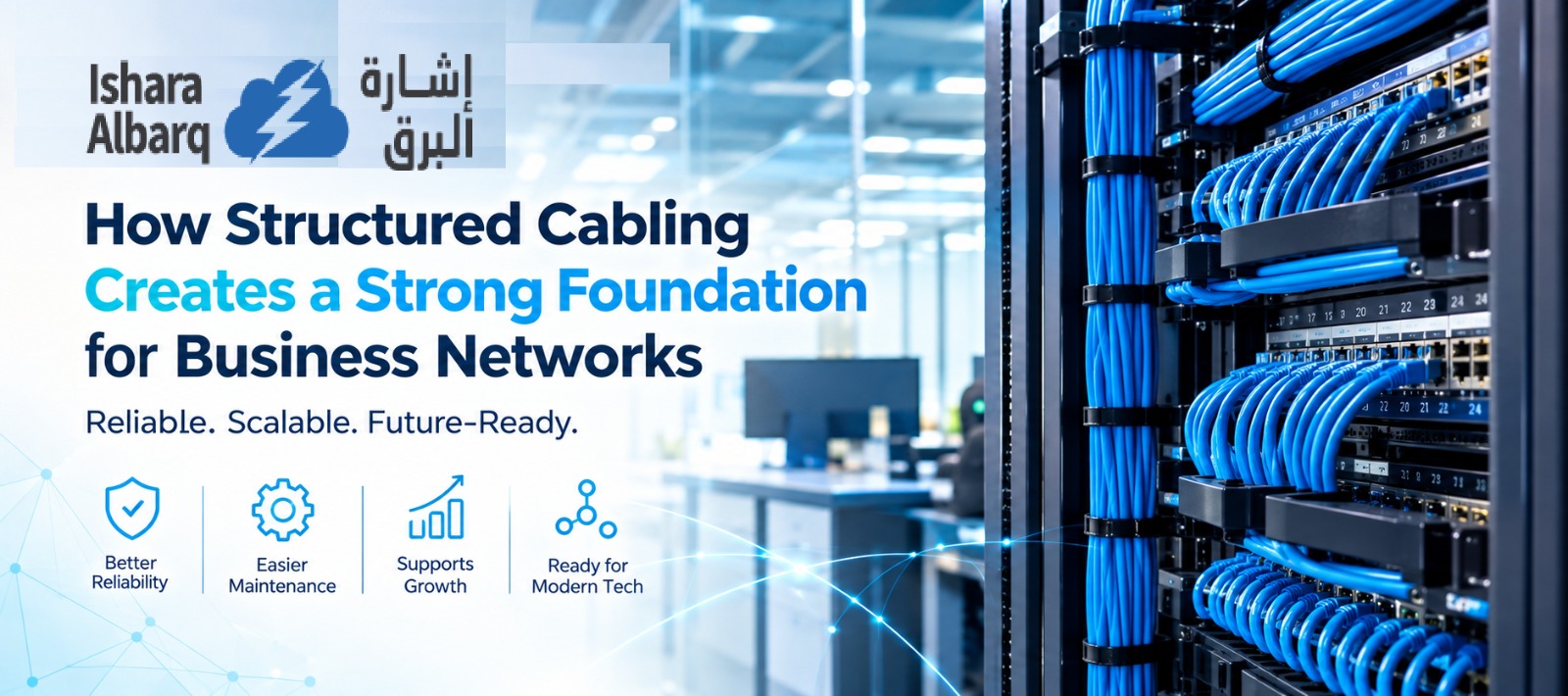
Category: Telecommunications & Networking
A business network is only as reliable as the infrastructure supporting it.
When companies think about networking, they often focus on routers, switches, Wi-Fi, internet connections, cloud platforms, and cybersecurity. But there is another critical component that often stays behind the scenes: structured cabling.
Structured cabling provides the physical foundation that connects computers, servers, phones, access points, security systems, and other network devices. When it is properly designed and installed, it can make a business network easier to manage, expand, troubleshoot, and maintain.
For modern businesses in the UAE, where digital operations and connected workplaces are becoming increasingly important, having a well-planned cabling infrastructure can play an important role in long-term network reliability.
What Is Structured Cabling?
Structured cabling is an organized approach to designing and installing the physical cabling infrastructure used by a building or business.
Instead of connecting devices through a collection of disconnected cables installed whenever a new requirement appears, structured cabling creates a planned infrastructure with standardized connections and organized pathways.
A typical structured cabling system can include:
-
Ethernet network cables
-
Fiber optic cables
-
Patch panels
-
Network racks and cabinets
-
Patch cords
-
Data outlets
-
Cable management systems
-
Server and equipment connections
-
Telecommunications connections
The goal is not simply to install cables. It is to create a structured and scalable physical network infrastructure that can support current and future business requirements.
Why Structured Cabling Matters
Imagine an office where cables have been installed over several years without a consistent plan.
One department may have one type of cable, another area may have different connections, and additional cables may have been added wherever they were needed. Eventually, identifying a particular connection or troubleshooting a network problem can become difficult.
Structured cabling takes a different approach.
The infrastructure is planned from the beginning, documented properly, labeled clearly, and organized around the needs of the business.
This can provide several long-term benefits.
1. Better Network Reliability
Network performance depends on more than the internet connection or networking equipment.
Poor-quality cables, damaged connections, excessive cable lengths, improper installation, and unorganized infrastructure can contribute to connectivity problems.
A professionally designed structured cabling system helps create consistent physical connections between network devices.
This provides a stronger foundation for business-critical applications, communication systems, cloud services, and connected devices.
2. Easier Troubleshooting and Maintenance
When a network problem occurs, time matters.
In an unorganized cabling environment, technicians may need to trace cables manually to determine which connection belongs to which device.
Structured cabling makes this process easier through:
-
Clear labeling
-
Organized patch panels
-
Proper cable management
-
Documented connections
-
Dedicated network racks
-
Standardized layouts
Better organization can reduce the time required to identify and resolve physical connectivity issues.
3. Supports Business Growth
Business networks rarely remain the same.
A company may start with 20 employees and eventually expand to 100 or more. It may add new departments, meeting rooms, access points, IP cameras, servers, phones, or additional office locations.
If the original cabling infrastructure was designed only for the current requirement, expansion can become expensive and disruptive.
Structured cabling allows businesses to plan for future requirements.
Unused ports, organized pathways, additional cable capacity, and properly designed network rooms can make future expansion easier.
4. Supports Modern Network Technologies
Modern businesses use a growing number of connected technologies.
These can include:
-
Cloud applications
-
VoIP communication
-
Wi-Fi access points
-
IP surveillance
-
Video conferencing
-
Network storage
-
IoT devices
-
Access control systems
-
Servers and data center equipment
All of these technologies depend on reliable connectivity.
A properly designed structured cabling system can provide the physical infrastructure required to support these technologies as the business evolves.
5. Fiber and Copper Have Different Roles
Structured cabling does not necessarily mean using only one type of cable.
Different parts of a network can require different technologies.
Copper cabling, such as Ethernet cabling, is commonly used for connecting computers, phones, wireless access points, and other network devices within offices and buildings.
Fiber optic cabling can be used for high-capacity connections, longer distances, building-to-building links, and connections between network infrastructure locations.
The right combination depends on factors such as distance, bandwidth requirements, environment, network architecture, and future expansion plans.
6. Better Cable Management Creates a Better Network Environment
Cable management might appear to be a simple visual concern, but it has practical importance.
Unorganized cables can make network rooms difficult to access and can increase the time required for maintenance.
A structured approach can include:
-
Cable trays
-
Proper routing
-
Patch panels
-
Rack organization
-
Cable labels
-
Separation of different systems where appropriate
-
Clearly documented connections
A clean network room makes it easier for technicians to understand the infrastructure and work on it safely and efficiently.
7. Structured Cabling Supports Business Continuity
Network downtime can interrupt business operations.
Employees may lose access to cloud applications, communication platforms, shared files, business systems, or internet-based services.
Structured cabling cannot eliminate every possible cause of downtime, but it can provide a more organized physical foundation for the network.
When combined with redundant network equipment, backup connectivity, monitoring, proper maintenance, and documented infrastructure, structured cabling can contribute to a more resilient business network.
8. Planning Is More Important Than Simply Installing Cables
One of the most common mistakes businesses can make is treating cabling as an afterthought.
Cabling should ideally be considered during the early stages of an office fit-out, building project, relocation, or network upgrade.
Planning should consider:
-
Number of users
-
Office layout
-
Network equipment
-
Wi-Fi requirements
-
Server locations
-
Meeting rooms
-
Security systems
-
Future expansion
-
Cable routes
-
Network room locations
-
Power and environmental requirements
-
Expected bandwidth requirements
This helps create an infrastructure that supports the business rather than forcing the business to work around the infrastructure.
Structured Cabling in UAE Business Environments
The UAE has a highly connected business environment, with organizations across sectors increasingly depending on digital platforms, cloud services, communications, automation, and connected devices.
Businesses operating from offices, warehouses, retail environments, hotels, commercial buildings, and industrial facilities can have very different connectivity requirements.
For this reason, cabling should not be treated as a one-size-fits-all solution.
A corporate office may require extensive Ethernet and Wi-Fi infrastructure, while a warehouse may need connectivity for scanners, cameras, access points, and operational systems.
A hospitality environment may require a combination of guest Wi-Fi, staff networks, security systems, telephony, and building technologies.
The physical network infrastructure needs to reflect the actual operating environment.
Common Structured Cabling Mistakes
Businesses can face unnecessary problems when cabling is installed without proper planning.
Some common mistakes include:
Installing only for today's requirements:
The network may work initially but become difficult to expand later.
Poor labeling:
Unlabeled cables can make troubleshooting unnecessarily complicated.
Ignoring cable management:
A crowded and disorganized network rack can make maintenance difficult.
Using unsuitable cabling:
Cable selection should match network requirements and the installation environment.
Skipping documentation:
Without accurate documentation, future technicians may struggle to understand the infrastructure.
Treating cabling as an isolated project:
Cabling should be considered alongside networking, security, Wi-Fi, telecommunications, and future technology requirements.
How Businesses Can Build a Better Cabling Foundation
A practical approach starts with understanding the business rather than simply counting network ports.
Step 1: Understand Current Requirements
Identify users, devices, applications, locations, and connectivity requirements.
Step 2: Plan for Future Growth
Consider potential employee growth, additional devices, new departments, and technology upgrades.
Step 3: Design the Network Layout
Plan equipment rooms, cable routes, outlets, racks, and connections.
Step 4: Select Appropriate Cabling
Choose copper, fiber, or a combination based on technical requirements and distances.
Step 5: Install and Organize Properly
Use appropriate pathways, cable management, labeling, and termination practices.
Step 6: Test the Infrastructure
Testing helps verify that installed connections meet the required performance standards.
Step 7: Document Everything
Maintain records of cable routes, ports, patch-panel connections, equipment locations, and network layouts.
This documentation becomes valuable when the business expands or troubleshooting is required.
Structured Cabling Is a Long-Term Investment
A network upgrade is often associated with visible equipment such as switches, routers, firewalls, and wireless access points.
Cabling is different.
Once installed correctly, it may remain part of the building's infrastructure for years.
That makes the initial design and installation particularly important.
A poorly planned cabling system can create limitations that are difficult and expensive to correct later. A well-planned system can provide a stable foundation for future networking technologies and business growth.
The Future of Business Networking Starts With the Physical Layer
Businesses are moving toward faster connectivity, cloud-based applications, smart workplaces, IoT systems, advanced security, and increasingly connected operations.
Behind these technologies is a physical infrastructure that still needs to connect devices reliably.
Structured cabling may not always be visible to employees or customers, but its importance becomes clear when a business needs reliable connectivity, easier maintenance, and room for growth.
Final Thoughts
A strong business network does not begin with software alone. It begins with the physical infrastructure that connects everything together.
Structured cabling creates an organized, scalable, and dependable foundation for modern telecommunications and networking.
For businesses planning a new office, expanding an existing facility, upgrading their network, or building technology infrastructure for long-term growth, structured cabling should be considered a strategic infrastructure decision—not simply an installation task.
The right foundation today can make tomorrow's network easier to manage, expand, and adapt.