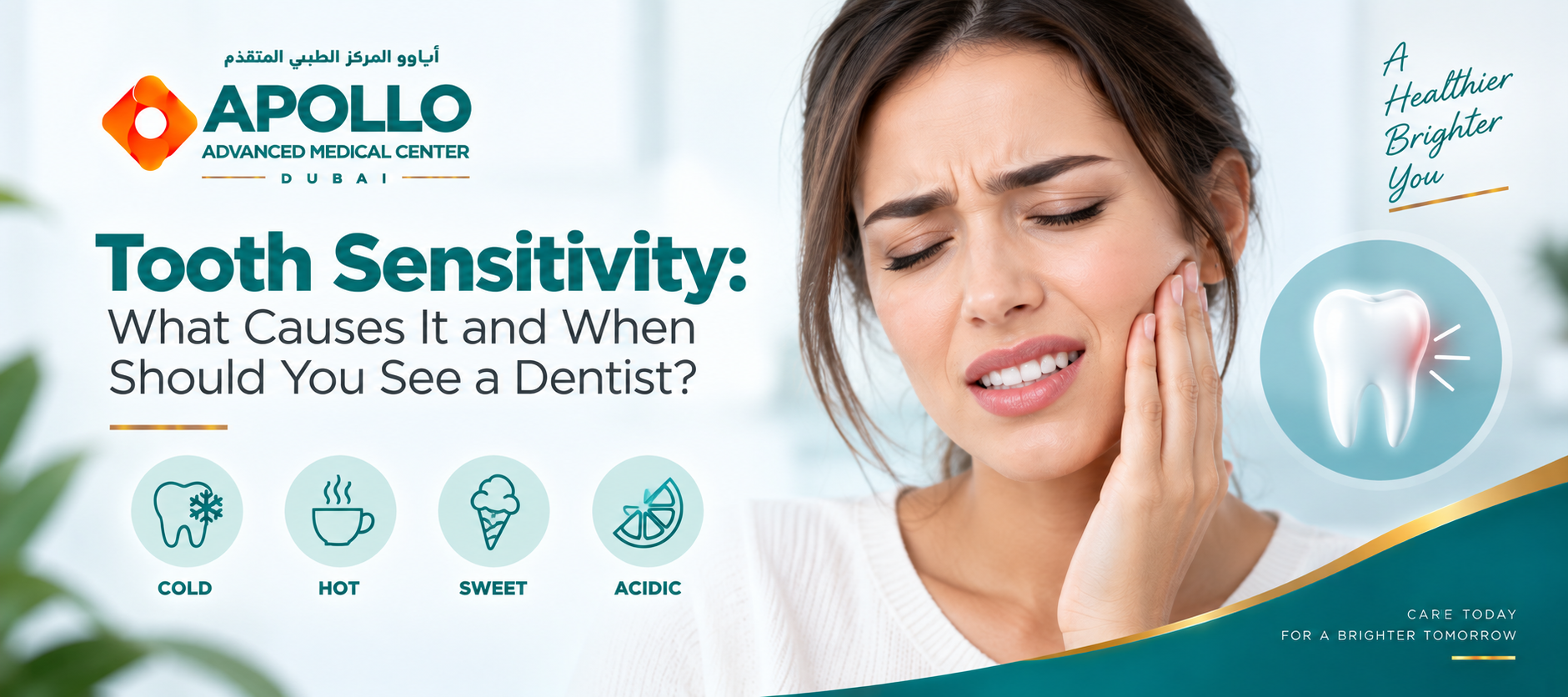
What Causes Tooth Sensitivity? A Complete Guide to Sensitive Teeth
A sudden sharp sensation when you drink something cold, enjoy a hot cup of tea, eat something sweet, or even brush your teeth can be surprisingly uncomfortable. For some people, tooth sensitivity is occasional and mild. For others, it becomes frequent enough to affect what they eat and drink.
Tooth sensitivity is common, but it should not automatically be dismissed as something you simply have to live with. It can happen when the protective enamel becomes worn or when gum recession exposes parts of the tooth that are more vulnerable to temperature and other stimuli. It can also be associated with problems such as tooth decay, gum disease, cracks, or recent dental procedures.
Understanding why your teeth are sensitive is therefore more useful than simply trying to avoid cold foods.
This guide explains the common causes of tooth sensitivity, how everyday habits can contribute to it, the connection with whitening products and acidic foods, and when it is sensible to arrange a professional dental assessment.
What Is Tooth Sensitivity?
Tooth sensitivity, sometimes called dentin hypersensitivity, occurs when the more sensitive inner portion of a tooth becomes exposed or more susceptible to external stimuli.
The outer surface of a healthy tooth is protected by enamel, a hard mineralized layer. Beneath the enamel is dentin. Dentin contains microscopic channels that communicate with the inner part of the tooth, where nerves are located.
When dentin becomes exposed, temperature changes and certain foods or drinks can trigger a short, sharp sensation. This can happen particularly with cold, hot, sweet or acidic foods and beverages.
Sensitivity itself is a symptom rather than a diagnosis. The important question is what is causing it?
Common Causes of Tooth Sensitivity
Several factors can contribute to sensitive teeth. Sometimes there is one obvious cause; in other cases, several factors may be involved.
1. Enamel Wear
Enamel provides important protection for the tooth. Although it is extremely hard, it can gradually become thinner or damaged through repeated exposure to acids, excessive brushing pressure, grinding and other forms of wear.
As enamel becomes thinner, the underlying dentin may become more exposed, increasing the likelihood of sensitivity. Enamel erosion can also cause changes such as discoloration, pitting or chipped areas in more advanced cases.
One common mistake is assuming that brushing harder means cleaning better. It does not.
Using excessive pressure or an overly firm toothbrush can contribute to enamel wear and gum irritation. A gentle brushing technique with a soft-bristled toothbrush is generally a better approach.
2. Exposed Dentin
Dentin can become exposed when enamel has worn away or when the gum has moved away from the tooth.
Because dentin contains microscopic tubules, exposure can make teeth react more strongly to temperature, sweetness and acidity.
This explains why someone might suddenly experience a sharp sensation when drinking ice-cold water even though there is no obvious hole in the tooth.
However, exposed dentin should not simply be assumed to be the cause. A dental examination can help determine whether sensitivity is related to enamel wear, gum recession, decay or another dental problem.
3. Gum Recession
Your gums help protect the roots of your teeth. When gum tissue recedes, the root surface can become exposed.
Unlike the crown of the tooth, the root is not covered by enamel. This makes exposed roots more vulnerable to sensitivity and root-surface decay.
Gum recession may be associated with factors including periodontal disease, aggressive brushing, tobacco use, tooth positioning and individual differences in gum tissue.
If you notice that your teeth appear longer than they used to, your gums are pulling away from the teeth, or sensitivity is concentrated around the gum line, a dental assessment is worthwhile.
Can Acidic Foods Cause Sensitive Teeth?
Yes. Frequent exposure to acidic foods and drinks can contribute to dental erosion, which gradually weakens the tooth surface.
Common sources of dietary acid include:
- Citrus fruits and juices
- Soft drinks
- Energy drinks
- Vinegar-based foods
- Pickles
- Certain sports drinks
- Other acidic beverages and foods
The issue is not necessarily eating one acidic food occasionally. Frequency and repeated exposure matter because teeth need time to recover between acid challenges.
Acids can soften the enamel surface. Brushing aggressively immediately after an acidic exposure may add mechanical wear to an already softened surface.
Practical habits that may help
If acidic foods or drinks are part of your regular diet:
- Avoid slowly sipping acidic beverages for long periods.
- Consider drinking water afterward.
- Keep acidic drinks with meals rather than repeatedly consuming them throughout the day.
- Avoid brushing immediately after an acidic exposure; giving saliva time to help neutralize and clear acids is sensible.
These steps do not replace professional dental care if sensitivity persists.
What About Teeth Whitening Products?
Teeth whitening is a popular cosmetic dental treatment, but temporary tooth sensitivity is one of the most common side effects of whitening.
Peroxide-based whitening products can temporarily increase sensitivity, and the likelihood can be influenced by factors such as the concentration of the whitening agent and how the product is used. Gum irritation can also occur.
This does not mean that whitening is inherently unsafe. It does mean that whitening should be approached thoughtfully.
A common mistake: whitening without checking your teeth first
If you already have sensitivity, cavities, gum problems or other dental concerns, simply starting an over-the-counter whitening product may not address the underlying issue.
A dental assessment can help determine whether whitening is appropriate and whether another problem needs attention first.
It is also important to remember that whitening products whiten natural teeth. Tooth-coloured restorations such as crowns or fillings do not necessarily change colour in the same way.
Other Reasons Your Teeth May Become Sensitive
Sensitivity is not always caused by enamel erosion or gum recession.
It may also occur in connection with:
Tooth decay
A cavity can eventually produce sensitivity to hot, cold or sweet foods and drinks. Early tooth decay may not cause noticeable symptoms, which is one reason routine dental examinations remain important.
Cracked or damaged teeth
A crack or chip may allow irritation to reach deeper parts of the tooth and can produce sensitivity or pain.
Teeth grinding or clenching
Repeated grinding can wear down enamel and expose the inner layers of the tooth. Tooth sensitivity can be one of the symptoms associated with bruxism.
Gum disease
Inflamed or diseased gums can contribute to gum recession and exposed tooth surfaces. Signs such as bleeding, swelling, persistent bad breath or sensitive teeth should not be ignored.
Recent dental treatment
Some people experience temporary sensitivity following certain dental procedures. However, persistent, worsening or unusual pain deserves professional evaluation.
When Should You See a Dentist for Tooth Sensitivity?
Not every brief episode of sensitivity means that something serious is wrong. But persistent or unexplained sensitivity should not simply be ignored.
Consider arranging a dental appointment if:
- Sensitivity keeps returning or is becoming more frequent.
- The discomfort is strong or lasts longer than expected.
- One particular tooth is consistently sensitive.
- You experience pain when biting or chewing.
- You notice a visible crack, chip, hole or unusual discoloration.
- Your gums bleed, swell or appear to be receding.
- You recently started experiencing significant sensitivity after whitening.
- Hot or cold sensitivity is accompanied by persistent toothache.
- You have facial or gum swelling, fever, or significant pain.
Tooth sensitivity can sometimes be associated with cavities, gum disease, cracks or other dental conditions, so an examination is important when symptoms persist.
What Happens During a Dental Assessment?
A dentist will generally begin by asking about your symptoms.
Useful details include:
- When the sensitivity started
- Whether it affects one tooth or several
- What triggers it
- How long the sensation lasts
- Whether you recently had dental treatment
- Whether you use whitening products
- Your brushing habits
- Your dietary habits
- Any history of grinding or clenching
The dentist may then examine the teeth and gums to look for signs of decay, erosion, recession, cracks or other causes.
Depending on the findings, additional diagnostic procedures may sometimes be appropriate.
The purpose is not simply to treat the sensitivity—it is to understand why it is happening.
How Can You Reduce the Risk of Tooth Sensitivity?
You cannot prevent every cause of sensitivity, but good everyday habits can help protect your teeth and gums.
Brush gently
Use a soft-bristled toothbrush and avoid aggressive scrubbing. Gentle, consistent brushing is preferable to applying excessive pressure.
Maintain daily oral hygiene
Regular brushing and cleaning between the teeth help control plaque, which is important for preventing tooth decay and gum disease.
Be mindful of acidic foods and drinks
Frequent acid exposure can contribute to enamel erosion. Moderation and good hydration can help reduce unnecessary exposure.
Be careful with whitening products
If you already have sensitive teeth, speak with a dental professional before beginning a whitening routine.
Do not ignore gum changes
Bleeding, swelling or recession can indicate an underlying gum problem and should be assessed rather than treated only with home remedies.
Common Misconceptions About Sensitive Teeth
“Sensitive teeth are always caused by weak enamel.”
Not necessarily. Sensitivity can have several causes, including gum recession, decay, cracks and gum disease.
“If the sensitivity disappears, I never need to worry about it.”
Not always. Symptoms can fluctuate, and some dental problems may initially cause little or no discomfort.
“Whitening products permanently damage everyone's teeth.”
That is not an accurate generalization. Temporary sensitivity is a recognized common side effect of whitening, but experiences vary, and appropriate use matters.
“Brushing harder will make sensitive teeth cleaner.”
More pressure is not necessarily better. Aggressive brushing can contribute to enamel wear and gum recession.
Tooth sensitivity is often your mouth's way of telling you that something has changed.
It may be related to enamel wear, exposed dentin, gum recession, acidic foods and drinks, whitening products, tooth decay, grinding, gum disease or another dental issue.
The most useful response is not to simply avoid cold foods forever. It is to understand the possible cause and determine whether professional assessment is appropriate.
For patients looking for dental care in Dubai or a dentist near Al Rigga and Union, Apollo Advanced Medical Center is located near Fish Roundabout in Al Rigga, Union, Dubai, and provides dental services including preventive and restorative dental care.
If tooth sensitivity is persistent, worsening, localized to one tooth, or accompanied by other symptoms, a dental consultation can help identify the underlying concern and guide appropriate.