Alexandria, Egypt: Where Ancient History, Mediterranean Beauty, and Modern Opportunity Meet
Alexandria is Egypt's largest city on the Mediterranean coast and one of the most historically significant cities in the world. Founded by Alexander the Great in 331 BCE, Alexandria became one of the leading centres of learning, trade, culture, and civilization in the ancient world.
Located on Egypt's northern Mediterranean coast, Alexandria combines ancient history, Greco-Roman heritage, Egyptian culture, Islamic architecture, European influences, beautiful coastal scenery, major ports, universities, and modern economic activity.
Today, Alexandria is an important centre for trade, shipping, manufacturing, education, tourism, technology, and business. Its strategic Mediterranean location also makes it one of Egypt's most important gateways to international markets.
Quick Facts
| Fact | Details |
|---|---|
| Country | Egypt 🇪🇬 |
| City | Alexandria |
| Region | North Africa |
| Location | Mediterranean coast of Egypt |
| Founded | 331 BCE |
| Founder | Alexander the Great |
| Official Language | Arabic |
| Widely Spoken Language | Egyptian Arabic; English and other languages are also used in international settings |
| Currency | Egyptian Pound (EGP) |
| Time Zone | Eastern European Time |
| Climate | Mediterranean |
| Major Economic Activities | Shipping, Trade, Manufacturing, Tourism, Education, Services |
| Major Airport | Borg El Arab International Airport |
| Major Ports | Alexandria Port and Dekheila Port |
| Known For | Library of Alexandria, Mediterranean coast, Greco-Roman heritage, seafood, and historic landmarks |
History of Alexandria
Alexandria was founded by Alexander the Great and quickly became one of the most important cities of the ancient world.
During the Ptolemaic period, Alexandria became famous for:
-
The Great Library of Alexandria
-
The Lighthouse of Alexandria
-
Scientific research
-
Philosophy
-
Mathematics
-
Astronomy
-
International trade
The ancient Lighthouse of Alexandria, also known as the Pharos of Alexandria, was considered one of the Seven Wonders of the Ancient World.
Alexandria was also home to the legendary Library of Alexandria, one of the greatest centres of knowledge in the ancient world.
Over the centuries, the city was influenced by:
-
Ancient Egyptian civilization
-
Greek culture
-
Roman rule
-
Byzantine history
-
Islamic civilization
-
Ottoman rule
-
European influences
-
Modern Egyptian development
Today, Alexandria remains a city where multiple civilizations have left their mark.
A Rich and Diverse Culture
Alexandria has a distinctive cultural identity shaped by its Mediterranean history.
The city reflects influences from:
-
Ancient Egyptian heritage
-
Greek civilization
-
Roman history
-
Arab culture
-
Islamic civilization
-
Mediterranean traditions
-
Ottoman heritage
-
European influences
Alexandria is known for:
-
Literature
-
Poetry
-
Art
-
Theatre
-
Architecture
-
Music
-
Cinema
-
Intellectual life
-
Mediterranean cuisine
The city's historic connection with writers, philosophers, scientists, and scholars continues to influence its cultural identity.
Famous Tourist Attractions
1. Bibliotheca Alexandrina
The Bibliotheca Alexandrina is one of Alexandria's most famous modern landmarks.
Inspired by the ancient Library of Alexandria, the institution serves as:
-
A major library
-
Research centre
-
Cultural institution
-
Museum complex
-
Conference venue
-
Educational centre
It represents Alexandria's continuing connection with knowledge, learning, science, and culture.
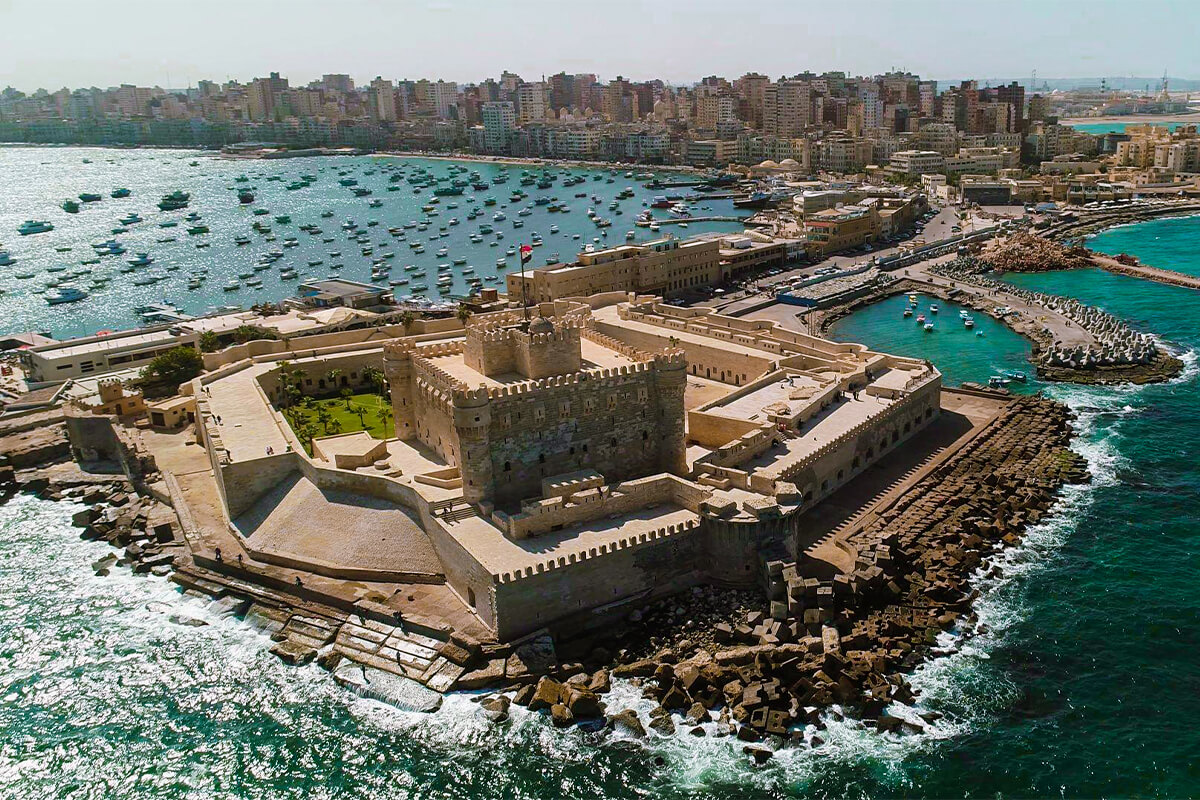
2. Citadel of Qaitbay
The Citadel of Qaitbay is one of Alexandria's most recognizable landmarks.
Built in the 15th century, the fortress stands on the Mediterranean coast near the historic location traditionally associated with the ancient Lighthouse of Alexandria.
Visitors can enjoy:
-
Mediterranean views
-
Historic architecture
-
Photography
-
Coastal walks
3. Catacombs of Kom El Shoqafa
The Catacombs of Kom El Shoqafa are among Alexandria's most important archaeological attractions.
The underground complex reflects a fascinating mixture of:
-
Egyptian traditions
-
Greek culture
-
Roman architecture
It is one of the best examples of Alexandria's multicultural ancient history.
4. Pompey's Pillar
Pompey's Pillar is one of Alexandria's most famous surviving Roman monuments.
The massive granite column stands near the ancient Serapeum complex and represents the city's Roman heritage.
5. Montaza Palace and Gardens
The Montaza Palace and Gardens are located along Alexandria's Mediterranean coast.
The area is known for:
-
Gardens
-
Historic architecture
-
Coastal scenery
-
Walking areas
-
Relaxation
It is one of the city's popular outdoor destinations.
6. Alexandria National Museum
The museum provides visitors with an introduction to Alexandria's long history.
Collections cover periods including:
-
Ancient Egypt
-
Greek civilization
-
Roman history
-
Byzantine history
-
Islamic Egypt
-
Modern Egypt
7. Abu al-Abbas al-Mursi Mosque
One of Alexandria's best-known religious landmarks.
The mosque is admired for its distinctive Islamic architecture and cultural importance.
8. Alexandria Corniche
The Corniche runs along the Mediterranean coastline and is one of the city's most popular areas.
Visitors can enjoy:
-
Sea views
-
Cafés
-
Restaurants
-
Walking
-
Photography
-
Evening entertainment
The Mediterranean Coast
Alexandria's Mediterranean location is central to its identity.
The coastline supports:
-
Tourism
-
Restaurants
-
Cafés
-
Hotels
-
Maritime activities
-
Fishing
-
Recreation
The combination of historic architecture and sea views gives Alexandria a character very different from Cairo and many other Egyptian cities.
Food and Culinary Scene
Alexandria is particularly famous for its seafood.
Popular foods include:
-
Grilled fish
-
Shrimp
-
Calamari
-
Seafood soups
-
Sayadeya
-
Egyptian mezze
-
Koshari
-
Ful medames
-
Taameya
-
Mahshi
-
Egyptian pastries
Fresh seafood restaurants are an important part of the city's food culture.
Alexandria also has a strong café culture influenced by its Mediterranean history.
Economy and Business Environment
Alexandria is one of Egypt's most important economic centres.
Major sectors include:
-
Maritime trade
-
Shipping
-
Port services
-
Manufacturing
-
Petrochemicals
-
Tourism
-
Education
-
Technology
-
Food processing
-
Logistics
-
Financial services
The city's strategic position on the Mediterranean gives it a major advantage for international trade.
Its ports connect Egypt with markets across:
-
Europe
-
Africa
-
The Middle East
-
Asia
-
The Mediterranean region
Business Opportunities in Alexandria
1. Shipping and Maritime Logistics
Alexandria is Egypt's most important maritime gateway.
Business opportunities include:
-
Port services
-
Freight forwarding
-
Warehousing
-
Shipping agencies
-
Supply-chain management
-
Customs technology
-
Cold-chain logistics
-
Container services
-
Maritime technology
The city's location makes it attractive for businesses connected with Mediterranean and international trade.
2. Manufacturing and Industry
Alexandria has an established industrial base.
Opportunities include:
-
Food processing
-
Petrochemicals
-
Pharmaceuticals
-
Textiles
-
Packaging
-
Construction materials
-
Engineering
-
Industrial automation
The city and surrounding region can support manufacturing businesses serving both domestic and export markets.
3. Tourism and Hospitality
Alexandria has major potential for tourism.
Opportunities include:
-
Hotels
-
Boutique accommodation
-
Restaurants
-
Heritage tourism
-
Cultural tourism
-
Coastal tourism
-
Cruise tourism
-
Travel technology
-
Event management
The city's combination of ancient history, museums, architecture, libraries, and Mediterranean scenery creates a distinctive tourism experience.
4. Technology and Digital Economy
Alexandria has a large student population and an expanding technology ecosystem.
Opportunities include:
-
Software development
-
Artificial Intelligence
-
FinTech
-
Cybersecurity
-
E-commerce
-
Digital payments
-
EdTech
-
HealthTech
-
Cloud services
-
Data analytics
Universities and educational institutions can support future technology talent and innovation.
5. Renewable Energy and Green Technology
Alexandria and Egypt have growing opportunities in clean technology.
Potential sectors include:
-
Solar energy
-
Wind energy
-
Energy efficiency
-
Green buildings
-
Smart infrastructure
-
Energy storage
-
Waste-to-energy
-
Sustainable ports
Green technology can help support the development of cleaner industries and sustainable urban growth.
6. Fisheries and Food Processing
Alexandria's coastal position creates opportunities in:
-
Seafood processing
-
Cold storage
-
Aquaculture
-
Fish distribution
-
Food packaging
-
Export logistics
-
Sustainable fisheries technology
Improving the seafood value chain can support employment and export growth.
Education
Alexandria is one of Egypt's leading educational centres.
Important institutions include:
-
Alexandria University
-
Arab Academy for Science, Technology and Maritime Transport
-
Pharos University
-
Various engineering and technical institutions
-
Research centres
Students can study:
-
Engineering
-
Medicine
-
Business
-
Maritime studies
-
Technology
-
Artificial Intelligence
-
Science
-
Law
-
Economics
-
Architecture
The city's educational ecosystem supports innovation and workforce development.
Transportation
Alexandria has strong transport connections with other parts of Egypt.
Transportation options include:
-
Rail connections
-
Road networks
-
Buses
-
Taxis
-
Private vehicles
-
Maritime facilities
Borg El Arab International Airport provides international and domestic air connectivity.
Alexandria's ports are central to the city's importance as a logistics and trade centre.
Shopping and Local Markets
Alexandria offers a mixture of traditional markets and modern shopping centres.
Visitors can explore:
-
Traditional souks
-
Local markets
-
Shopping malls
-
Boutiques
-
Artisan stores
Popular products include:
-
Jewellery
-
Egyptian cotton products
-
Spices
-
Perfumes
-
Traditional clothing
-
Handicrafts
-
Egyptian souvenirs
-
Local food products
Cultural Events and Entertainment
Alexandria has a rich cultural and intellectual tradition.
The city hosts:
-
Literary events
-
Book exhibitions
-
Music performances
-
Theatre
-
Art exhibitions
-
Cultural festivals
-
International conferences
-
Educational programmes
The Bibliotheca Alexandrina plays an important role in the city's modern cultural and intellectual life.
Living in Alexandria
Alexandria offers a distinctive Mediterranean lifestyle compared with Egypt's capital.
Important areas include:
-
Smouha
-
Stanley
-
Montaza
-
Raml Station
-
Sporting
-
Sidi Gaber
-
Agami
-
Miami
The city offers:
-
Universities
-
Hospitals
-
Schools
-
Hotels
-
Restaurants
-
Shopping centres
-
Business districts
-
Coastal communities
-
Cultural institutions
The Mediterranean climate and coastal lifestyle are among Alexandria's major attractions.
Why Visit Alexandria?
Alexandria offers a remarkable combination of ancient history, Mediterranean beauty, Egyptian culture, intellectual heritage, and modern city life.
-
History lovers can explore Roman monuments, catacombs, museums, and ancient sites.
-
Culture enthusiasts can experience the Bibliotheca Alexandrina, art, literature, and architecture.
-
Seafood lovers can enjoy fresh Mediterranean cuisine.
-
Beach and coastal visitors can experience the Corniche and Mediterranean lifestyle.
-
Business travellers can explore opportunities in shipping, logistics, manufacturing, tourism, education, and technology.
Future Growth and Emerging Opportunities
Alexandria has strong potential for future development in several industries.
Key sectors include:
-
Artificial Intelligence
-
Maritime Technology
-
Logistics Technology
-
FinTech
-
Cybersecurity
-
Renewable Energy
-
Green Ports
-
Smart Cities
-
EdTech
-
HealthTech
-
Aquaculture
-
Food Technology
-
E-commerce
-
Sustainable Tourism
The city's ports, universities, industrial base, and Mediterranean location provide a strong foundation for economic growth.
Sustainable Development Opportunities
As a major coastal city, Alexandria faces important environmental and urban challenges.
This creates opportunities in:
-
Coastal protection
-
Climate resilience
-
Sustainable ports
-
Renewable energy
-
Water management
-
Waste recycling
-
Sustainable transportation
-
Green buildings
-
Marine conservation
-
Smart infrastructure
Investment in climate resilience will be particularly important because of Alexandria's low-lying coastal geography.
Alexandria as a Gateway to Egypt and the Mediterranean
Alexandria plays an important role as a gateway for:
-
International trade
-
Maritime logistics
-
Tourism
-
Manufacturing
-
Technology
-
Education
-
Research
-
Investment
Its Mediterranean position provides strong connections between:
-
Egypt
-
Africa
-
Europe
-
The Middle East
-
International shipping routes
This gives Alexandria significant long-term potential as a regional business and logistics hub.
Conclusion
Alexandria is more than Egypt's historic Mediterranean city—it is a place where ancient civilizations, intellectual heritage, coastal beauty, modern industry, and future opportunities meet.
From the legacy of the Great Library and Lighthouse of Alexandria to the modern Bibliotheca Alexandrina, the historic Citadel of Qaitbay, ancient catacombs, museums, and Mediterranean Corniche, Alexandria offers a unique experience that combines the past with the present.
Its strongest future opportunities are likely to emerge in maritime logistics, technology, artificial intelligence, manufacturing, tourism, renewable energy, fisheries, education, and sustainable coastal development.
For travellers, entrepreneurs, investors, students, researchers, and international organisations, Alexandria provides an important gateway to Egypt, Africa, Europe, and the wider Mediterranean world.
#Alexandria #Egypt #VisitAlexandria #VisitEgypt #AlexandriaTourism #EgyptTourism #Mediterranean #NorthAfrica #Africa #AncientEgypt #lowkot #AncientAlexandria #LibraryOfAlexandria #BibliothecaAlexandrina #CitadelOfQaitbay #PompeysPillar #KomElShoqafa #MediterraneanTourism #CulturalTourism #HeritageTourism #Seafood #MaritimeTrade #Shipping #Logistics #PortOfAlexandria #BusinessOpportunities #Investment #Technology #ArtificialIntelligence #FinTech #Cybersecurity #Manufacturing #RenewableEnergy #GreenPorts #Tourism #Education #MaritimeTechnology #SustainableDevelopment #ClimateResilience #ExploreEgypt #ExploreAfrica #EgyptBusiness #FutureAfrica