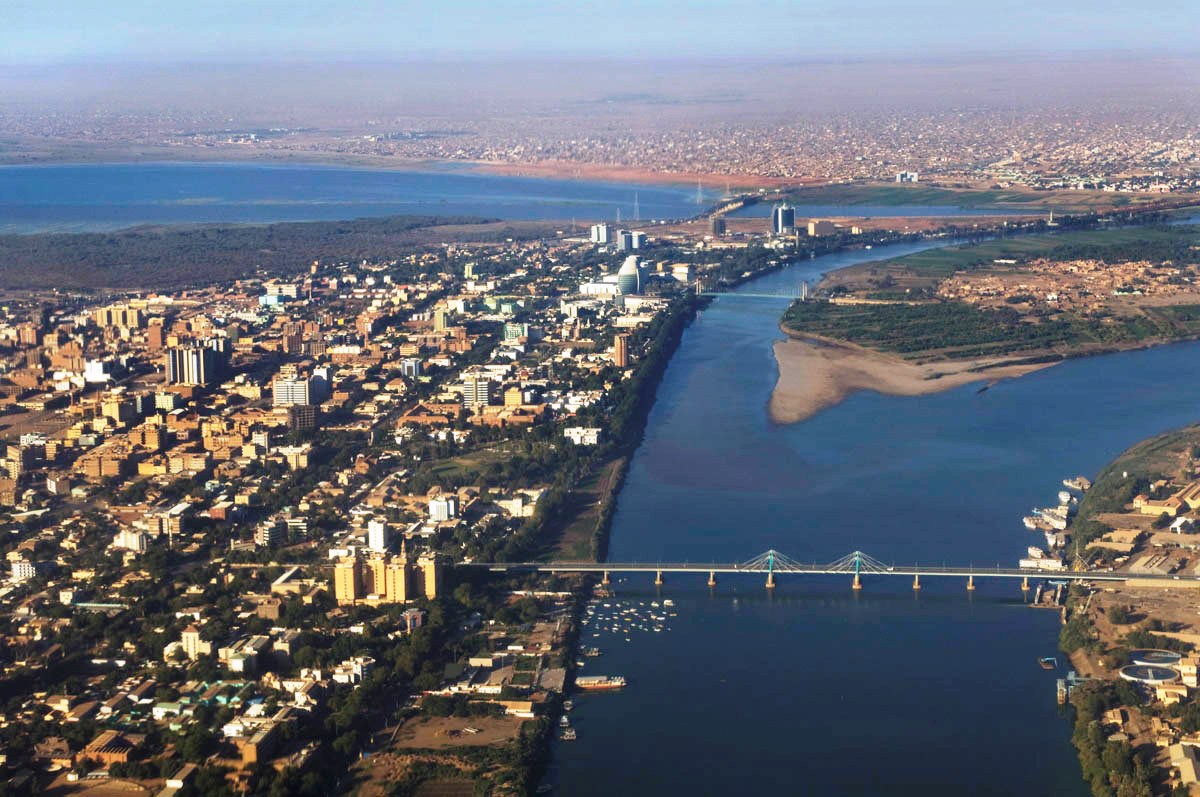
Khartoum, the capital and largest city of Sudan, is one of Africa's most historically significant capitals. Located at the spectacular meeting point of the Blue Nile and the White Nile, the city serves as Sudan's political, economic, financial, and cultural centre. This unique confluence, known as Al-Mogran, has made Khartoum an important crossroads for trade, civilization, and cultural exchange for centuries.
Founded in 1821 as an Egyptian military outpost, Khartoum grew into a major administrative and commercial city. Today, despite the severe challenges caused by the ongoing conflict in Sudan, Khartoum remains central to the country's identity and long-term development. Once stability is restored, the city holds significant potential for reconstruction, investment, education, tourism, and economic growth.
Overview of Khartoum
Khartoum is Sudan's political, commercial, and cultural capital.
Quick Facts
- Country: Sudan
- Capital: Khartoum
- Population: Approximately 6 million (Greater Khartoum metropolitan area, pre-conflict estimates)
- Time Zone: Central Africa Time (CAT, UTC+2)
- Official Languages: Arabic and English
- Currency: Sudanese Pound (SDG)
- Climate: Hot desert climate with extremely hot summers and mild winters
- Major Industries: Government Services, Agriculture, Banking, Construction, Manufacturing, Telecommunications, Trade, Education, Healthcare, Logistics
History and Cultural Heritage
Khartoum occupies a strategic location where the Blue Nile and White Nile merge to form the River Nile. The city became an important military and administrative centre during the 19th century and later played a major role in Sudan's political history.
Khartoum is closely associated with the Mahdist War, the Siege of Khartoum, and the country's journey through independence and modern nation-building. The surrounding region also preserves the legacy of ancient Nubian civilizations that flourished along the Nile for thousands of years.
Despite recent destruction caused by conflict, Khartoum's historical landmarks and cultural heritage remain an essential part of Sudan's national identity.
A Rich and Diverse Culture
Khartoum reflects Sudan's rich blend of African and Arab cultures.
The city's cultural highlights include:
- Nubian heritage
- Islamic traditions
- Traditional music and dance
- Arabic literature
- Local handicrafts
- Traditional markets
- Cultural festivals
- Art galleries
- Museums
- Sudanese cuisine
The city's diversity has made it an important centre for education, literature, and cultural exchange.
Famous Tourist Attractions
1. Al-Mogran (Confluence of the Blue and White Nile)
One of Khartoum's most iconic landmarks, where the Blue Nile and White Nile meet to form the Nile River.
2. Sudan National Museum
The country's largest museum, housing priceless artefacts from ancient Nubian and Egyptian civilizations.
3. Presidential Palace Museum
A historic building displaying Sudan's political history and important national artefacts.
4. Tuti Island
A peaceful island located at the meeting point of the two Niles, offering scenic views and agricultural landscapes.
5. Omdurman Souq
One of Sudan's largest traditional markets, famous for handicrafts, spices, jewellery, clothing, and local products.
6. Khalifa House Museum
A museum dedicated to the Mahdist period and Sudan's struggle for independence.
7. Nile Street
A beautiful riverside boulevard lined with government buildings, universities, gardens, and hotels.
8. Friendship Hall
A major conference and cultural venue hosting exhibitions, meetings, and public events.
9. University of Khartoum Campus
One of Africa's oldest and most respected university campuses, known for its historic architecture.
10. Corinthia Hotel Khartoum
A distinctive modern landmark that has become part of the city's skyline.
Natural Beauty and Outdoor Activities
Khartoum offers unique natural scenery centred around the Nile.
Popular activities include:
- Nile river cruises
- Boat rides
- Photography
- Bird watching
- Cultural tours
- Historical sightseeing
- Traditional market visits
- Riverside walks
- Local food experiences
- Nature excursions
Nearby attractions include:
- Tuti Island
- Sabaloka Gorge
- Meroë Pyramids (day-trip destination from central Sudan)
- Desert landscapes
- Nile wetlands
Food and Culinary Scene
Khartoum offers authentic Sudanese cuisine with African and Middle Eastern influences.
Popular local dishes include:
- Ful Medames
- Kisra
- Asida
- Tagaliya
- Mulah
- Grilled lamb
- Fresh Nile fish
- Sudanese coffee
- Hibiscus tea (Karkade)
- Traditional desserts
The city also offers Egyptian, Ethiopian, Lebanese, Turkish, Indian, and international cuisine.
Economy and Business Environment
Historically, Khartoum has been Sudan's largest economic centre.
Major industries include:
- Agriculture
- Banking
- Telecommunications
- Manufacturing
- Construction
- Healthcare
- Education
- Trade
- Logistics
- Government services
The ongoing conflict has severely affected economic activity, infrastructure, and investment. Future economic recovery will depend on stability, reconstruction, and institutional development.
Business Opportunities in Khartoum
Following long-term peace and reconstruction, Khartoum could offer significant opportunities in several sectors.
Infrastructure and Reconstruction
Potential opportunities include:
- Housing development
- Roads and bridges
- Utilities
- Engineering services
- Urban planning
Agriculture and Food Processing
Sudan has vast agricultural resources.
Future opportunities include:
- Irrigation systems
- Food processing
- Agricultural technology
- Livestock production
- Export businesses
Renewable Energy
Growing demand may create opportunities in:
- Solar energy
- Wind energy
- Rural electrification
- Sustainable infrastructure
- Energy-efficient construction
Healthcare
Potential investment areas include:
- Hospitals
- Medical equipment
- Telemedicine
- Pharmaceutical distribution
- Healthcare training
Education
Long-term opportunities include:
- Universities
- Vocational education
- Digital learning
- Research centres
- Professional development
Information Technology
As digital infrastructure develops, opportunities may include:
- Artificial Intelligence (AI)
- Software Development
- Cybersecurity
- Digital Government
- Financial Technology (FinTech)
- Cloud Computing
Education
Khartoum has traditionally been Sudan's leading educational centre.
Major institutions include:
- University of Khartoum
- Sudan University of Science and Technology
- Al Neelain University
- Future University
- International University of Africa
These universities have contributed significantly to education in engineering, medicine, agriculture, law, business, and science.
Transportation
Historically, Khartoum has been Sudan's main transportation hub.
Transportation includes:
- Khartoum International Airport
- National railway connections
- Highway network
- River transport
- Public buses
- Taxis
Many transport services and infrastructure have been disrupted by the ongoing conflict and will require substantial rehabilitation.
Shopping Destinations
Popular shopping areas include:
- Omdurman Souq
- Afra Mall
- Local craft markets
- Nile Street shopping districts
Visitors can purchase traditional Sudanese textiles, leather products, spices, jewellery, handicrafts, pottery, and local artwork.
Annual Festivals and Events
Historically, Khartoum has hosted:
- Cultural festivals
- Book fairs
- Educational conferences
- Agricultural exhibitions
- Business forums
- Music festivals
- National celebrations
- Art exhibitions
Many public events have been disrupted by the current conflict but could return as conditions improve.
Living in Khartoum
Before the current conflict, Khartoum offered a vibrant urban lifestyle with universities, hospitals, cultural institutions, and active commercial districts.
Residents valued:
- Strong community ties
- Educational opportunities
- Nile waterfront lifestyle
- Cultural diversity
- Traditional markets
- Growing business environment
Current living conditions have been significantly affected by the ongoing conflict, with serious impacts on infrastructure, public services, healthcare, and daily life.
Why Visit Khartoum?
When security conditions allow safe travel, Khartoum offers unique experiences.
- History enthusiasts can explore Sudan's ancient and modern heritage.
- Nature lovers can witness the meeting of the Blue Nile and White Nile.
- Archaeology enthusiasts can learn about Nubian civilizations.
- Entrepreneurs can explore future opportunities in reconstruction, agriculture, logistics, healthcare, and technology.
- Food lovers can enjoy authentic Sudanese cuisine.
- Photographers can capture the beauty of the Nile and desert landscapes.
Travellers should always consult the latest official travel advisories before planning any visit due to the ongoing security situation.
Future Growth and Emerging Opportunities
With long-term peace and reconstruction, Khartoum has strong potential for sustainable development.
Emerging sectors include:
- Artificial Intelligence
- Financial Technology (FinTech)
- Renewable Energy
- Smart Infrastructure
- Digital Government
- Sustainable Agriculture
- Healthcare Technology
- Educational Technology
- Logistics
- Water Management
- Green Construction
- Innovation and Research
Investment in these sectors could support Sudan's long-term recovery and economic transformation.
Conclusion
Khartoum is far more than the capital of Sudan—it is a city where the Blue Nile and White Nile unite, symbolising the country's rich history and cultural diversity. From the Sudan National Museum and bustling Omdurman Souq to the scenic Nile waterfront, Khartoum has long been a centre of learning, commerce, and heritage.
Although the city faces immense challenges due to the ongoing conflict, its strategic location, resilient people, and historical significance provide a strong foundation for future recovery. With peace, reconstruction, and international cooperation, Khartoum has the potential to once again become a thriving centre for culture, education, business, and sustainable development in Northeast Africa.
#Khartoum #Sudan #VisitSudan #TravelGuide #BlueNile #WhiteNile #NileRiver #Omdurman #BusinessOpportunities #Investment #Reconstruction #Agriculture #RenewableEnergy #ArtificialIntelligence #FinTech #Healthcare #Education #Logistics #Technology #Tourism #Entrepreneurship #NubianCivilization #AfricanCities #EconomicDevelopment #CulturalHeritage #SustainableDevelopment #Innovation #HistoricCities #FutureSudan #ExploreSudan #lowkot