Dambulla, Sri Lanka – The Golden Heart of Ancient Cave Temples and Cultural Heritage
Discover Dambulla: Where Sacred Caves, Ancient Art, and Natural Beauty Converge
Dambulla, located in Sri Lanka’s Central Province within the famous Cultural Triangle, is one of the island’s most significant historical and spiritual destinations. Renowned for its UNESCO World Heritage Cave Temple Complex, Dambulla blends religious heritage, ancient artistry, dramatic rock formations, and vibrant local culture into a truly unforgettable experience.
Strategically positioned near major ancient cities such as Sigiriya, Polonnaruwa, and Anuradhapura, Dambulla serves as a key hub for cultural tourism in Sri Lanka. The city attracts pilgrims, historians, archaeologists, and global travelers seeking to explore the roots of Buddhist civilization and Sri Lanka’s artistic legacy.
From golden Buddha statues inside sacred caves to panoramic views from towering rock formations, Dambulla offers a journey into both spiritual serenity and natural wonder.
Why Dambulla is One of Sri Lanka’s Most Important Heritage Destinations
Dambulla stands out as a living center of Buddhist devotion and ancient artistic excellence.
It is known for:
-
UNESCO World Heritage Cave Temple Complex
-
Over 2,000 years of religious history
-
Stunning rock cave murals and Buddha statues
-
Strategic location in Sri Lanka’s Cultural Triangle
-
Rich Buddhist pilgrimage significance
-
Ancient monastic traditions
-
Strong cultural tourism industry
-
Surrounding archaeological and natural attractions
The city represents a perfect fusion of spirituality, history, and natural beauty.
Top Places to Visit in Dambulla
Dambulla Royal Cave Temple (Golden Temple)
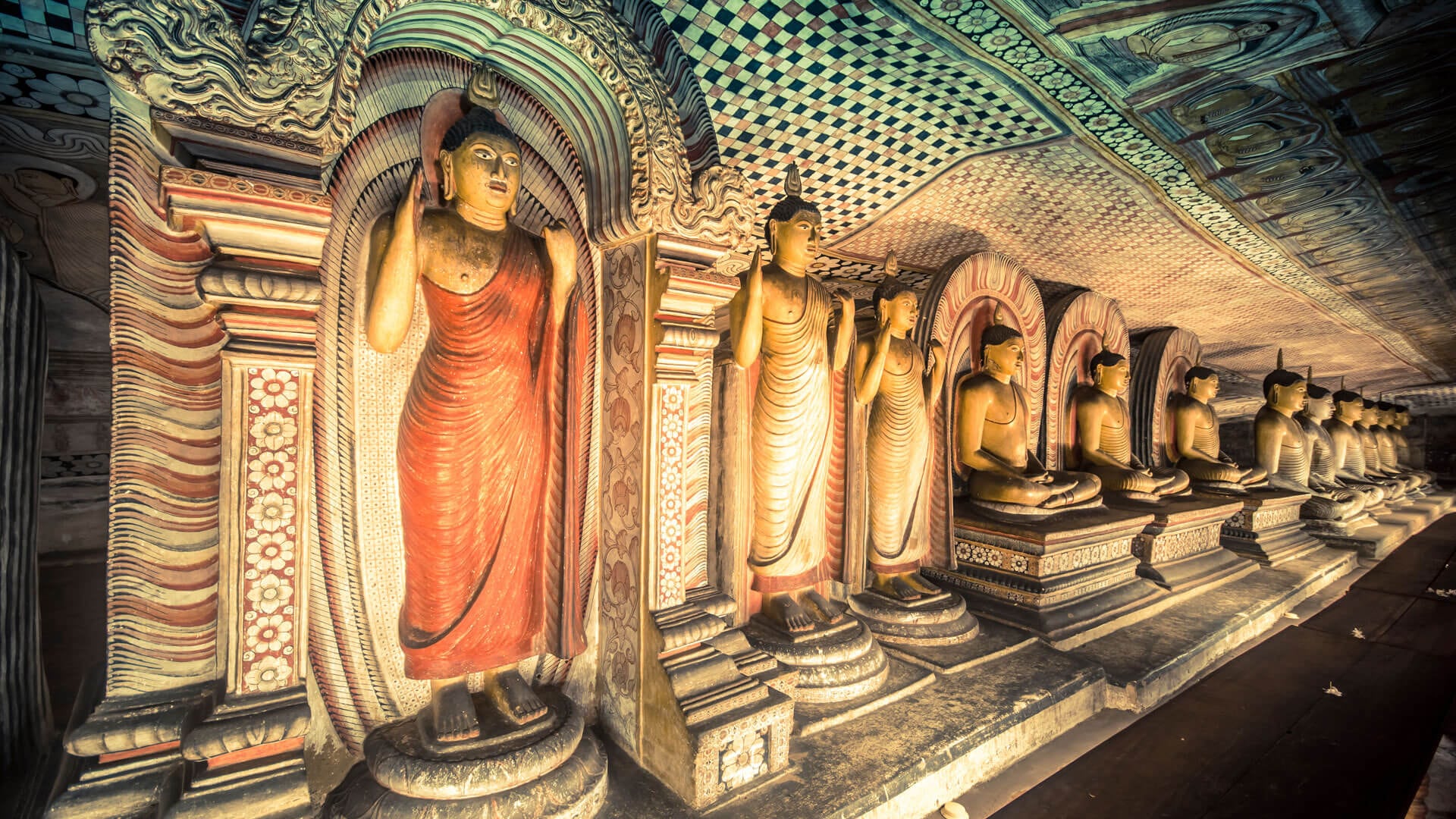
The crown jewel of Dambulla, this sacred cave complex features five main caves filled with over 150 Buddha statues and intricate wall and ceiling murals depicting Buddhist teachings and Sri Lankan history. It is one of the best-preserved cave temple systems in the world.
Golden Buddha Statue
A massive golden Buddha statue at the entrance of the temple complex, symbolizing peace and spiritual significance while serving as a landmark of Dambulla.
Popham’s Arboretum
A peaceful dry-zone forest reserve showcasing Sri Lanka’s native flora and fauna, ideal for nature walks and eco-tourism experiences.
Ibbankatuwa Megalithic Burial Site
An important archaeological site offering insight into prehistoric burial practices and early civilizations in Sri Lanka.
Rangiri Dambulla International Stadium
A unique cricket stadium built near a rock cave environment, known for its scenic and historic backdrop.
Rose Quartz Mountain Range
One of South Asia’s largest rose quartz mountain formations, offering panoramic views and geological significance.
The Golden Cave Temple Complex
Ancient Buddhist Sanctuary
The Dambulla Cave Temple dates back over two millennia and has been continuously used as a place of worship and meditation.
Masterpieces of Buddhist Art
Inside the caves, visitors can explore:
-
Intricate murals depicting Buddha’s life
-
Hundreds of seated and reclining Buddha statues
-
Paintings showcasing Sri Lankan Buddhist history
Architectural Marvel
The caves were naturally formed and later transformed into sacred spaces carved into the rock, demonstrating ancient engineering and devotion.
Culture and Spiritual Heritage of Dambulla
Buddhist Pilgrimage Center
Dambulla is one of the most important pilgrimage sites in Sri Lanka, attracting devotees throughout the year.
Living Religious Tradition
Monks continue to reside and practice meditation within the temple complex, maintaining centuries-old traditions.
Artistic Heritage
The murals and statues represent some of the finest examples of Sri Lankan Buddhist art.
Festivals and Religious Observances
Major events include:
-
Vesak Festival
-
Poson Festival
-
Sinhala and Tamil New Year
-
Poya Day ceremonies
-
Temple Peraheras and religious processions
Nature and Surroundings
Rock Landscapes and Forests
Dambulla is surrounded by striking rock formations, dry-zone forests, and agricultural landscapes.
Wildlife Encounters
The region is home to elephants, monkeys, deer, and diverse bird species, especially near forest reserves.
Scenic Views
The elevated cave temple offers panoramic views of the surrounding plains and distant mountains.
Business and Tourism Opportunities in Dambulla
Dambulla is a fast-growing hub within Sri Lanka’s cultural tourism corridor.
Cultural Tourism Industry
Strong demand exists for:
-
Heritage tours
-
Pilgrimage packages
-
Guided archaeological experiences
-
Educational tourism
Hospitality and Accommodation
Opportunities include:
-
Hotels and guesthouses
-
Boutique resorts
-
Eco-lodges
-
Pilgrim rest facilities
Agriculture and Trade
Dambulla is also a major agricultural distribution center known for:
-
Fresh produce markets
-
Vegetable wholesale trade
-
Agribusiness logistics
Strategic Location Advantage
Its central position makes it a key transit hub connecting major cultural and tourist destinations.
Lifestyle in Dambulla
Cost of Living
Dambulla offers an affordable and balanced lifestyle with access to essential services and a peaceful environment.
Education
The region includes schools and vocational institutions supporting local development.
Healthcare
Basic and regional healthcare services are available within the district.
Transportation
Dambulla is well connected through:
-
Major highway networks
-
Bus routes across Sri Lanka
-
Proximity to Cultural Triangle destinations
-
Access to Colombo and central cities
Community and Safety
The city is known for its peaceful environment, strong cultural identity, and welcoming community.
Climate and Best Time to Visit
Dambulla experiences a warm dry-zone climate throughout the year.
The best time to visit is:
-
November to March (cooler and ideal for sightseeing)
-
Early mornings or late afternoons for temple visits
Light clothing and sun protection are recommended due to warm conditions.
Why Dambulla Stands Out
Dambulla is one of Sri Lanka’s most spiritually and culturally significant destinations.
It stands out because:
-
It preserves one of the world’s finest cave temple complexes
-
It is a UNESCO World Heritage Site
-
It connects key ancient cities in the Cultural Triangle
-
It showcases exceptional Buddhist art and history
-
It combines nature, spirituality, and archaeology
Conclusion
Dambulla is more than a city—it is a sacred sanctuary carved into history and stone. From its golden Buddha statues and ancient cave murals to its surrounding forests and cultural significance, Dambulla offers a deeply spiritual and visually stunning experience.
For pilgrims, travelers, historians, and cultural explorers, Dambulla represents the essence of Sri Lanka’s Buddhist heritage and artistic legacy, making it one of the island’s most meaningful and unforgettable destinations.