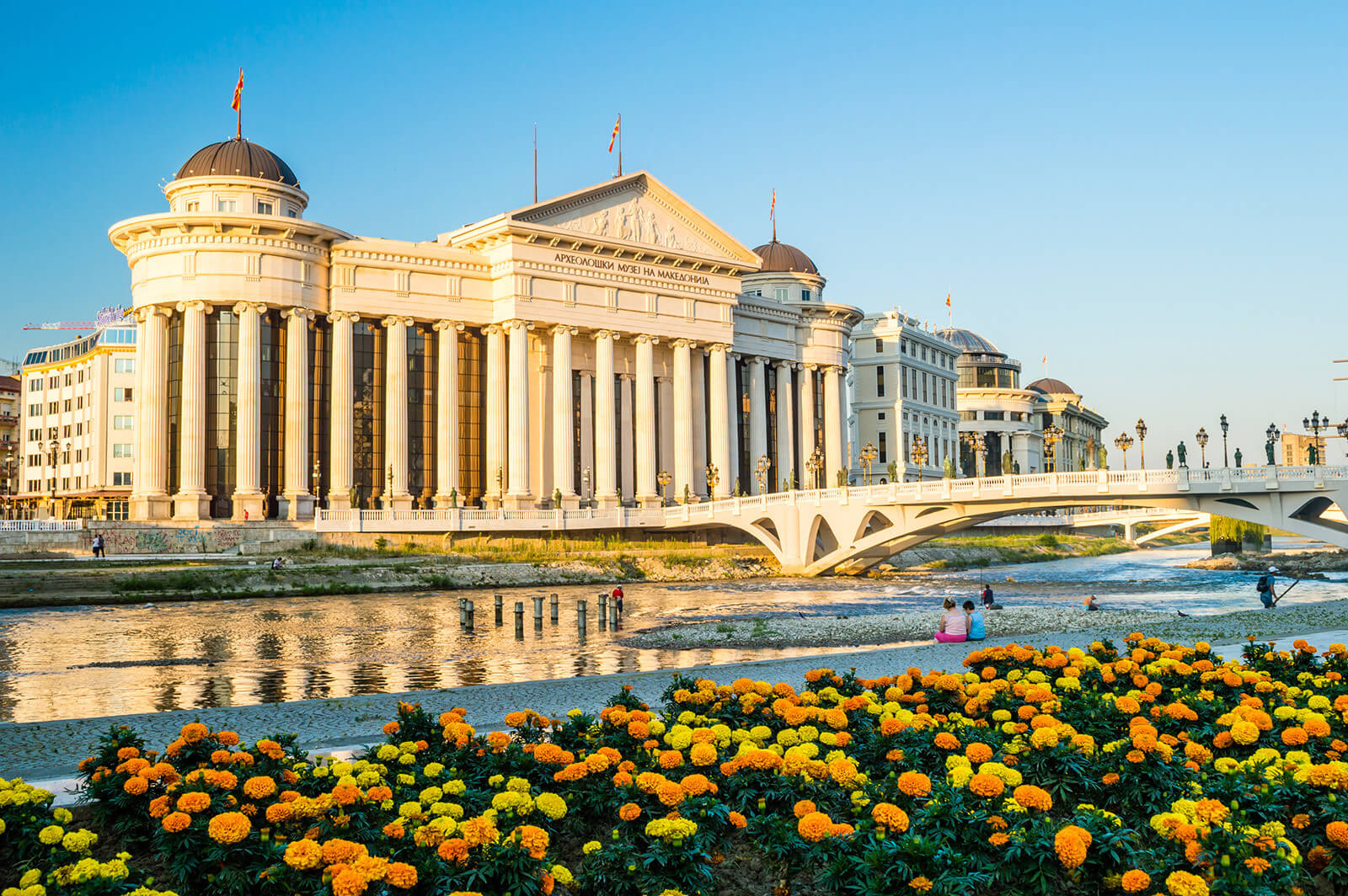
Skopje, North Macedonia: Where History, Culture, and Modern Opportunity Meet
Skopje is the capital and largest city of North Macedonia, located in the heart of the Balkans in southeastern Europe. Situated along the Vardar River and surrounded by mountains, the city combines centuries of history with a modern and increasingly international urban environment.
From the historic Old Bazaar and Stone Bridge to Kale Fortress, Mount Vodno, Matka Canyon, Macedonia Square, and contemporary cafés and business districts, Skopje offers a fascinating combination of heritage, culture, nature, and modern life.
The city is the country's political, economic, educational, cultural, and transportation center. Its location also gives it an important role in connections between Central Europe, the Balkans, and southeastern European markets.
Quick Facts About Skopje
| Category | Details |
|---|---|
| Country | North Macedonia |
| City | Skopje |
| Capital | Yes |
| Region | Balkans / Southeastern Europe |
| Location | Along the Vardar River |
| Language | Macedonian; Albanian is also widely used |
| Currency | Macedonian Denar (MKD) |
| Time Zone | Central European Time / Central European Summer Time |
| Climate | Continental with Mediterranean influences |
| Major Sectors | Services, trade, manufacturing, technology, construction, tourism, education |
| Main Airport | Skopje International Airport |
| Main River | Vardar River |
| Known For | Old Bazaar, Stone Bridge, Kale Fortress, Mount Vodno, Matka Canyon |
| Major Landmark | Millennium Cross |
History of Skopje
Skopje has a long history stretching back more than two millennia.
The region was inhabited in ancient times and became part of several major empires and political systems throughout history. The city developed under Roman rule and was known as Scupi, an important settlement in the wider region.
During the Byzantine period, Skopje remained an important strategic center. Later, it became part of the medieval Serbian state before coming under Ottoman rule.
The Ottoman period had a particularly strong influence on the city's architecture, trade, religious institutions, markets, and urban development.
The Old Bazaar remains one of the strongest reminders of this historical period.
Skopje experienced major destruction from an earthquake in 1963, after which the city underwent extensive reconstruction and urban planning. The rebuilding process introduced modern architectural concepts while preserving parts of the historic city.
Today, Skopje reflects layers of Roman, Byzantine, Ottoman, Yugoslav, and contemporary Balkan history.
Culture and Identity
Skopje is one of the culturally diverse capitals of the Balkans.
Its cultural landscape includes influences from:
-
Macedonian traditions
-
Albanian heritage
-
Ottoman history
-
Byzantine traditions
-
Balkan culture
-
Orthodox Christianity
-
Islam
-
Jewish heritage
-
Yugoslav history
-
Contemporary European culture
The city's architectural diversity is particularly visible around the Old Bazaar, central Skopje, religious buildings, public squares, and modern neighborhoods.
Cafés, restaurants, music, festivals, galleries, theatres, and public events contribute to the city's contemporary cultural identity.
Famous Tourist Attractions in Skopje
1. Old Bazaar
The Old Bazaar is one of Skopje's most historic and atmospheric districts.
Its narrow streets, traditional shops, cafés, restaurants, workshops, mosques, and historic buildings reflect centuries of commercial and cultural activity.
Visitors can explore traditional crafts, local food, souvenirs, and historic architecture.
2. Stone Bridge
The Stone Bridge is one of Skopje's most recognizable landmarks.
Crossing the Vardar River, the historic bridge connects the central Macedonia Square area with the Old Bazaar.
It has become one of the defining symbols of the city.
3. Kale Fortress
Kale Fortress stands on a hill overlooking central Skopje.
The fortress has played an important defensive role throughout the city's history and offers panoramic views over Skopje and the surrounding landscape.
4. Macedonia Square
Macedonia Square is the central public square of Skopje.
It is surrounded by important buildings, cafés, hotels, restaurants, shops, and public spaces.
The square is also a major location for cultural celebrations and public events.
5. Mother Teresa Memorial House
Skopje is associated with Mother Teresa, who was born in the city in 1910.
The Mother Teresa Memorial House commemorates her life and humanitarian legacy.
It is an important destination for visitors interested in her history and international humanitarian work.
6. Museum of the Macedonian Struggle
This museum explores different periods of North Macedonia's political and national history.
Its collections and exhibitions provide visitors with insight into the country's complex historical development.
7. Church of Saint Clement of Ohrid
The Church of Saint Clement of Ohrid is one of the most prominent Orthodox churches in Skopje.
Its distinctive architecture and interior artwork make it an important religious and cultural landmark.
8. Millennium Cross
The Millennium Cross stands on Mount Vodno above Skopje.
The enormous cross has become one of the city's most recognizable modern landmarks.
Visitors can travel toward Mount Vodno to enjoy panoramic views of Skopje.
9. Matka Canyon
Matka Canyon is one of the most popular natural attractions near Skopje.
The canyon offers:
-
Hiking
-
Kayaking
-
Boat trips
-
Rock climbing
-
Photography
-
Nature exploration
Its dramatic cliffs, lake, caves, and surrounding greenery make it an excellent escape from the city.
10. Skopje City Park
Skopje City Park provides green space close to the urban center.
It is popular for walking, recreation, cafés, family activities, and relaxing beside the Vardar River.
Nature and Outdoor Experiences
Skopje benefits from its location between mountains and valleys.
Outdoor opportunities include:
-
Hiking
-
Mountain biking
-
Rock climbing
-
Kayaking
-
Nature photography
-
Walking trails
-
Weekend excursions
-
Adventure tourism
Mount Vodno is particularly accessible from the city, while Matka Canyon provides opportunities for more active outdoor experiences.
The surrounding mountains and countryside also make Skopje a useful base for exploring other parts of North Macedonia.
Food and Culinary Culture
Skopje's food culture reflects Balkan, Mediterranean, Ottoman, and regional influences.
Popular foods include:
-
Tavče gravče
-
Ajvar
-
Kebapi
-
Burek
-
Shopska salad
-
Pastrmajlija
-
Grilled meats
-
Stuffed peppers
-
Fresh cheeses
-
Traditional breads
-
Baklava
-
Turkish-style coffee
The Old Bazaar is particularly well known for traditional food and cafés.
At the same time, modern restaurants and international cuisine have become increasingly common across the city.
Economy and Business Environment
Skopje is the main economic center of North Macedonia.
Major economic activities include:
-
Trade
-
Banking and finance
-
Manufacturing
-
Construction
-
Real estate
-
Information technology
-
Telecommunications
-
Tourism
-
Logistics
-
Education
-
Professional services
-
Retail
-
Food processing
The city's concentration of government institutions, financial services, universities, businesses, and international organizations gives it a central role in the national economy.
Skopje's location within the Balkans also supports regional trade and logistics.
Business Opportunities in Skopje
1. Technology and Digital Services
Skopje has an expanding technology and startup ecosystem.
Potential areas include:
-
Software development
-
IT outsourcing
-
Artificial intelligence
-
Cybersecurity
-
FinTech
-
E-commerce
-
Digital marketing
-
Business automation
-
Cloud services
Its skilled workforce and regional location can support technology businesses serving international clients.
2. Manufacturing and Industry
Manufacturing remains an important part of the wider economy.
Opportunities exist in:
-
Automotive components
-
Machinery
-
Food processing
-
Textiles
-
Electronics
-
Industrial services
-
Export-oriented manufacturing
3. Tourism and Hospitality
Skopje's historic landmarks and proximity to natural attractions create opportunities in:
-
Hotels
-
Boutique accommodation
-
Restaurants
-
Tour operators
-
Adventure tourism
-
Cultural tourism
-
Travel technology
-
Destination marketing
The city can also function as a starting point for travelers visiting other parts of North Macedonia.
4. Real Estate and Construction
Urban development continues to create demand for:
-
Residential projects
-
Commercial properties
-
Hospitality developments
-
Property management
-
Construction services
-
Interior design
-
Smart buildings
5. Logistics and Regional Trade
Skopje's location makes logistics and transportation important business sectors.
Opportunities include:
-
Warehousing
-
Freight forwarding
-
Distribution
-
E-commerce logistics
-
Supply-chain management
-
Cross-border trade services
6. Renewable Energy
Clean energy and energy efficiency represent emerging areas for investment and entrepreneurship.
Potential sectors include:
-
Solar energy
-
Energy-efficient buildings
-
Green construction
-
Energy management
-
Electric mobility
-
Environmental services
Education in Skopje
Skopje is North Macedonia's primary higher-education center.
Major institutions include:
-
Ss. Cyril and Methodius University in Skopje
-
University of Information Science and Technology-related academic networks
-
South East European University
-
International Balkan University
-
University American College Skopje
-
Mother Teresa University
Universities and higher-education institutions contribute to the country's workforce, research, technology development, and international academic cooperation.
Transportation
Skopje is North Macedonia's main transportation hub.
Skopje International Airport
Skopje International Airport provides international air connections and serves as the country's primary aviation gateway.
Road Network
Major roads connect Skopje with other North Macedonian cities and neighboring Balkan countries.
Public Transport
The city has an extensive bus-based public transportation network.
Taxis and Mobility Services
Taxis and private mobility services provide additional transportation options within the metropolitan area.
Walking and Cycling
Several central districts are suitable for walking, while cycling infrastructure has been developed in parts of the city.
Shopping in Skopje
Skopje offers a combination of traditional shopping areas, independent stores, markets, boutiques, and modern shopping centers.
Popular shopping destinations include:
-
Old Bazaar
-
Macedonia Square area
-
Debar Maalo
-
City shopping districts
-
Modern shopping malls
-
Local markets
The Old Bazaar is particularly interesting for traditional products, crafts, jewelry, textiles, souvenirs, and local food.
Events and Festivals
Skopje has an active cultural calendar throughout the year.
Events can include:
-
Music festivals
-
Film festivals
-
Theatre performances
-
Art exhibitions
-
Book events
-
Food festivals
-
Cultural celebrations
-
International conferences
-
Business events
-
Technology gatherings
The city's diverse cultural traditions contribute to a lively arts and entertainment scene.
Living in Skopje
Skopje offers a relatively compact urban environment with a combination of historic neighborhoods and modern residential areas.
Popular lifestyle and residential districts include:
-
Debar Maalo
-
Centar
-
Karpoš
-
Aerodrom
-
Vodno
-
Čair
-
Kisela Voda
The city provides access to universities, healthcare, shopping, restaurants, cafés, parks, entertainment, and professional services.
For international residents and entrepreneurs, Skopje can also provide access to a broader Balkan network.
Why Visit Skopje?
Skopje offers visitors an opportunity to experience several layers of Balkan history in one city.
Visitors can enjoy:
-
Ottoman-era architecture
-
Historic bazaars
-
Religious landmarks
-
Museums
-
Contemporary urban culture
-
Balkan cuisine
-
Mountain landscapes
-
Outdoor adventures
-
Local cafés
-
Cultural events
Its proximity to Mount Vodno and Matka Canyon makes it particularly attractive for travelers who want to combine city sightseeing with outdoor experiences.
Skopje's Future Growth and Emerging Opportunities
As North Macedonia continues developing its economy and strengthening connections with European markets, Skopje is positioned to remain the country's main business and innovation center.
Emerging opportunities may include:
-
Artificial intelligence
-
Software development
-
FinTech
-
Cybersecurity
-
E-commerce
-
Green energy
-
Smart-city technology
-
Digital services
-
Logistics technology
-
Sustainable tourism
-
Advanced manufacturing
-
Creative industries
Technology-enabled services may be particularly important as businesses become more connected to international markets.
Sustainable Development Opportunities
Skopje's future urban development can benefit from greater focus on sustainability.
Potential priorities include:
-
Cleaner public transportation
-
Electric mobility
-
Cycling infrastructure
-
Renewable energy
-
Energy-efficient buildings
-
Urban green spaces
-
Waste reduction
-
Recycling
-
Water efficiency
-
Sustainable construction
-
Smart-city systems
Sustainable development can support economic growth while improving the city's environment and quality of life.
Skopje as a Gateway to the Balkans
Skopje occupies an important geographical position in southeastern Europe.
Its location provides connections toward:
-
Serbia
-
Kosovo
-
Albania
-
Bulgaria
-
Greece
-
Montenegro
-
Bosnia and Herzegovina
-
Wider European markets
For businesses, the city can serve as a base for developing relationships across the Western Balkans and southeastern European markets.
For travelers, Skopje provides a convenient starting point for exploring North Macedonia's mountains, lakes, historic towns, cultural sites, and neighboring countries.
Conclusion
Skopje is a city where Balkan history, cultural diversity, Ottoman heritage, modern urban life, mountain landscapes, and emerging economic opportunities come together.
From the historic Old Bazaar and Stone Bridge to Mount Vodno and Matka Canyon, the city offers a wide range of experiences for travelers.
At the same time, its universities, technology sector, manufacturing base, financial services, real estate market, tourism industry, and regional location create opportunities for entrepreneurs, professionals, investors, and international businesses.
As North Macedonia continues to strengthen its regional and European connections, Skopje will remain an important center for business, education, culture, innovation, tourism, and international cooperation.
#Skopje #SkopjeNorthMacedonia #NorthMacedonia #VisitSkopje #ExploreSkopje #SkopjeTravel #NorthMacedoniaTravel #BalkanTravel #Balkans #SkopjeTourism #SkopjeCity #MacedonianCulture #NorthMacedonianCulture #OldBazaarSkopje #StoneBridgeSkopje #KaleFortress #MountVodno #MillenniumCross #MatkaCanyon #SkopjeBusiness #BusinessInNorthMacedonia #InvestInNorthMacedonia #SkopjeRealEstate #SkopjeTechnology #SkopjeStartups #NorthMacedoniaBusiness #SkopjeEducation #SkopjeFood #BalkanBusiness #SustainableSkopje #SkopjeInnovation #EuropeanCities #DiscoverSkopje #TravelNorthMacedonia #lowkot